
Driveway & Pavers: Repair or Replace? How Buena Park Homeowners Decide
Patching a driveway with a failing base is like painting over a water stain. It looks fine for about six months, then costs you twice as much as the replacement you should have done the first time. The expensive mistake isn’t choosing wrong, it’s choosing based on what you can see. In Buena Park, the answer almost always lives six inches under the pavers, and that’s a place most homeowners never get a look at.
The short answer: if the base is intact, targeted repair holds for years. If the base has moved, no surface fix lasts a full season. A legitimate assessment tells you which one you’re standing on before anyone quotes a number. And if you’d rather skip the guesswork, call (833) 522-5059 and we’ll take a look at the base, not just the surface.
Why the surface tells you almost nothing in Buena Park
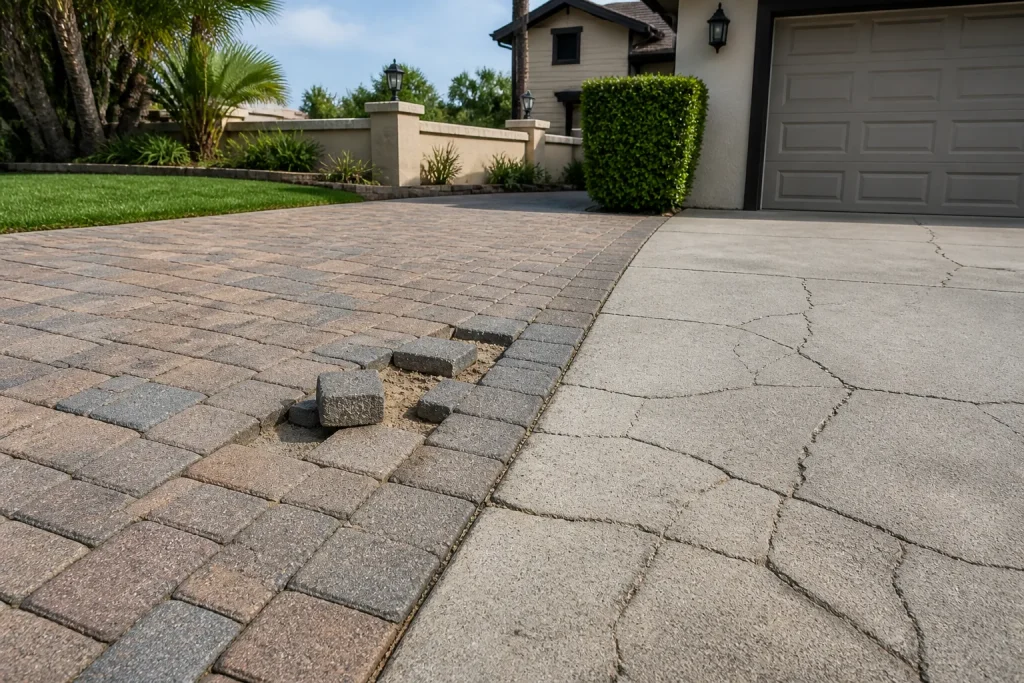
Most homeowners make this decision on looks. The pavers are stained, a few are cracked, the edge is a little wavy, and the knee-jerk reaction is that the whole thing is shot. That’s a surface read on a structural question. A paver driveway is a system: the pavers on top, a bedding layer, a compacted aggregate base, and the native soil underneath. The pavers are the cheapest part of that system. The base is the expensive part, and it’s also the part that decides whether repair money stays spent.
Buena Park has a specific challenge here. A lot of the city’s soils carry expansive clay, and coastal-adjacent moisture swings means that clay swells in the wet months and shrinks hard through the dry summer. That cycle pushes up and pulls down on a driveway base continuously. We’ve seen this play out block after block in the older tracts near Buena Park Downtown, where driveways from one builder age differently depending on which side of a property line they sit on, simply because drainage and soil moisture differ. Meanwhile, Southern California UV does its own quiet work, baking the surface and fading color while the base moves underneath.
The point: two driveways that look identical from the street can need completely opposite recommendations. Looking at them the same way is how people overpay.
The four base-condition indicators that point to replacement
If you spot any of these four, replacement is usually the only financially sound choice, and surface repairs are money spent twice:
- Widespread lateral movement. If pavers are spreading apart across several square feet, not in one spot, the base is shifting as a whole. Re-laying isolated pieces just resets the same failure.
- Ponding that doesn’t clear within a day. Standing water after a rain means the base is no longer draining. Trapped moisture under pavers leads to pumping, settling, and eventual failure of everything above it.
- Displacement over a utility trench. Driveways built over poorly compacted backfill (common where gas or water lines were run after the original pour) settle in a long trench line. That’s a base compaction problem, not a paver problem.
- Visible sinking along the garage apron or foundation edge. This is the one that matters most. When the driveway drops toward the foundation, the base has failed at the load-bearing edge, and that’s a water-management risk on top of a paving problem.
You can identify all four without digging. Walk the surface, look at the edges against the foundation, watch it after a real rain, and check whether the spread is localized or everywhere. Nobody needs to excavate your whole driveway to spot a base in trouble.
When repair is genuinely the right call
Repair is the correct answer more often than most people assume, and it holds for years when the damage profile is isolated. These are the cases where targeted work makes sense:
- Isolated heaving from a single root. One raised area with stable pavers around it. Pull the section, address the cause, re-lay. The surrounding base is fine.
- Edge crumbling. The paver edge against a lawn or planter breaks down from lack of restraint. Re-setting the edge with proper edging is real, lasting work.
- Surface scaling and color loss. Cosmetic and UV-driven. Cleaning and re-sealing brings the surface back without touching the base.
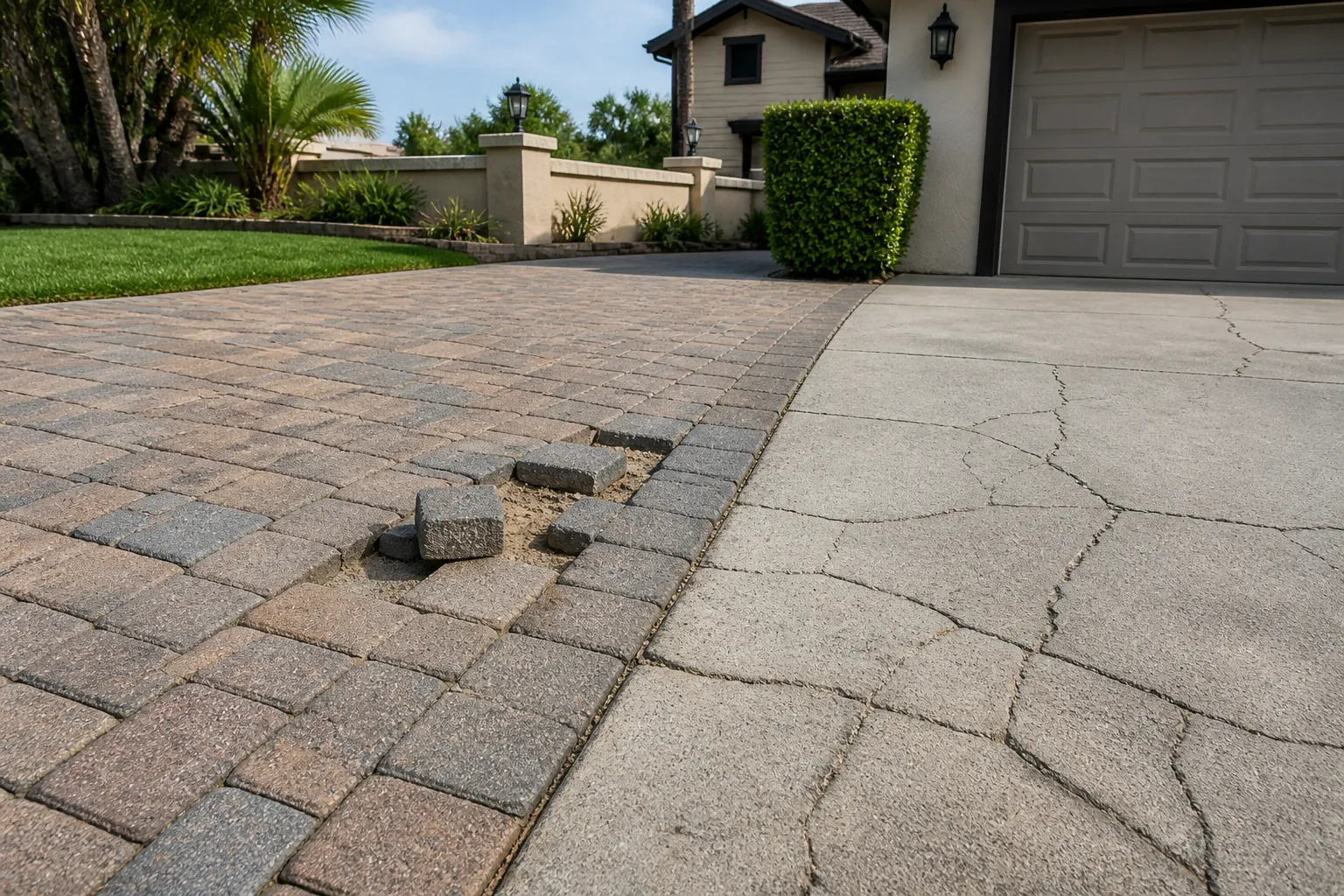
- A handful of cracked or chipped pavers. If the base underneath the damaged units is compact and flat, swapping individual pavers is straightforward.
In these cases the base is doing its job and the repair money stays where it’s put. The tell is that the damage is contained. When we look at a driveway in the Los Coyotes area and the movement is limited to one or two sections with solid base beneath the rest, a targeted repair is usually the honest recommendation. The opposite is also true: don’t let anyone sell a full replacement on a driveway that only needs an edge reset.
The cost-per-year math that settles the argument
Gut feeling is a bad accountant. The repair-versus-replace decision gets simpler when you price it per year of service instead of comparing total numbers. A full replacement carries a bigger total, but it spreads over a much longer service life. Repeated repairs look cheap per visit and quietly compound.
Rough shape of the math for a typical Buena Park driveway:
- Targeted repair on a solid base: lowest upfront, and if the base is healthy it lasts many years. Good cost per year.
- Targeted repair on a failed base: modest upfront, but it fails and needs patching again and again. The cumulative spend can pass replacement within a couple of seasons, with no durability to show for it.
- Full replacement on a failed base: highest upfront, longest service life, done once. Best cost per year over the long run.
The takeaway is that repair isn’t always the budget move and replacement isn’t always the premium one. Which is cheaper per year depends entirely on the base. That’s exactly why the assessment has to come before the number. When the work is a full replacement, our upfront pricing and 0% financing for 18 months plus $1,000 off projects over $10,000 are there to make the right call affordable instead of the expensive one. The number you see is the number you pay.
What a legitimate assessment actually looks like
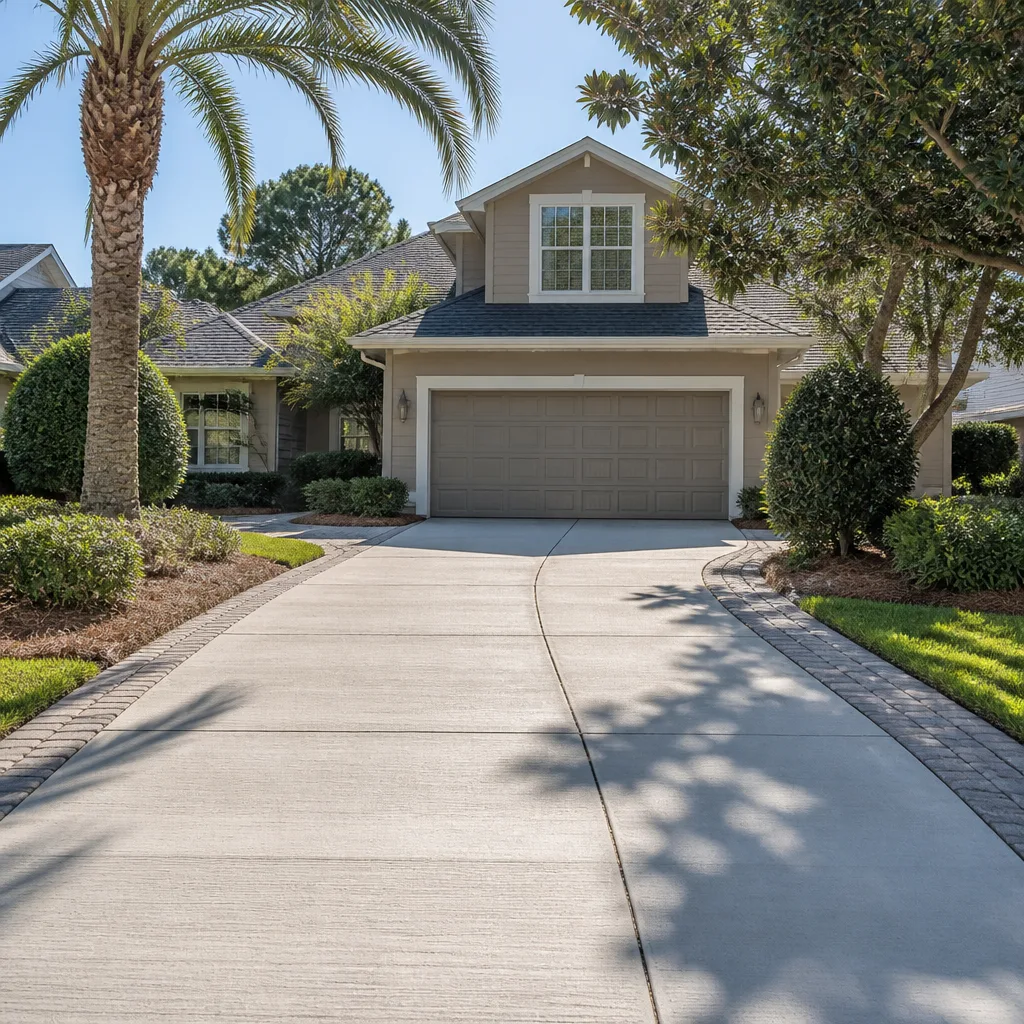
Before any recommendation gets made, a proper assessment walks the base, not just the surface. Here’s what should happen:
- Shine a light on the base. Lift a paver or two at the edge and inspect the aggregate base and bedding layer for softness and contamination.
- Walk the whole drive, then check edges against the foundation. Look for settlement lines and ponding low points.
- Test for movement and drainage. Check whether water drains off or sits, and whether sections move underfoot.
- Ask about history. When was it installed, has anything been patched, did the settling start after a plumbing or utility job.
That’s the report you want before anyone touches your wallet. If a contractor quotes replacement off a five-minute glance from the sidewalk, you haven’t been assessed. We use Belgard hardscape products and Quikrete and Sakrete base materials for the repair and rebuild work that follows, so the fix and the base under it are matched to the job. And the work comes backed in writing by our 730-Day Done Right Promise: if it’s not done right, we make it right.
When to call a pro: if you see water pooling toward the foundation, spreading pavers across several feet, or a drop along the garage apron, it’s time to stop guessing. Those are base signals, and a wrong call here costs real money. For a full look at what we do, see our Driveway & Pavers in Buena Park page, and if the driveway work sits alongside a bigger project, we handle it from foundation to finish line, including Fence Installation in Buena Park and Home Additions & ADU in Buena Park.
The Bottom Line
The repair-versus-replace call on a Buena Park paver driveway hinges on the base, not the surface. Score it against the four base indicators first. If the base is solid and the damage is isolated, repair is genuine and durable. If the base has moved, drained poorly, or settled toward the foundation, replacement is the cheaper decision per year, even though it costs more upfront. Don’t let surface symptoms make a structural decision for you, and don’t accept a quote that wasn’t built on an actual base inspection.
If you’re in Buena Park and need help, Groundwork Construction Co. of Buena Park offers free estimates, answered by a live person 24/7. Call (833) 522-5059 to schedule one, and we’ll tell you honestly which call your driveway actually needs.
Frequently Asked Questions
Check the base, not the surface. If pavers are spreading across several feet, water ponds for more than a day, a long trench line has settled, or the driveway drops toward the foundation, that’s a failed base and replacement is the sound choice. If the damage is isolated, such as one root-heaved section or crumbling edges, a targeted repair holds for years.
Expansive clay soil and Southern California moisture swings are the main reasons. The clay swells and shrinks with the wet and dry cycles, pushing and pulling on the base continuously. Add steady UV exposure degrading the surface, and Buena Park driveways live in a tougher environment than most. Drainage on your particular lot makes a big difference too.
Repair is worth it when the base is intact and the damage is contained. It’s delaying the inevitable when the base has failed, because the fix keeps coming back and the spend compounds. The cost-per-year test settles it: healthy base favors repair, failed base favors replacement. Call (833) 522-5059 for an assessment before you decide.
A real assessment inspects the aggregate base and bedding layer, checks the edges against the foundation, tests for drainage and movement, and asks about the driveway’s history. A quote made without any of that is a guess, not an assessment. We look at the base first, price it upfront, and back the work with our 730-Day Done Right Promise. Call (833) 522-5059 for a free estimate.
Written by the team at Groundwork Construction Co. of Buena Park.
Need Construction Help?
Call Groundwork Construction Co. of Buena Park - the local pro we connect you with is licensed and insured, here with fast after-hours help in Buena Park.
(833) 522-5059