
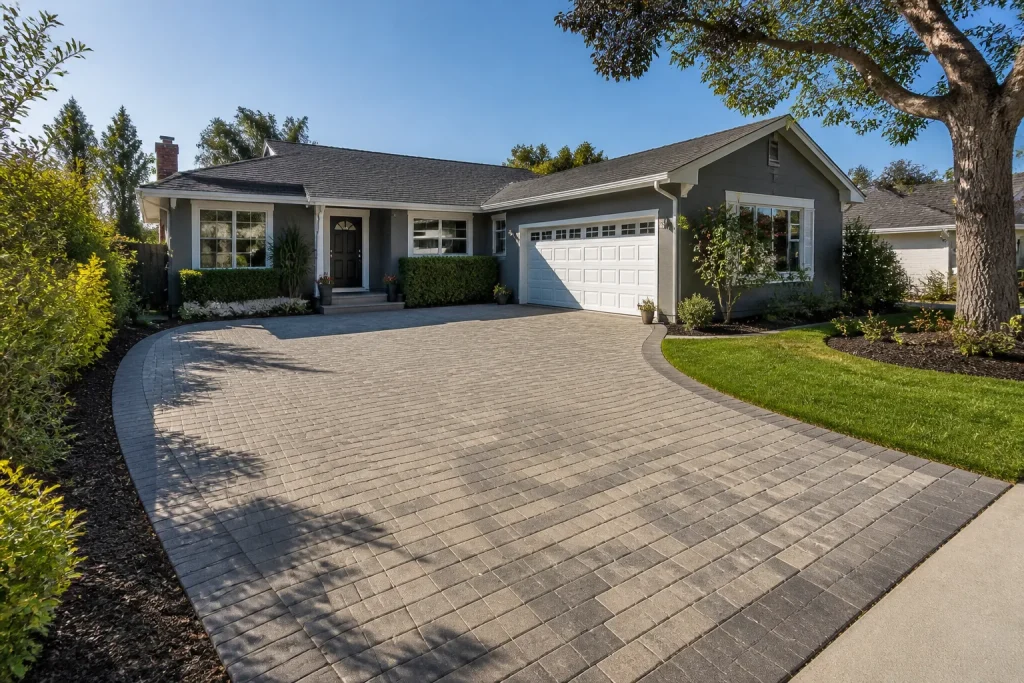
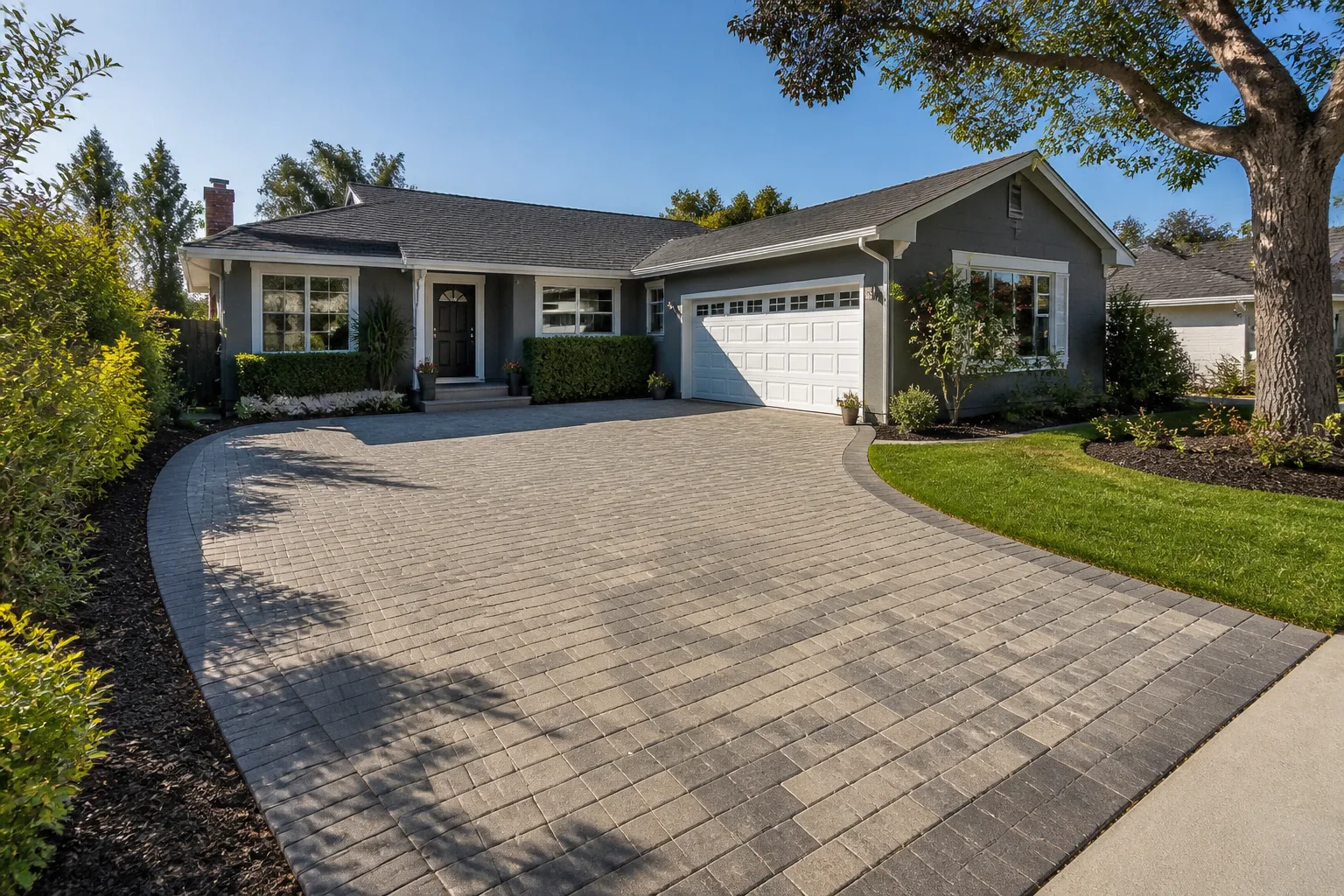
American Standard Driveway & Pavers in Buena Park: A Homeowner’s Guide
American Standard’s name on a paver brings instant credibility, but credibility isn’t a load rating. A plumbing brand with a century of faucets doesn’t automatically make a paver that belongs under a 5,000-pound SUV. Some American Standard hardscape lines are engineered for vehicular traffic; others are pedestrian-only patio products dressed in the same marketing. This guide reads the spec sheet for you so your Buena Park driveway gets the right product, not the pretty one. If you’d rather not sort that out yourself, call (833) 522-5059.
Which American Standard pavers actually belong on a Buena Park driveway?
Not all American Standard pavers are rated for vehicles. That single distinction matters more than anything else on the box, and it’s where most DIY driveway projects go wrong. American Standard splits its hardscape catalog into two broad families: pavers engineered for vehicular loads and pavers built for patios, walkways, and pool decks. The two families look nearly identical in photos, so you have to read the technical documentation, not the lifestyle shots.
Vehicle-rated collections carry compressive strength and thickness specs printed in the product data sheet. Pedestrian pavers often don’t list a vehicle rating at all, which is your first clue. If you can’t find a PSI number and a thickness in the documentation, assume the paver is not rated for a driveway.
- Driveway-rated pavers: engineered for live vehicle loads, typically 8,000 PSI minimum with a full 2 3/8-inch or greater thickness.
- Pedestrian pavers: rated for foot traffic only; fine for patios and garden paths, a mistake under a car.
- The gray zone: decorative pavers marketed as “driveway friendly” that meet thickness but not the PSI minimum for sustained vehicle weight.
In Buena Park we regularly see pavers fail not because of material quality but because the wrong product went into the driveway and the right product went to the patio. The fix starts at the spec sheet.
How does color-through manufacturing hold up against Buena Park sun?
Color-through manufacturing holds up well against Buena Park’s direct sun because the color runs through the full thickness of the paver rather than sitting on top. That structural difference is the single most important longevity factor for a driveway exposed to Southern California’s UV load.
Buena Park gets an average of 278 sunny days a year, and a south-facing driveway bakes through afternoon sun that would fade a surface-coated paver inside a few seasons. Surface-coated or “painted” pavers wear through the color layer as tires scrub and foot traffic polishes the surface, exposing a pale core underneath. The fading shows up fastest at the entry apron and along the tire tracks, which is exactly where you don’t want it.
Color-through pavers carry their pigment through the entire body of the paver. When the top surface scuffs, the exposed material is the same color as the face. Over the long horizon, that means the driveway you install in Buena Park this year still reads the same at year ten.
One thing we’ve learned from jobs across Buena Park: even color-through pavers need a proper base and drainage to age well. The pigment won’t fade, but ponding water from a poorly graded base will leave efflorescence and stain lines that no paver finish can survive. The material and the install have to work together.
What PSI and thickness specs should Buena Park installers be hitting?
For a residential Buena Park driveway, American Standard pavers need at minimum 8,000 PSI compressive strength and a full 2 3/8-inch thickness (60mm) under vehicle loads. Anything thinner or softer is a patio product, not a driveway product.
Those two numbers – PSI and thickness – are the working minimums for a residential driveway in Southern California. The full spec stack our crew installs to:
- Compressive strength: 8,000 PSI minimum. Lower ratings may work for foot traffic but shouldn’t see vehicle load.
- Paver thickness: 2 3/8 inches (60mm) for standard residential driveways; some commercial loads require 3 1/8 inches (80mm).
- Base depth: 4 to 6 inches of compacted Class II aggregate base, plus 1 inch of bedding sand.
- Edge restraint: aluminum or concrete edge restraint on all four sides to lock the field in place.
- Joint sand: polymeric sand for joint stability and weed resistance.
- Drainage slope: 1 to 2 percent away from the garage slab to keep water moving off the driveway.
Skipping any of these is where we see failures. A paver rated for a driveway will still shift and crack if it’s laid over 2 inches of base, and the warranty won’t cover an installation that didn’t follow the manufacturer’s specified base and edge requirements. If you’re comparing American Standard pavers against another brand like Belgard or Unilock for a Buena Park driveway, the comparison that matters is the spec line, not the marketing copy.
Here’s how the two sides compare in plain terms:
- What you’ll pay attention to: color-through manufacturing, design profiles, and the fact that American Standard’s hardscape line carries a plumbing brand’s design reputation.
- What the sub-base doesn’t care about: the brand name. It cares about PSI, thickness, base depth, compaction, and edge restraint.
- The failure mode if you get it wrong: edge creep, joint sand washout, and paver settlement within two winters.
How do American Standard profiles fit Spanish Colonial and Mid-Century Ranch homes?
American Standard’s paver profiles fit Buena Park’s two most common housing styles well: the tumbled or cobble profiles suit Spanish Colonial and Mediterranean homes, while the clean rectangular profiles suit Mid-Century Ranch. The design language is where American Standard earns its place on a Buena Park property.
Buena Park is a mixed architectural town. The older ranch tracts built from the 1940s through the 1960s sit cheek by jowl with Spanish Colonial revival builds and the occasional Mid-Century modern. A driveway has to fit the house it serves without competing with it.
- Spanish Colonial: the tumbled-edge and cobble profiles from American Standard’s hardscape catalog read as warm terracotta-adjacent tones and suit red clay roof tiles and stucco walls. Rounded edges soften the transition between driveway and landscape.
- Mid-Century Ranch: rectangular profiles in muted grays and warm neutrals fit the horizontal lines and low-pitched rooflines. Clean joints look best here.
- Mixed or transitional: a two-tone field with a simple running bond bridges both styles without a heavy commitment to either.
This is where American Standard’s design DNA from plumbing shows up in the hardscape line. The color palette is curated to coordinate with muted stucco tones rather than fight them. That’s a real advantage for Buena Park curb appeal, and it’s not something every paver brand pulls off.
What does the American Standard warranty actually cover?
American Standard’s paver warranty covers defects in the paver material itself – cracking, spalling, and color-through integrity – but it does not cover installation-related failures like settlement, joint sand washout, or damage from a substandard base. The manufacturer’s warranty lives or dies by whether the installer followed the specified installation requirements.
The warranty structure works like this:
- Covered: defects in the paver body, including structural cracking under normal use and failure of the color-through pigment to hold.
- Not covered: cracked or settled pavers caused by inadequate base compaction, water infiltration, or missing edge restraint.
- Voided by: installation without a proper Class II base, pavers laid outside the specified thickness or application rating, or use of a paver on a load it wasn’t rated for.
In plain terms: the paver warranty protects you from a bad batch of pavers. It doesn’t protect you from a bad installation. That’s why the installation requirements matter as much as the product selection, and why we install to American Standard’s spec line rather than to a generic “looks about right” standard.
Why Buena Park’s climate is hard on driveway pavers
Buena Park’s climate is hard on driveway pavers because the combination of intense direct sun, dry summers, and the occasional winter rain cycle works pavers from both directions – UV on the surface and water underneath. Most paver failures we see here aren’t material failures, they’re drainage and base failures.
A driveway in Buena Park lives through roughly 14 inches of rain concentrated in a few winter storms, sitting on top of clay-heavy soils that don’t drain fast. Without a properly graded base and edge restraint, water pools, the base loses compaction, and pavers rock under the next vehicle load. The summer sun then dries the subgrade, the joint sand works out, and by the second winter you have a driveway with dips and loose pavers.
We pulled a set of surface-coated pavers out of a driveway near Knott’s Berry Farm last year where the color layer had worn through along both tire tracks after just four summers. The pavers themselves weren’t defective – the product was simply the wrong choice for a south-facing vehicular surface in direct sun. Color-through pavers from American Standard’s driveway-rated line would have held up without any of that fade.
When to call a pro
Call a pro when the scope involves removing existing concrete, grading the base, or installing to a manufacturer’s spec line you’ll want to keep the warranty valid on. Paver driveways look like a weekend project, but the layers under the pavers – subgrade, base, bedding, edge restraint, joint sand, and drainage slope – are where the work actually lives. A driver sees the paver; the failure happens in the base.
If your Buena Park driveway is a fresh install or a paver replacement over an existing concrete slab that’s cracked, the scope gets more involved than a straightforward paver lay. Getting the base and drainage right up front costs less than replacing a shifted field two winters later.
Related services in Buena Park: our Driveway & Pavers in Buena Park page covers the full install scope, and if your project touches your property line you’ll want to look at Fence Installation in Buena Park as well. For homeowners planning a bigger exterior overhaul, our Home Additions & ADU in Buena Park page covers the other side of curb appeal – the structure. And if you’re just starting to think through the whole exterior, the Groundwork Construction Co. of Buena Park home page lays out the full scope we handle.
The Bottom Line
American Standard’s driveway pavers are a solid fit for Buena Park homeowners who want curb appeal that holds up under daily vehicle traffic and direct sun. The catch – and it’s the one that matters – is choosing only the paver lines rated for vehicular loads, specifying the right PSI and thickness, and getting the base and drainage right so the warranty stays intact. The material is worth the brand name; the install is what makes it last.
The 730-Day Done Right Promise means if the driveway isn’t right – joint sand, edge, drainage slope, or paver field – we make it right, in writing. Background-checked, uniformed technicians on every project. Upfront pricing with the number you see being the number you pay, and 0% financing for 18 months with $1,000 off projects over $10,000 to make a full paver driveway achievable on your schedule.
If you’re in Buena Park and need help sorting out which American Standard pavers belong on your driveway, Groundwork Construction Co. of Buena Park offers free estimates – call (833) 522-5059. Calls are answered by a live person 24/7, and every project comes with a free design consult before you commit.
Frequently Asked Questions
Yes – American Standard’s driveway-rated paver lines are good for a Buena Park driveway, provided you choose a collection rated for vehicular loads and install to the 8,000 PSI minimum with 2 3/8-inch thickness. The pedestrian-only pavers in the catalog aren’t the right product for a driveway, even though they look similar in photos. Call (833) 522-5059 for a free estimate and we’ll match the right American Standard line to your driveway.
A paver driveway in Buena Park typically runs $12 to $22 per square foot installed, depending on paver selection, base prep, and existing material removal. A standard two-car driveway in the 500-square-foot range lands roughly in the $6,000 to $11,000 range before any concrete removal or drainage work. American Standard color-through pavers sit in the middle to upper end of that range. Call (833) 522-5059 for an exact quote – estimates are free.
American Standard color-through pavers do not fade in Buena Park sun the way surface-coated pavers do, because the pigment runs through the entire paver body rather than sitting on top. Surface-coated alternatives can fade along tire tracks within four to six summers of direct exposure. Color-through pavers scuff and expose the same color underneath, so they hold their appearance for the long haul. Call (833) 522-5059 to talk through which American Standard line fits your driveway.
No – our upfront pricing means the number you see is the number you pay. We quote the full scope in writing before any work begins, and change orders only happen if you request a scope change mid-project. If you’re comparing estimates from other Buena Park contractors, ask specifically what’s included for base prep, edge restraint, and joint sand before comparing the bottom line. Call (833) 522-5059 for a written line-item quote – free of charge.
Written by the team at Groundwork Construction Co. of Buena Park.
Need Construction Help?
Call Groundwork Construction Co. of Buena Park - the local pro we connect you with is licensed and insured, here with fast after-hours help in Buena Park.
(833) 522-5059