
5 Mistakes to Avoid With Driveway & Pavers
Four out of five paver driveway failures we inspect in Southern California trace back to decisions made before the first paver was ever set. Not the color. Not the pattern. The expensive mistakes happen during planning, vetting, and the final walkthrough, and they look completely fine on day one. If you’d rather have the base work handled right from the start, call (833) 522-5059 for a free estimate on your Buena Park driveway.
Here’s the uncomfortable part: most of these failures stay invisible for a year or two. Then a corner of the driveway dips after a wet winter, grass pushes through the joints, or the whole field starts rocking underfoot. By then the warranty conversation gets harder. So let’s go through the five we see most, and what to do instead.
Mistake #1: Accepting “Proper Base” as a Written Specification
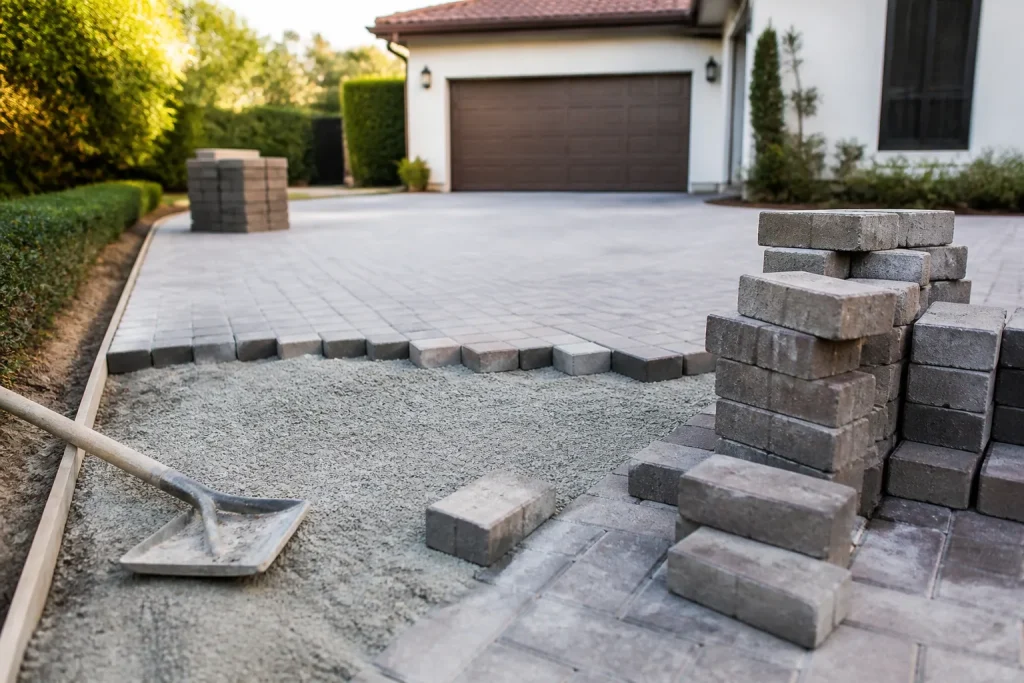
“We always do a proper base” is not a specification. It’s a sentence that means nothing in a contract, and it’s the single most common thing we watch homeowners sign. Paver performance lives or dies on the base, and a base that isn’t documented in writing has no accountability attached to it. In Buena Park’s warm, largely dry climate, it’s easy to assume drainage and base depth matter less than they do in wetter regions. Then a February rainstorm proves otherwise.
What a real contract should spell out:
- Excavation depth – the total dig measured in inches, not “about a foot”
- Aggregate type and depth – compacted class II or crushed stone, stated in inches, plus the sand bedding layer
- Compaction method – plate compactor passes, in lifts, not one pass over a thick pour
- Subgrade prep – whether the native soil gets scarified, replaced, or stabilized where it’s soft
Ask the contractor to write those numbers into the scope. A crew that does the work properly has no reason to resist putting it on paper. A crew that won’t is telling you something. When we’re on a Buena Park paver job, that base spec comes with the estimate, so there’s nothing to argue about later. Our technicians have up to 12 years of experience on this kind of work, and they’ll tell you the base is where the driveway is actually built.
Mistake #2: Picking the Paver Before Understanding the Drainage Plan
This is the one that produces the most expensive failures, and it happens in the wrong order almost every time. Homeowners tour a showroom or a yard, fall for a Belgard in a warm charcoal tone, then ask the contractor to “make it work.” Drainage should decide the product, not the other way around.
Here’s what we mean. Buena Park lots sit on a mix of gently sloped ground and near-flat pads. A near-flat pad can’t shed water on slope alone, so the driveway design needs either a crown, a cross-pitch toward a swale, or a channel drain – and the paver choice affects which of those is practical. A larger format paver with a tighter joint pattern routes water differently than a smaller, more permeable field. Permeable pavers, in fact, change the entire base design underneath them. Choose the product first and you may have locked yourself out of the drainage solution your lot actually needs.
The fix is simple in principle: get a site plan that shows the finished slopes and the water’s exit path, then pick the product that fits it. Ask where runoff goes and what happens where it meets your garage apron. If nobody can point to a spot on a drawing and explain the water’s route, that’s a red flag worth heeding in Buena Park before anything gets ordered.
Mistake #3: Hiring on the Sample Instead of the Base Work Record
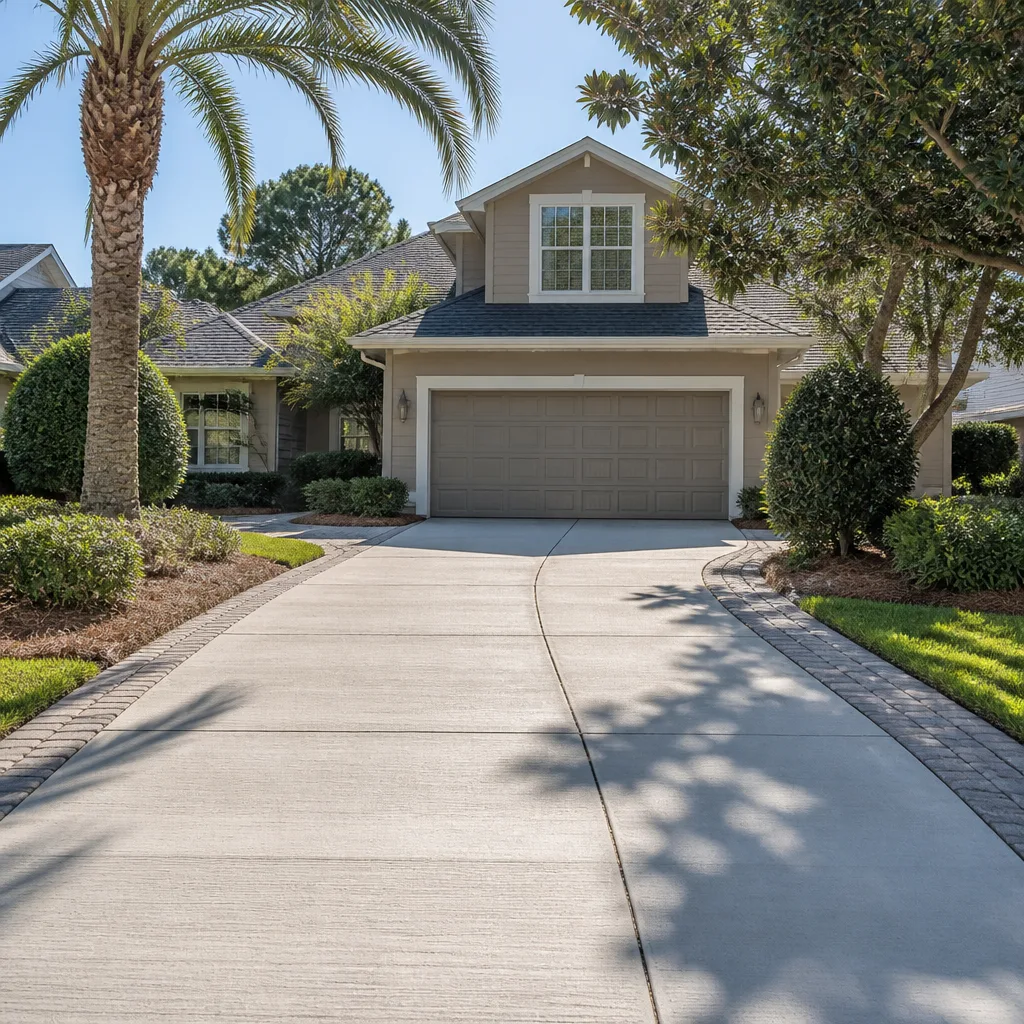
Anyone can hand you a pretty sample board. The question most homeowners never ask is the one that actually predicts quality: “Can I see a driveway you installed five or more years ago?” Not last month’s beautiful install. A driveway that’s weathered several wet seasons and thousands of vehicle passes. That’s the real portfolio question, and it tells you more than any brochure.
Get specific when you look at past work:
- Is the field still flat? Run a hand over the surface and look for rocking or dipping at the edges.
- Are the joints still filled? Empty or washed-out sand between pavers means a failing joint system.
- Is the edge restraint intact? Check the border where the pavers meet soil, curb, or planting bed.
- Any sinkholes or pooling spots? Both point to base or drainage problems that got hidden at installation.
The brands matter too – Belgard, for example, makes a strong product we’re glad to use – but the base track record matters more than the name stamped on the paver. When we quote a paver job in Buena Park, we’d rather you see an older install than a fresh one. Our work carries the 730-Day Done Right Promise, and if it’s not done right, we make it right. That’s a commitment you can verify against real driveways, not a promise in a sample folder.
Mistake #4: Ignoring Buena Park’s Hardscape Permit Threshold
This one sneaks up on people, and it’s less about cracking pavers and more about resale and legal headaches. Local jurisdictions often tie hardscape permitting to square footage, and once a paver driveway crosses that threshold – commonly in the range where major driveway replacements land – the project may need a permit and inspection. We’re not quoting a specific number here because requirements shift, and the one that applies to your address is the one you should confirm. But the principle holds: a large hardscape project that quietly skipped permitting can create problems when you sell.
Think about what a buyer’s inspector sees. A paver driveway that replaced a lot of impervious surface often raises questions about grading, runoff, and whether the work was reviewed. If there’s no paper trail, that becomes a negotiation problem years down the road. In Buena Park, the fix is to ask your contractor, “Does this project cross the permitting threshold, and are you pulling it?” A crew that pulls the permit and gets the inspection passed takes that risk off your plate.
While you’re planning hardscape, it’s worth looking at the whole yard in the same breath – a paver driveway and a fence often get designed together, and coordinating the two saves re-work at the property line. See our Fence Installation in Buena Park page if that’s on your list too.
Mistake #5: Signing Off Before the Last 5% Is Locked
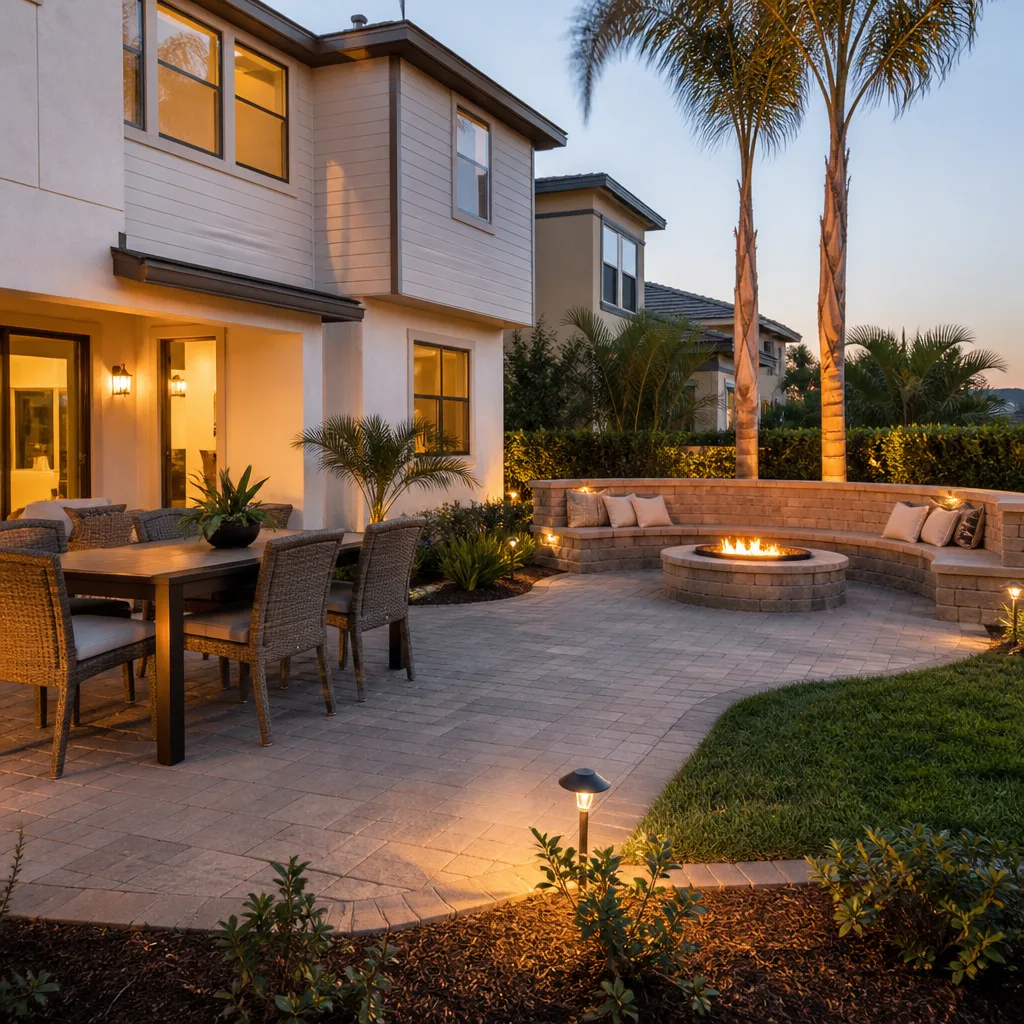
The final walkthrough is where the first 95% of a good paver job either holds or starts to unravel, and most homeowners sign off too early because the surface looks great. Two things decide the outcome, and both get confirmed in the last few hours of the job: the edge restraint system and the joint sand.
Edge restraint. The border is what keeps the pavers from spreading outward under vehicle load. It should be a rigid, properly spiked or otherwise anchored system that’s fully in place – not a soft border that flexes when you press it. A weak edge lets the field migrate, joints open, and the whole surface start to loosen at the perimeter. Check it with your hand and your eye before you sign anything.
Joint sand. The joints should be fully filled and locked – typically with a polymeric or stabilized sand that sets up and resists washing out. Partially filled joints let water get into the base, which is where damage starts. Run a finger or a small tool along a few joints and confirm they’re packed, not hollow.
Ask for these two items to be confirmed explicitly at the walkthrough. A crew that leaves them for “later” usually doesn’t come back. When our crew finishes a driveway in Buena Park, the edge and the joints are part of what we walk you through – and if it’s not done right, the 730-Day Done Right Promise means we make it right.
When to Call a Pro
Here’s the honest test: if any of these five issues describe your driveway today – soft spots, rocking pavers, open joints, a weak edge, or no record of the base spec or permit – it’s worth having a trained professional take a look before the damage worsens. Resetting a few pavers is a small repair. Rebuilding a failing base is a much bigger one. Get an outside, experienced eye on it early. Our technicians are background-checked, arrive in uniform, and can assess what’s actually happening under that surface. While you’re at it, if you’re weighing other hardscape or structural work, our Home Additions & ADU in Buena Park page covers projects that often intersect with driveway and grading plans.
The Bottom Line
The five mistakes come down to decisions that look fine on day one and cost real money by year two. Get the base spec in writing. Let drainage pick the product, not the reverse. Vet the contractor on old driveways, not sample boards. Confirm the Buena Park permitting threshold for large hardscape projects. And don’t sign off until the edge restraint and joint sand are fully locked. None of these require special tools – just the right questions, asked at the right time.
If you’re in Buena Park and need help, Groundwork Construction Co. of Buena Park offers free estimates – call (833) 522-5059. We answer with a live person 24/7, and every project comes with upfront pricing and no surprises. Our Driveway & Pavers in Buena Park page covers the full scope, and if you want the wider picture of what we do, start at our Groundwork Construction Co. of Buena Park home.
Frequently Asked Questions
Cost depends on square footage, base prep, and the product you choose, so any single number would be misleading. The bigger point: the base work is where price can be cut dishonestly, so insist on a written line-item bid that shows excavation depth, aggregate, compaction, and edge restraint separately. Call (833) 522-5059 for an exact quote – estimates are free.
It shouldn’t if the estimate is written properly. Vague scopes invite change orders. Upfront pricing with a detailed line-item bid means the number you see is the number you pay. Ask any contractor to put the base spec and drainage plan in writing before you sign. Call (833) 522-5059 to schedule your free estimate.
Projects that cross the local hardscape threshold should be permitted and inspected, and that’s part of what a pro handles for you. Ask directly whether your project crosses it. Our crew pulls the permits and works through the inspection so the paper trail holds up at resale. Call (833) 522-5059 to talk through the scope.
A properly built paver driveway should hold for decades. The variable is the base, the drainage, and the edge system – not the paver itself. Get those right and you rarely think about the driveway again. Get them wrong and you’ll know within a couple of wet seasons. Call (833) 522-5059 for a free estimate and base evaluation.
Written by the team at Groundwork Construction Co. of Buena Park.
Need Construction Help?
Call Groundwork Construction Co. of Buena Park - the local pro we connect you with is licensed and insured, here with fast after-hours help in Buena Park.
(833) 522-5059