Last updated November 18, 2026
Free written scope consultation - allowances, timeline, and change-order rules on paper before a single trade is scheduled
The Complete Driveway & Pavers Guide for Buena Park Homeowners
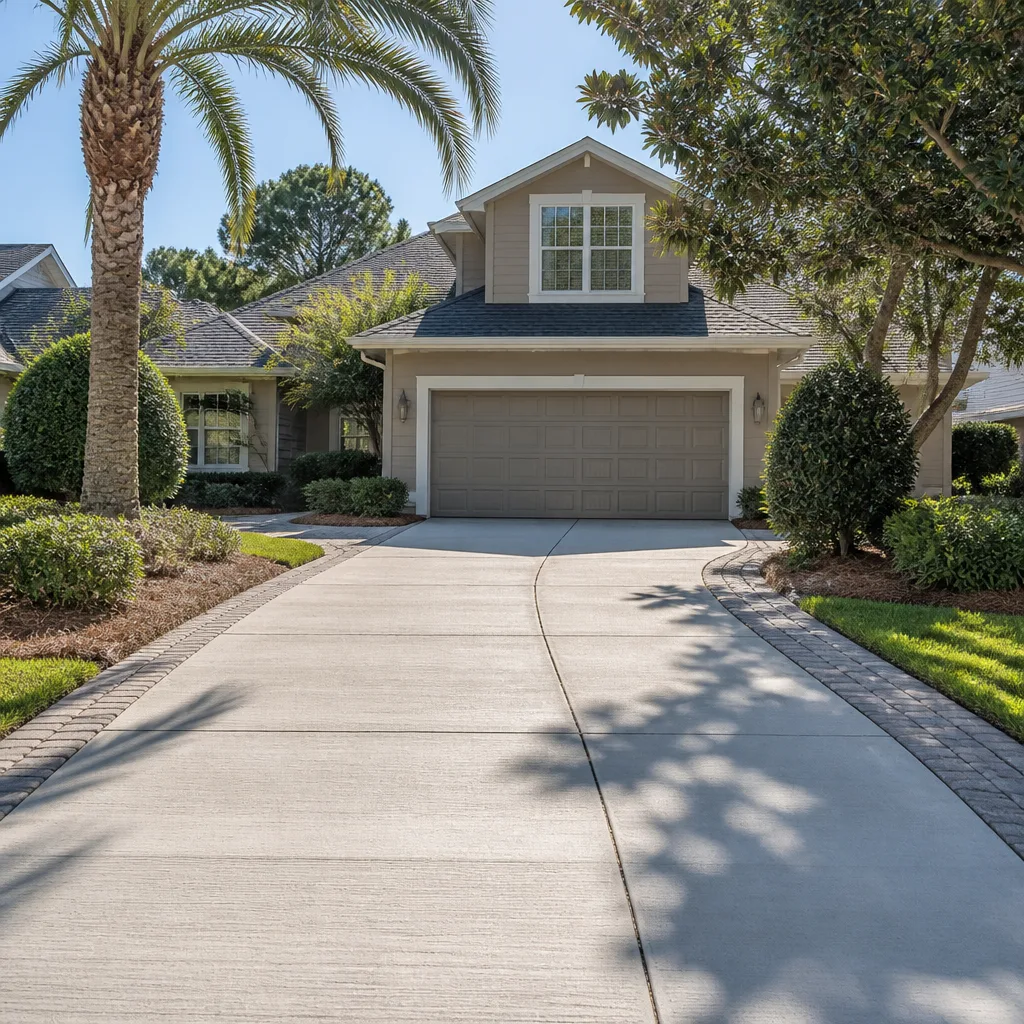
The number one reason Buena Park driveways crack within three years isn’t cheap pavers. It’s a base layer installed for a different climate entirely. We’ve pulled up plenty of driveways here where the pavers themselves were perfectly good – and the six inches of road base underneath had turned into a wet sponge because it was compacted to a spec written for dry, sandy soil in some other state. Buena Park sits on some of the most temperamental ground in Orange County, and the marine layer off the coast keeps that ground moving. This guide covers the compaction depths that actually hold here, the paver thickness your truck needs, the permit and HOA steps that surprise people midway through, and how to compare bids line by line so you can tell what you’re really buying. If you’re searching for driveway pavers in Buena Park CA and want the version written for this zip code, settle in.
Quick Answer
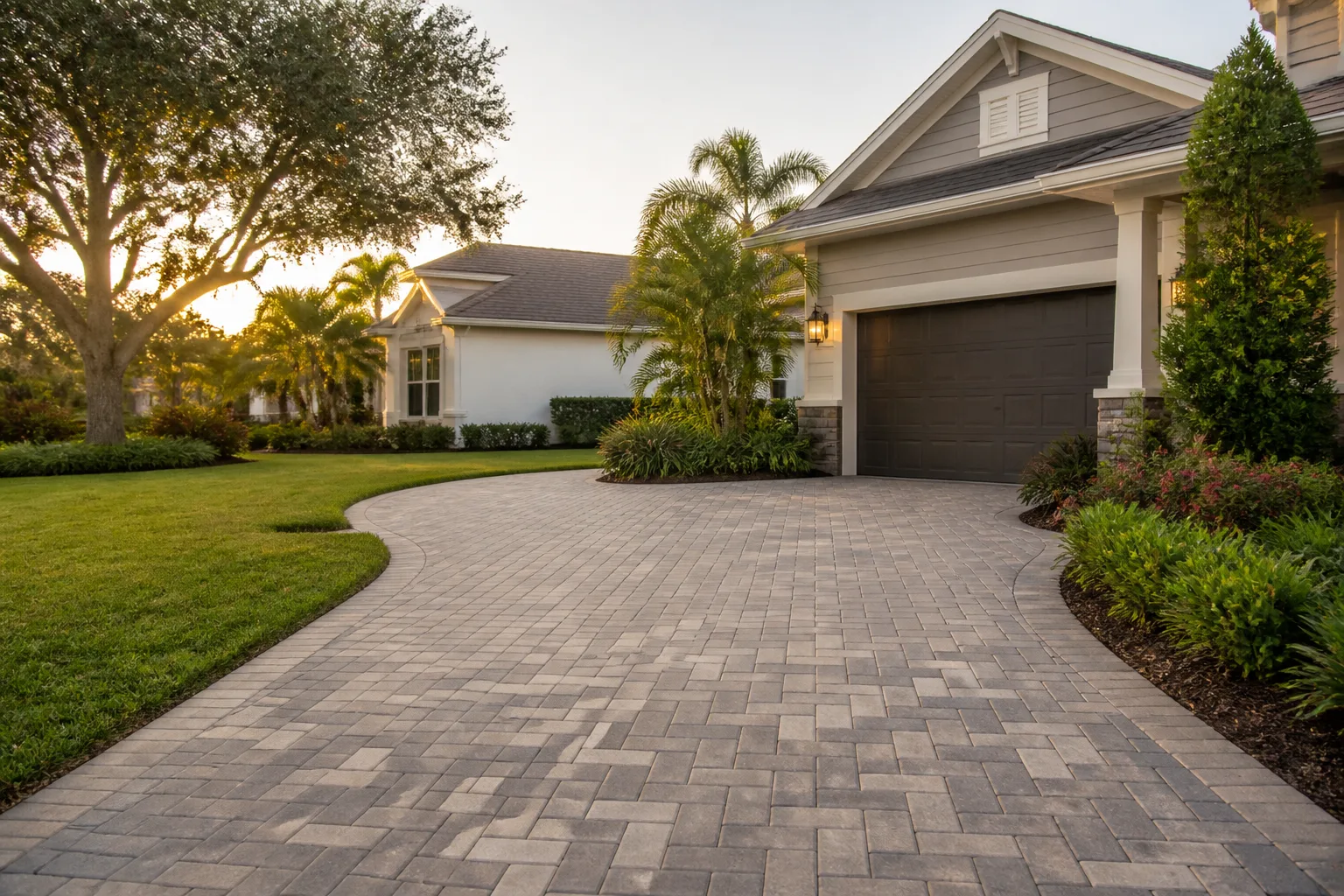
Pavers work well on Buena Park driveways when the base is engineered for expansive clay soil and installed at 8 to 12 inches of compacted aggregate rather than the 4 to 6 inches you’ll find in most national installation guides. Choose concrete pavers at least 2 3/8 to 2 3/4 inches thick for vehicle traffic, get an HOA approval and city permit in hand before demolition day, and budget roughly $12 to $24 per square foot installed. The base is where the money goes, and it’s the part nobody sees once the job is done.
Styles & brands we work with
- Kitchen remodeling
- Bathroom remodeling
- Home additions & ADU
- Roofing
- Windows & doors
- Driveway & pavers
- Fence
Table of Contents
- Why Buena Park’s Clay Soil Changes Everything About Your Base
- How Thick Do Pavers Need to Be for a Driveway That Carries Real Trucks?
- Permeable Pavers, Stormwater Rules, and What Buena Park Actually Requires
- Permits, HOA Approvals, and the Paperwork That Stalls Projects
- How to Compare Paver Bids Side by Side Without Getting Fooled
- Choosing Materials That Survive Marine Air and Temperature Swings
- Keeping Your Driveway Sound for the Long Haul
Why Buena Park’s Clay Soil Changes Everything About Your Base
Buena Park sits over a stretch of expansive clay that runs across much of inland Orange County. That clay swells every winter when the marine layer soaks it and shrinks every summer when the sun bakes it dry. That cycle repeats every single year, and it moves anything sitting on top of it. When we open up a driveway that failed early, we’re almost always looking at a base installed to a national standard of four to six inches. On sand, that works. On clay that pumps and heaves, it’s a countdown clock.
The fix is depth and drainage. For a residential Buena Park driveway, we’re typically talking about an aggregate base compacted in lifts, not dumped in one pass, at 8 to 12 inches total depending on what the soil report and the load say. The base needs to be compacted to a measurable density, not just “looks solid.” A drive that takes a loaded work truck or an RV needs the deeper end of that range. A drive for two sedans can sit at the lighter end. Same street, different needs.
Drainage matters just as much. Clay doesn’t drain well, so water that gets under the pavers has nowhere to go unless the installer plans the slope and the sub-base to move it out. In Buena Park we pay close attention to how the property sits relative to the street and where the gutters drain, because a winter rain funneling toward the garage wall will find a weak seam every time. Getting the water away from the slab and out to the street or a proper drain is half the job.
- Standard national spec: 4 to 6 inches of compacted base
- Buena Park clay spec: 8 to 12 inches of compacted base installed in lifts
- What the extra depth buys: resistance to heave and settlement through wet-dry cycles
- What it costs: more in material and labor now, far less in repair bills later
If a bid you’re holding lists “4 inch base” for your Buena Park driveway, ask why. Sometimes there’s a defensible reason – a short, low-traffic pad over a well-draining subsoil, for example. But on a full vehicle driveway here, a thin base is the single most common reason pavers shift and crack. For a full picture of how we handle base and installation in this city, see our Driveway & Pavers in Buena Park page.
How Thick Do Pavers Need to Be for a Driveway That Carries Real Trucks?
Most paver guides are written around patios and walkways, where foot traffic is the load. A driveway is a different animal. A loaded pickup, a landscaping trailer, or a contractor’s materials delivery can put thousands of pounds on a small footprint. The short answer: your pavers need to be at least 2 3/8 to 2 3/4 inches thick for vehicle traffic, and the thicker end is the safer choice for anything that regularly carries heavy loads or turns in place.
Here’s the part the thickness chart doesn’t tell you. A thick paver over a weak base still fails, because the paver tips and the joints open up. Conversely, a properly specified paver over a deep, well-compacted base behaves like a rigid slab once it interlocks. So thickness and base depth are a matched pair. You want both dialed in, not one matched to the national spec and the other to what’s on the pallet.
| Application | Minimum Paver Thickness | Base Depth (Buena Park clay) |
|---|---|---|
| Walkway / patio (foot traffic) | 1 5/8″ to 2 3/8″ | 4″ to 6″ compacted |
| Residential driveway (cars, light pickup) | 2 3/8″ to 2 3/4″ | 8″ to 10″ compacted |
| Heavy load driveway (RV, truck, trailer) | 2 3/4″ or thicker | 10″ to 12″ compacted |
One more thing that matters for thickness: driveways get turning stress, and the outer edge takes the worst of it. Pavers laid over an edge restraint that’s properly anchored won’t spread, and the joints stay tight. Skip the restraint, and the whole field loosens over a couple of seasons of turning in.
Permeable Pavers, Stormwater Rules, and What Buena Park Actually Requires
Permeable pavers may be required or incentivized in Buena Park depending on your project, and the only way to know for certain is to call the city Building and Planning counter before you buy. Orange County and its cities have been tightening stormwater rules for years, and some of the local ordinances reward or require home designs that let rain sink in rather than run straight to the storm drain. Whether that touches your driveway depends on the scope of the project and your property’s drainage situation. This is a check-before-you-buy point, not a check-the-box point.
What we tell homeowners in Buena Park: bring your parcel number and a rough drawing of your existing driveway to the city counter and ask two questions. First, does my project trigger any infiltration or stormwater requirement? Second, if it does, what counts as compliance? The answers drive whether you’re choosing a conventional paver field or one of the permeable systems with open joints and an underdrain bed.
Permeable systems aren’t just an obligation – they solve a real Buena Park problem. Clay soil sheds water fast, and a permeable driveway with an adequate storage bed underneath holds winter rain and lets it infiltrate slowly instead of pooling against the foundation. That can reduce hydrostatic pressure against the garage slab and cut down on the waterfinding cracks in a nearby stem wall. The tradeoff is a slightly different base design and a stone reservoir layer, which adds to the material cost. But for a property that already fights drainage, it can be the smarter long game.
- Conventional driveway: pavers over compacted base, water runs to the street or a drain
- Permeable driveway: pavers with open joints over a stone storage bed, water infiltrates
- Where to check: City of Buena Park Building & Planning counter
- What to bring: parcel number, existing driveway sketch, project scope
Getting this step right up front keeps you from buying the wrong pavers for the wrong system. It’s also the kind of thing we walk through in a free estimate, because the design and the drainage spec go together.
Permits, HOA Approvals, and the Paperwork That Stalls Projects
Here’s where we see the most Buena Park projects go sideways: not on the installation, but on the paperwork. A driveway is a structure, and replacing or substantially modifying one typically requires a permit from the City of Buena Park. Paving a brand-new driveway where none existed usually needs one too. If you live in an HOA community – and plenty of Buena Park neighborhoods have them – your association also controls the color, pattern, and sometimes the driveway’s dimensions. Both approvals have to be in hand before the demo hammer swings.
The HOA step catches homeowners off guard because it isn’t a city permit and the rules live in a document people haven’t read since closing. A common one: the association has an approved palette of paver colors and styles, and an unapproved color means removal and replacement at your cost. Another: front setback rules on where your driveway can meet the sidewalk. We’ve seen a homeowner fall in love with a paver pattern and color, get it installed, and then have the HOA require it torn out. That’s a painful, avoidable loss.
The city side has its own requirements, from right-of-way encroachment permission to curb-cut specifications where the driveway meets the street. The specific details depend on your street and your property layout, which is why we don’t hand out a one-size checklist. What we do is pull the local approvals as part of the job and get them signed off before work starts.
- Pull your HOA documents. Find the exterior modification section and read the paver color and pattern restrictions.
- Submit the HOA request early. Board approval can take a monthly cycle or more; don’t wait until the day before demo.
- Confirm city permit needs. Ask the Buena Park counter whether your scope triggers a building permit and any right-of-way encroachment approval.
- Check stormwater requirements. Confirm whether your project falls under any infiltration or drainage rule while you’re at the counter.
- Get written sign-off on both. Keep the approved HOA letter and city permit on file before any work starts.
This is where an upfront, fixed price matters. When permits and inspections are part of the scope and priced in, you don’t get a change-order surprise when the city asks for a revision. Upfront pricing, no surprises is the only kind of pricing that survives the permit process.
How to Compare Paver Bids Side by Side Without Getting Fooled
The hardest part of hiring a paver contractor in Buena Park isn’t finding someone to give you a number. It’s comparing the numbers fairly. One bid for $9,000 and another for $14,000 can look like a $5,000 gap when it’s really a completely different job – one keeps the old base, one replaces it; one uses thin driveway pavers, one specs the thick ones; one pulls the permit, one asks you to. Unless the bids describe the same scope, the numbers don’t mean anything. So line them up against these categories before you sign anything.
We’ve seen homeowners default to the cheapest bid on a driveway and regret it within two winters. The low number almost always means a shallower base, cheaper pavers, or no permit. Sometimes it means all three. Here’s the framework that lets you tell a real bid from a thin one.
- Base depth and compaction method. Does the bid state 8 to 12 inches of compacted aggregate in lifts, or a vague “proper base”? Vague is where the corner gets cut.
- Paver spec by part number. The bid should name the manufacturer and the model, and the model should be rated for vehicular traffic. Generic “paver” without a spec is a red flag.
- Edge restraints. Anchored edge restraint keeps the field from spreading. If it’s missing from the bid, it’s probably missing from the job.
- Permits and inspections. Named, priced, and pulled by the contractor – or explicitly excluded. Know which.
- Drainage plan. Where does the water go? A line about slope or subdrain tells you the installer thought about Buena Park rain.
- Disposal and hauling. Demo debris doesn’t vanish on its own. If the fee isn’t in the bid, it shows up later.
- Warranty in writing, and what’s covered. Labor and materials both, with the coverage period spelled out. This is where the 730-Day Done Right Promise comes from – we put workmanship coverage in writing because we expect the base to still be sound long after the last brick is set.
- Payment schedule. Big money up front, no milestones, no inspection schedule, and no written guarantee is the pattern that bites.
Put the two bids side by side on a sheet of paper with these eight rows and the true gap becomes obvious. The last piece of comparing a paver driveway in Buena Park is verifying the crew showing up at your house, and for any larger project tied to it – an attached carport, a detached garage, an ADU – see our Home Additions & ADU in Buena Park page for how the scopes connect.
Choosing Materials That Survive Marine Air and Temperature Swings
Buena Park’s climate is gentle compared to the inland valleys, but there’s a specific combination here that wears paving materials in a particular way. The marine layer keeps winter nights cool and damp, then summer afternoons bake the same surface. Moisture drawn into a porous material freezes, thaws, and expands. Over years, that cycle shows up as surface spalling, fading, and, in bad cases, cracking. Concrete pavers with a high-density mix and a consistent manufacturing spec stand up to these swings well. Look for pavers from established manufacturers whose product is rated for freeze-thaw exposure, even in a mild climate, because the spec tells you the material is engineered, not just colored.
Color matters more here than people expect. A deep charcoal or black paver field runs hotter in the summer sun, which raises the surface temperature and can stress sealers and grout over time. Mid-tone grays, buffs, and blended patterns perform well and stay cooler underfoot. For a lot of Buena Park homes, a blended pattern also hides the inevitable tire marks and soil droppings better than a solid field.
On the sand and joint side, a stabilized joint material from a name like Sakrete or Quikrete helps the driveway resist weed growth and washout. The joint is the mechanical lock that holds the whole field together, so the material choice there is a structural decision, not a cosmetic one.
One more thing worth doing: keep a few extra pavers from your installation on a shelf. When a paver cracks five years from now, having the matching color and thickness means you can swap it without hunting for a discontinued dye lot. That’s a small habit that saves a lot of aggravation.
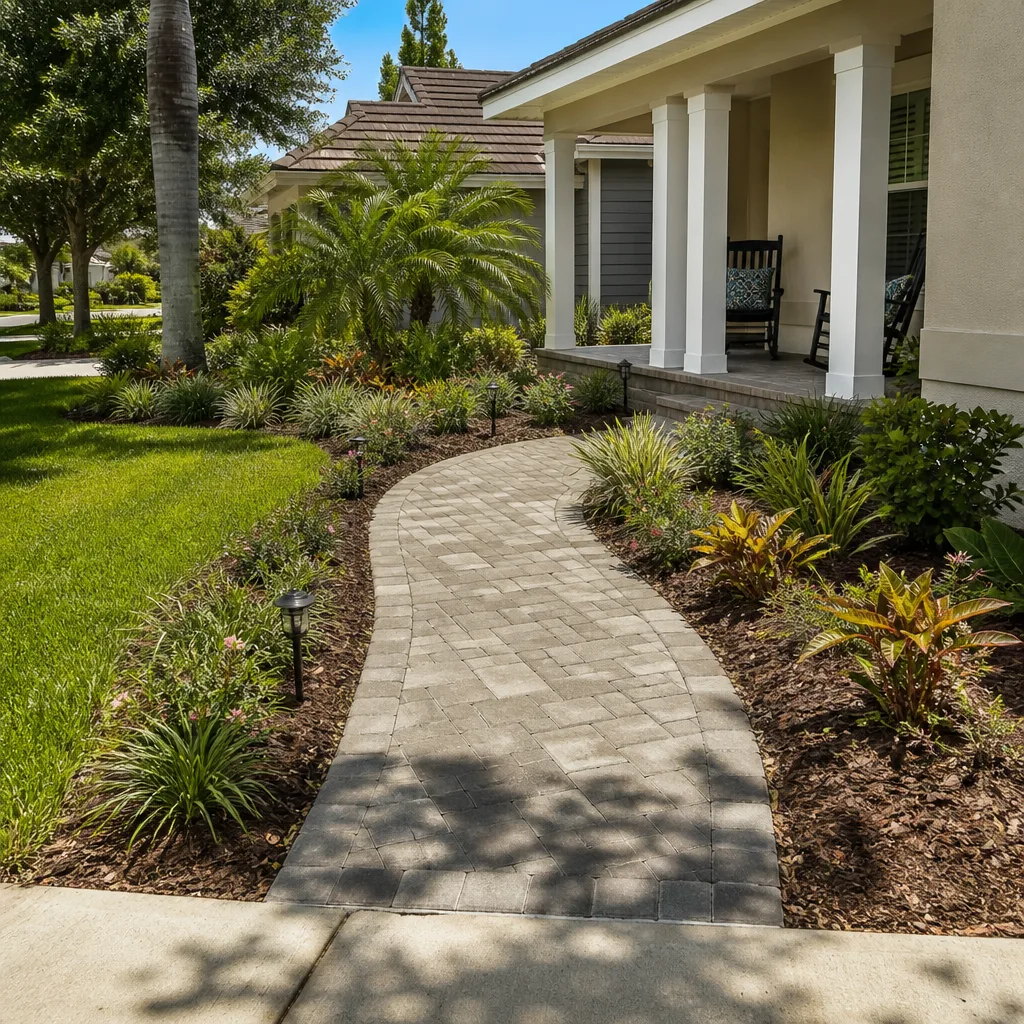
For bigger exterior projects that tie to the driveway – fences along the property line, a new walkway to the front door – the same material logic applies. Our Fence Installation in Buena Park page covers how exterior materials work together around the house.
Keeping Your Driveway Sound for the Long Haul
A well-installed Buena Park driveway doesn’t need much, but it does need the right small things. The most important one is drainage. Keep the gutter and any drains clear so water can get away from the pavers. Second is the joint sand. Weather and traffic work the sand out of the joints over time, and when the joints go, the interlock loosens. Re-sand the joints with the same stabilized material, usually every few years, and you keep the field tight.
Then there’s what falls on the surface. Oil and transmission fluid stain and weaken the joint sand, so wipe up drips fast rather than letting them soak. Weeds that push up between pavers are almost always a sign the joint material has eroded, not a sign the paver itself failed. Deal with the joint, and the weeds stop. Pressure washing is fine on concrete pavers with a modest setting; blasting the surface at high pressure will strip the joint sand faster than you’d think.
- Twice a year: clear gutters and drains so water moves away from the driveway
- Every few years: top up joint sand with a stabilized product
- As needed: spot-clean oil and fluid drips immediately
- Once a season: check the edge restraints and the sidewalk transition
If you keep a buffer of replacement pavers from the original install, a cracked brick in year eight is a ten-minute repair, not a delivery lead-time problem. The workmanship warranty on a properly built driveway covers defects, and regular maintenance is what keeps the driveway in that category. We’ve seen Buena Park driveways built on a proper base stay put for decades with nothing more than joint sand and a clear drain.
Common Mistakes to Avoid
- Accepting a 4-inch base on clay. This is the number one cause of Buena Park driveway failure within a few years. Ask for the base depth in writing and make sure it’s 8 inches or more with compaction in lifts.
- Buying pavers before checking the HOA palette. If your association has an approved color list and you install outside it, you may be paying to rip the driveway out. Read the HOA document first.
- Skipping the permit because “it’s just a driveway.” The permit and any right-of-way approvals are what keep the project legal and insurable. Unpermitted work can complicate resale.
- Choosing thin pavers rated for patios. A paver spec’d for foot traffic will fail under a truck. Confirm the paver model is rated for vehicular use.
- Comparing bids by the total number only. A lower total with no permit, shallow base, or thin pavers isn’t cheaper – it’s a different job. Line up scope, not just price.
- Ignoring where the water goes. A driveway that drains toward the garage will find the foundation eventually. A drainage plan in the bid tells you the installer thought about it.
- Not buying spare pavers. A discontinued paver in the right color and thickness is nearly impossible to match later. Keep a stash on a shelf.
See the difference
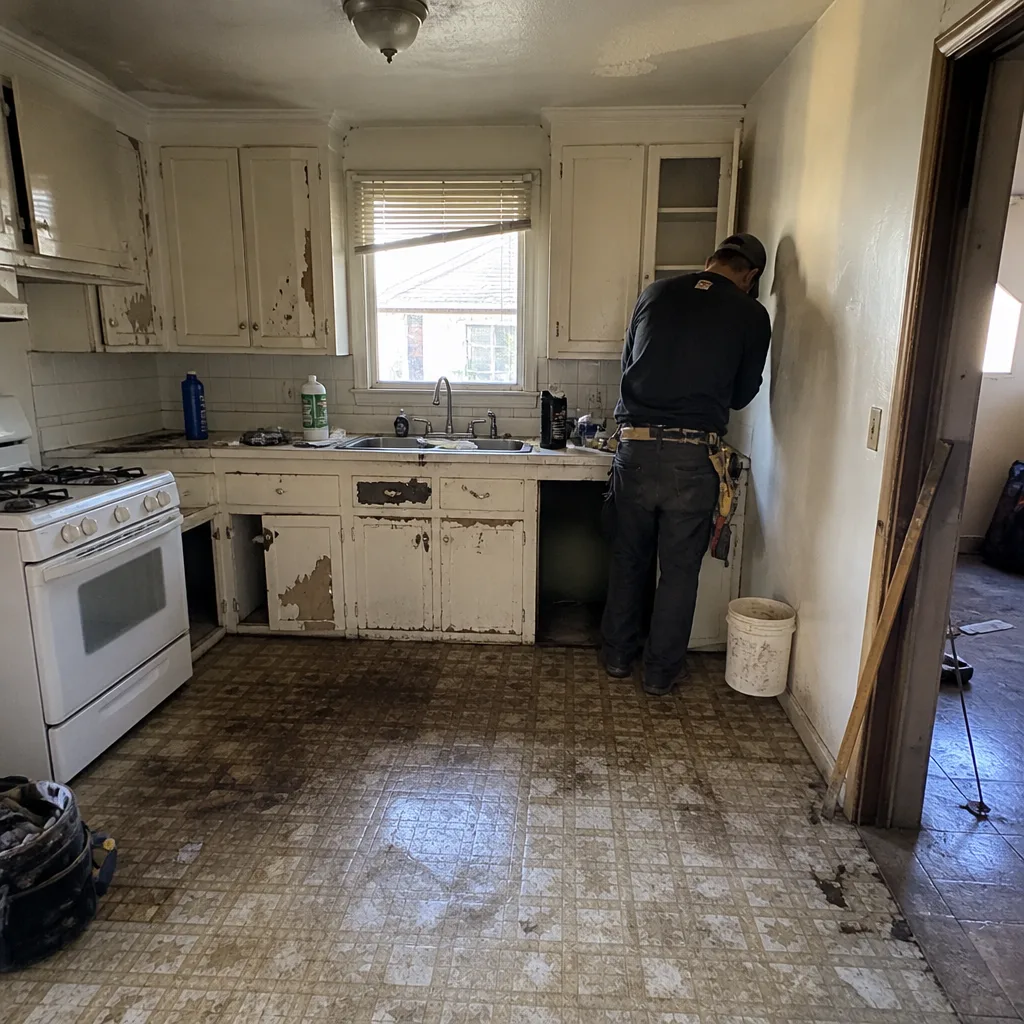 Before
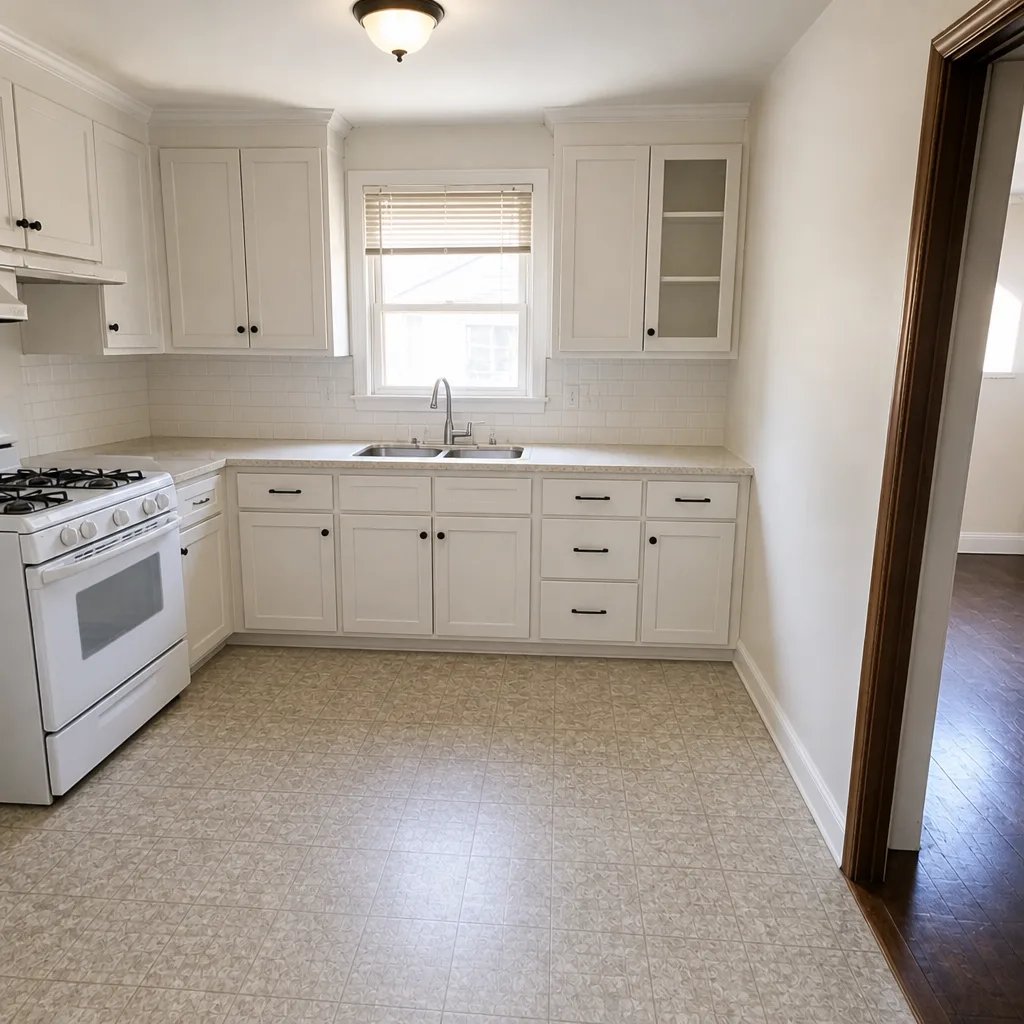 After
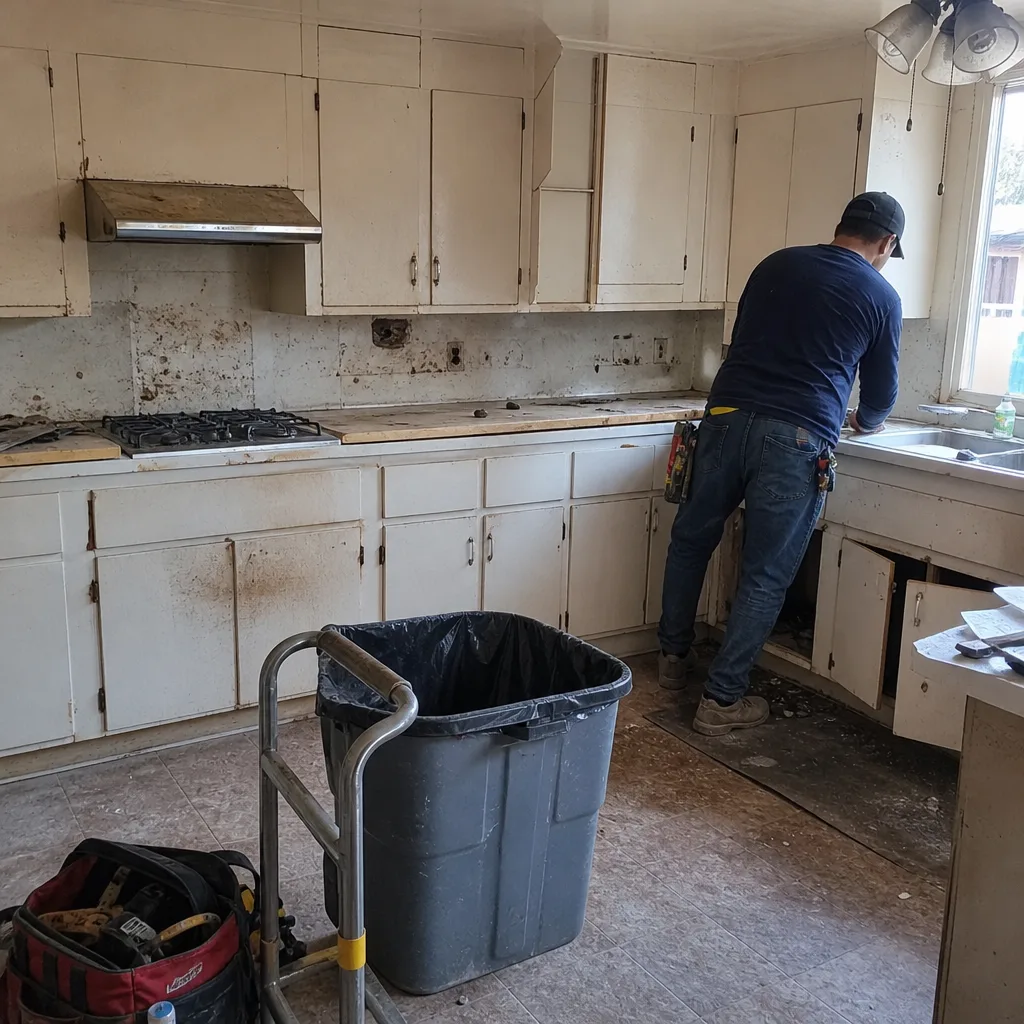 Before
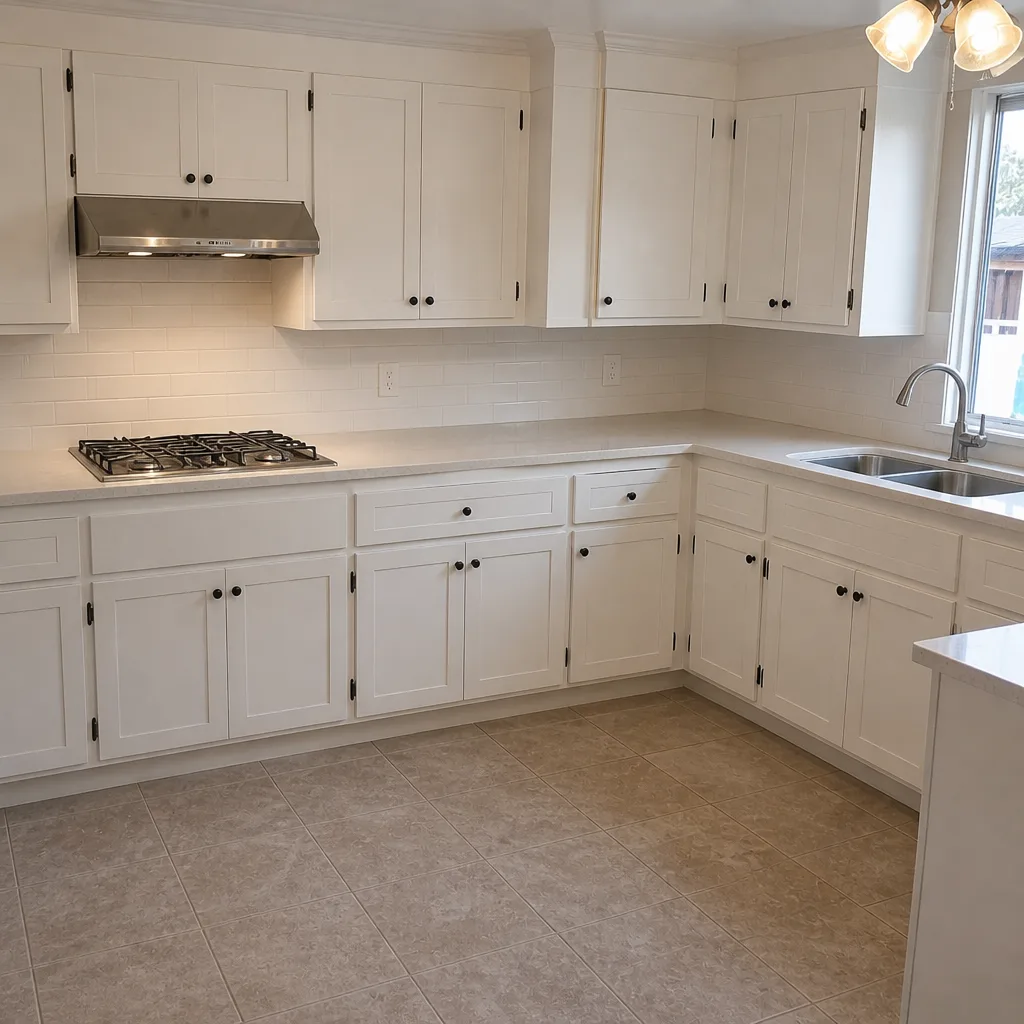 After
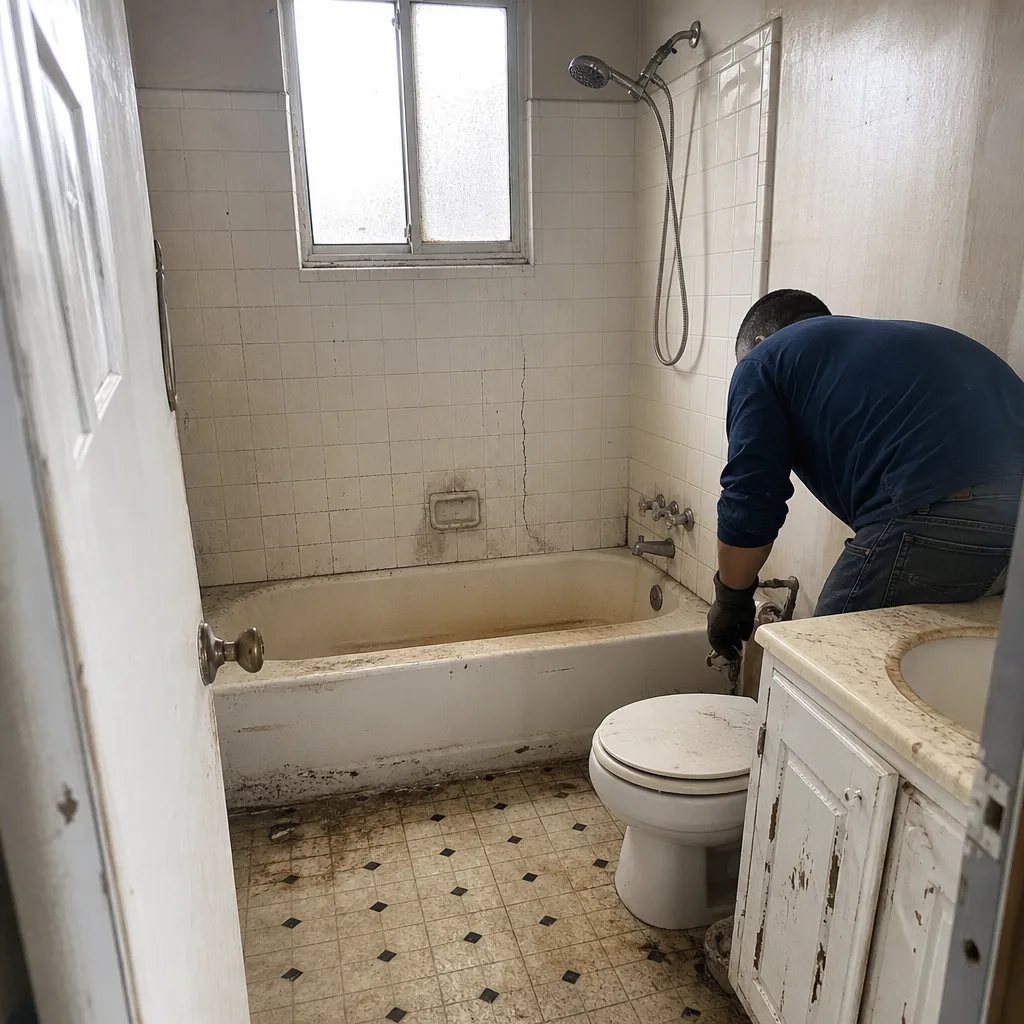 Before
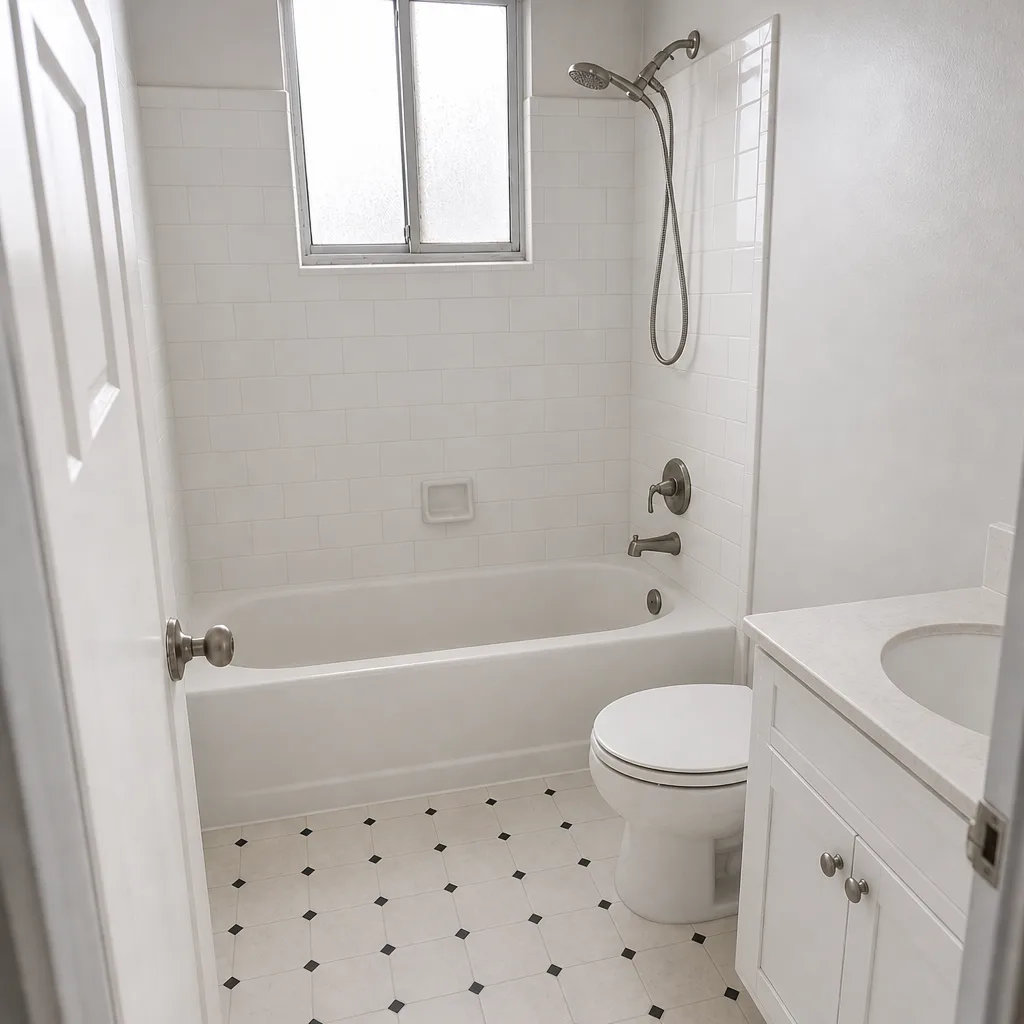 After
When to Call a Professional
Some driveway work is a DIY-friendly touch-up: re-sanding joints, clearing a drain, wiping up a stain. But anything involving the base, the pavers, or the structural edge is a call-a-pro job in Buena Park. Base failure that shows as sinking or heaving pavers gets worse every wet season. Loose edge restraints, wide or shifting joints, cracks that run across several pavers, and water pooling against the garage all point to a base or drainage problem that surface fixes won’t solve. If your driveway is new construction or being replaced, the permit and inspection side belongs with a licensed installer who pulls it as a matter of course. The local pro is licensed and insured as the state requires, and the work gets documented for both you and the city.
Groundwork Construction Co. of Buena Park offers free estimates in Buena Park – call (833) 522-5059. Our technicians have up to 12 years of experience with the soil and climate here, and every estimate comes with a written scope and a 730-Day Done Right Promise.
Frequently Asked Questions
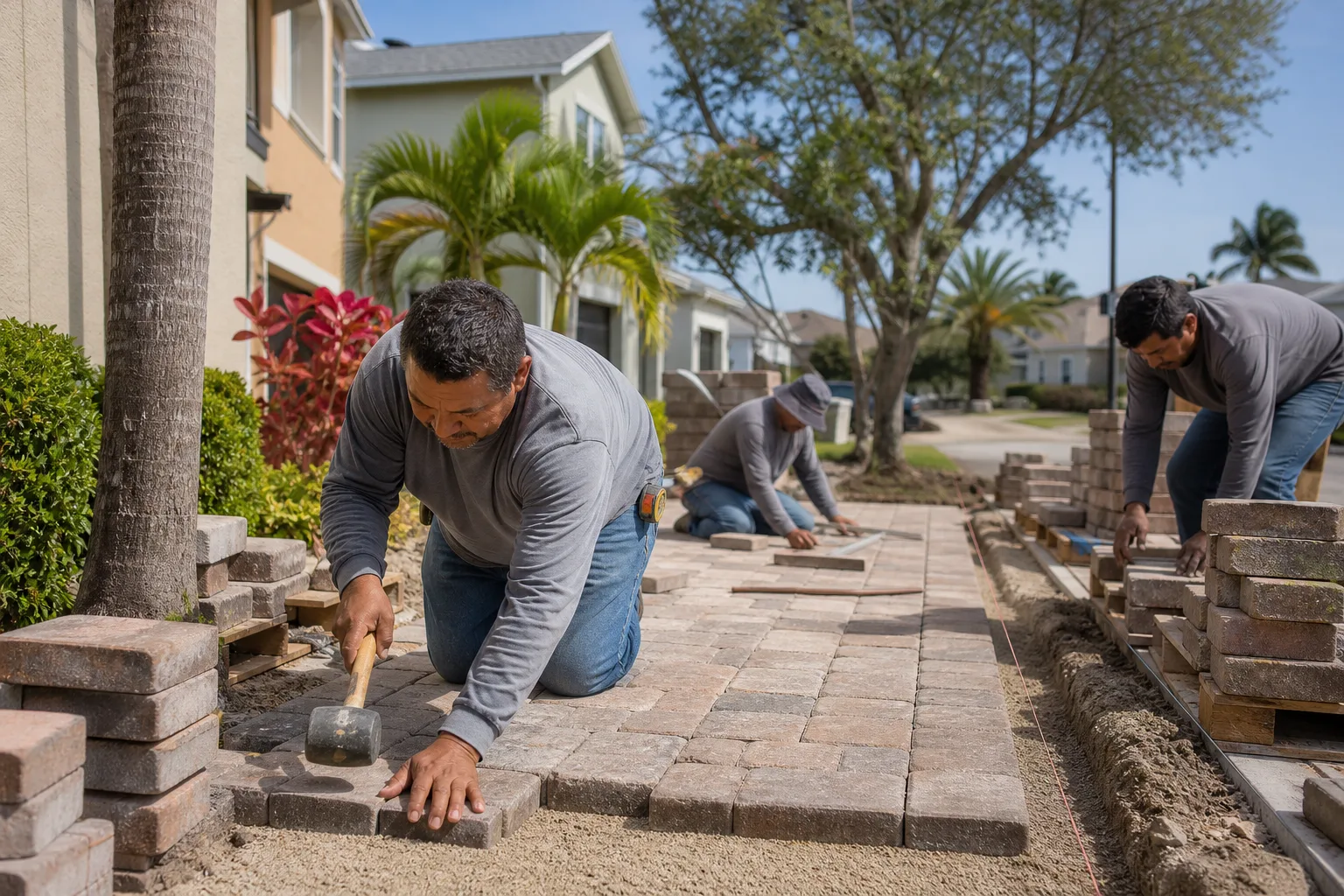
Paver driveways in Buena Park typically run about $12 to $24 per square foot installed, which puts a standard two-car driveway in the rough range of $6,000 to $18,000 depending on size, paver choice, base depth, and whether drainage or a curb cut is involved. The base accounts for a meaningful share of that cost because Buena Park clay needs a deeper, more carefully compacted foundation than the national standards call for. Call (833) 522-5059 for an exact quote – estimates are free.
Usually yes, and you should confirm before you buy pavers. Replacing or substantially modifying a driveway generally requires a permit from the City of Buena Park, and any work in the right-of-way near the street may need additional approval. If you live in an HOA community, the association’s approval is a separate step – check that too. Bring your parcel number and a rough drawing to the city counter to get a definitive answer for your property. Call us to review scope and permit needs before you commit.
Aim for pavers at least 2 3/8 to 2 3/4 inches thick for a residential driveway, and go to 2 3/4 inches or thicker if you regularly park a heavy truck, trailer, or RV. Thickness alone isn’t enough, though – the paver needs to sit on an 8 to 12 inch compacted base on Buena Park’s clay soil to perform. A thin paver over a weak base will fail whether or not it meets the thickness number. Call (833) 522-5059 for help matching paver and base specs to your driveway.
Most sinking and shifting in Buena Park traces back to a base that wasn’t built for expansive clay or a drainage problem that lets water sit under the pavers. When the clay beneath the base swells and shrinks through wet-dry cycles, a shallow or poorly compacted base moves with it, and the pavers above tilt and spread. Fixing it means addressing the base and the drainage, not just setting the pavers back down. Call us for an assessment if you’re seeing movement.
Possibly, depending on your project and local stormwater rules, which is why you check with the city before buying. Orange County has tightened stormwater ordinances over the years, and some scopes trigger infiltration or drainage requirements. The only way to know for certain is to ask the City of Buena Park Building & Planning counter about your specific parcel and project. Call (833) 522-5059 and we’ll walk through it with you.
It shouldn’t – and with a written, itemized scope, it won’t for reasons of discovery mid-job. The most common causes of surprise pricing on a paver driveway are permit requirements discovered late, unexpected base replacement, and HOA rework after the fact. Getting the permit and HOA approvals first, and pricing the base correctly up front, eliminates those. Our estimates are fixed and itemized, and our 730-Day Done Right Promise stands behind the work. Call (833) 522-5059 to schedule your free estimate.
The Bottom Line
The paver itself is rarely why a Buena Park driveway fails. The base is. Clay soil that swells every wet season and shrinks every dry one will move a shallow, undercompacted base out from under the nicest paver on the market. So the order of operations here is: get the base depth right for this soil, choose pavers thick enough for the loads your driveway will actually carry, sort the permits and HOA approvals before demolition, and compare every bid on scope rather than total. Do those four things and you’ll have a driveway that holds through many wet winters and dry summers. Skip them and no paver, at any price, saves you. For a full-scope look at how the driveway fits into the rest of your property, start from the Groundwork Construction Co. of Buena Park home page, and when you’re ready to talk numbers, our team is here to help.
We answer the phone with a live person, 24 hours a day, seven days a week. No voicemail, no waiting until Monday. Our technicians are background-checked and arrive in uniform, and every project carries our 730-Day Done Right Promise. Call (833) 522-5059 to schedule your free estimate and get an upfront, itemized price with no surprises. If your project qualifies, we also offer $1,000 off projects over $10,000 and 0% financing for 18 months, so a full driveway replacement doesn’t have to sit on your budget wishlist for years.
Written by the team at Groundwork Construction Co. of Buena Park.