





Free written scope consultation - allowances, timeline, and change-order rules on paper before a single trade is scheduled
Styles & brands we work with
- Kitchen remodeling
- Bathroom remodeling
- Home additions & ADU
- Roofing
- Windows & doors
- Driveway & pavers
- Fence
See the difference
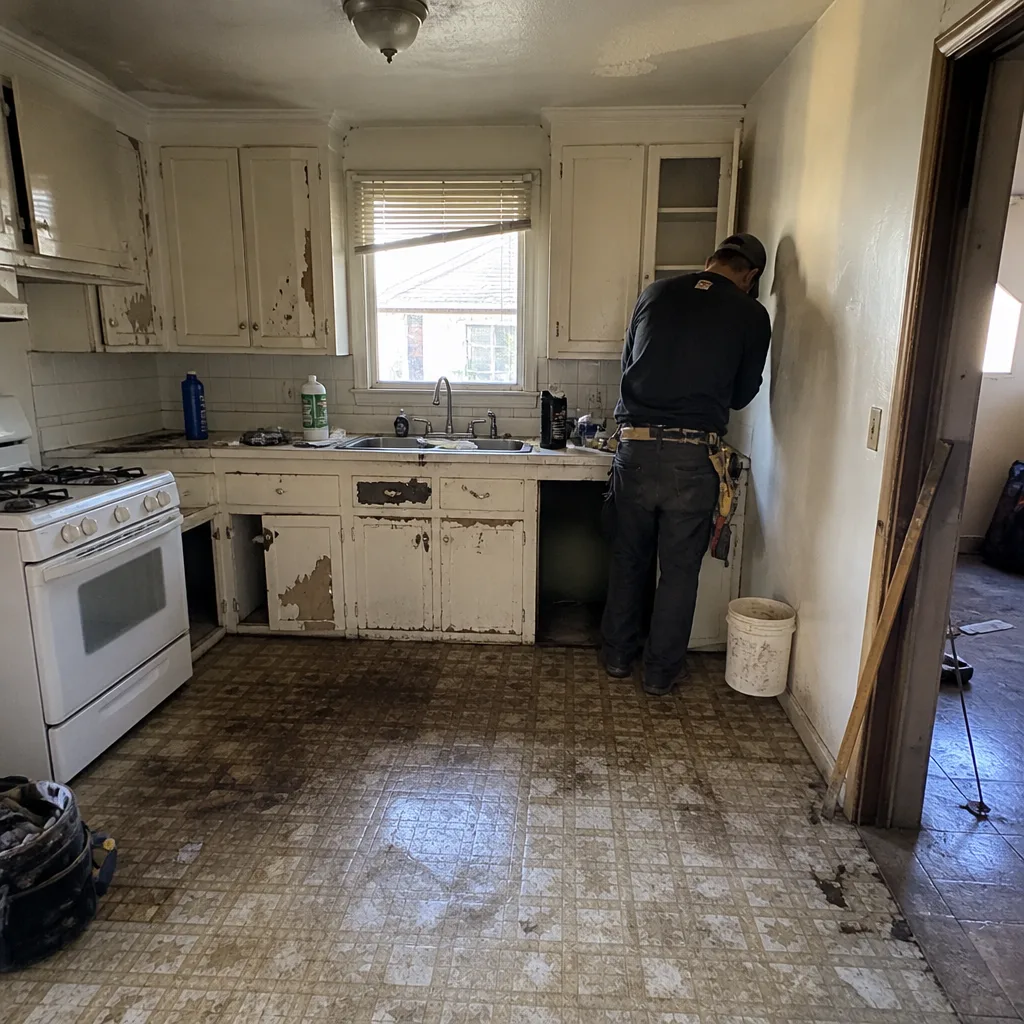 Before
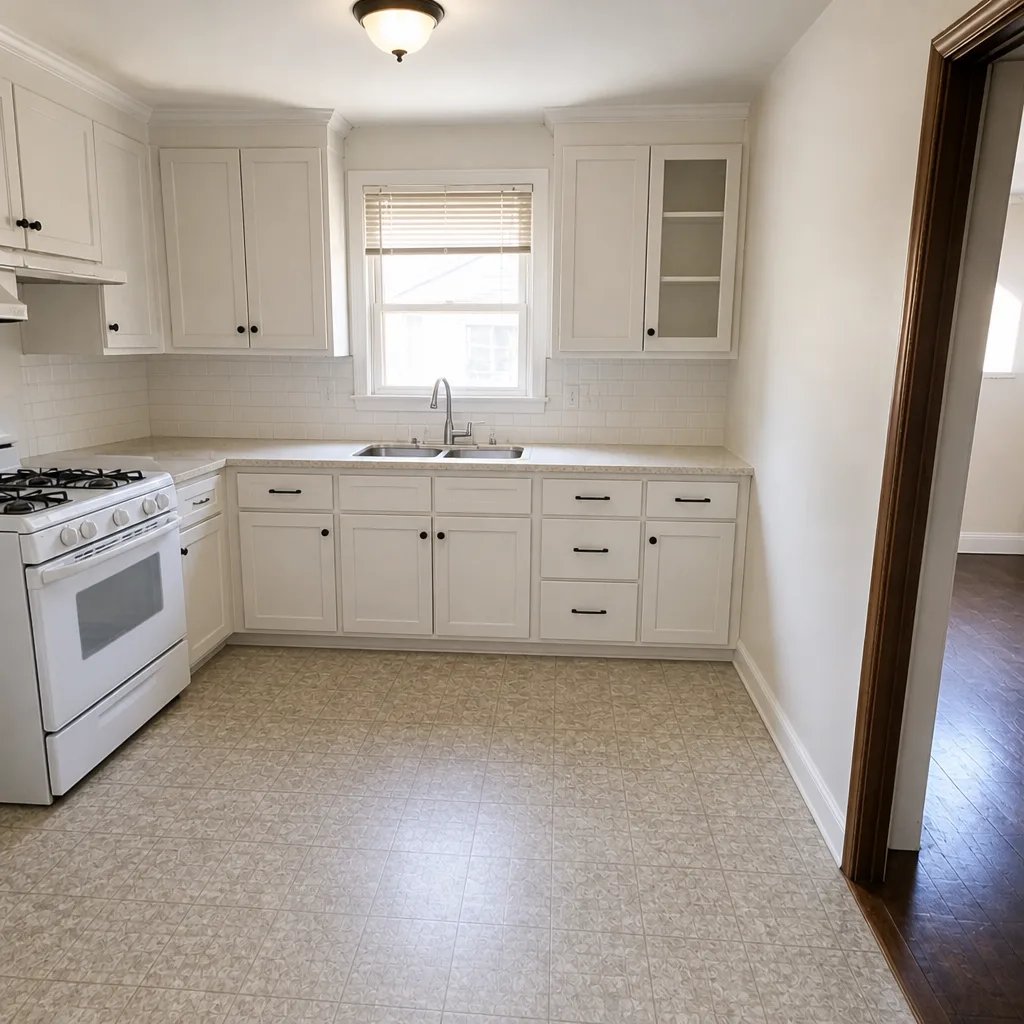 After
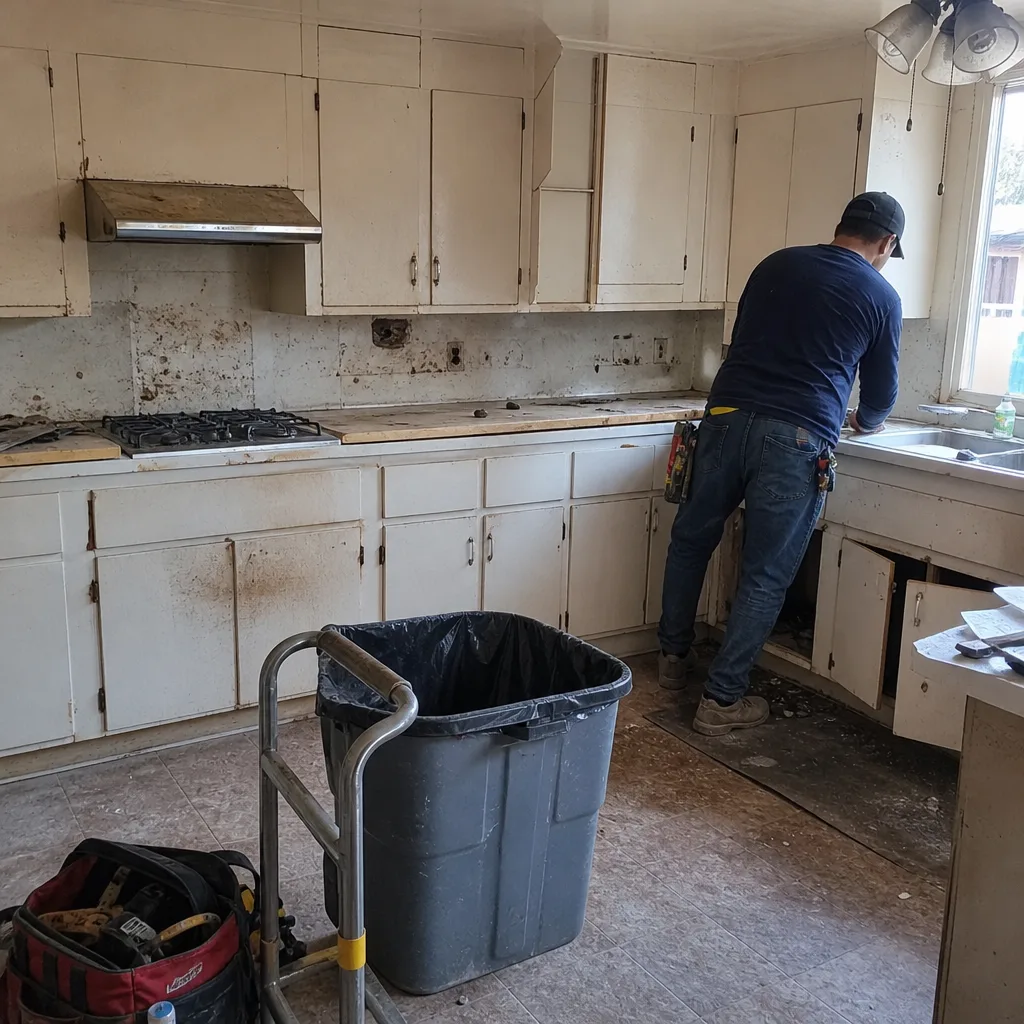 Before
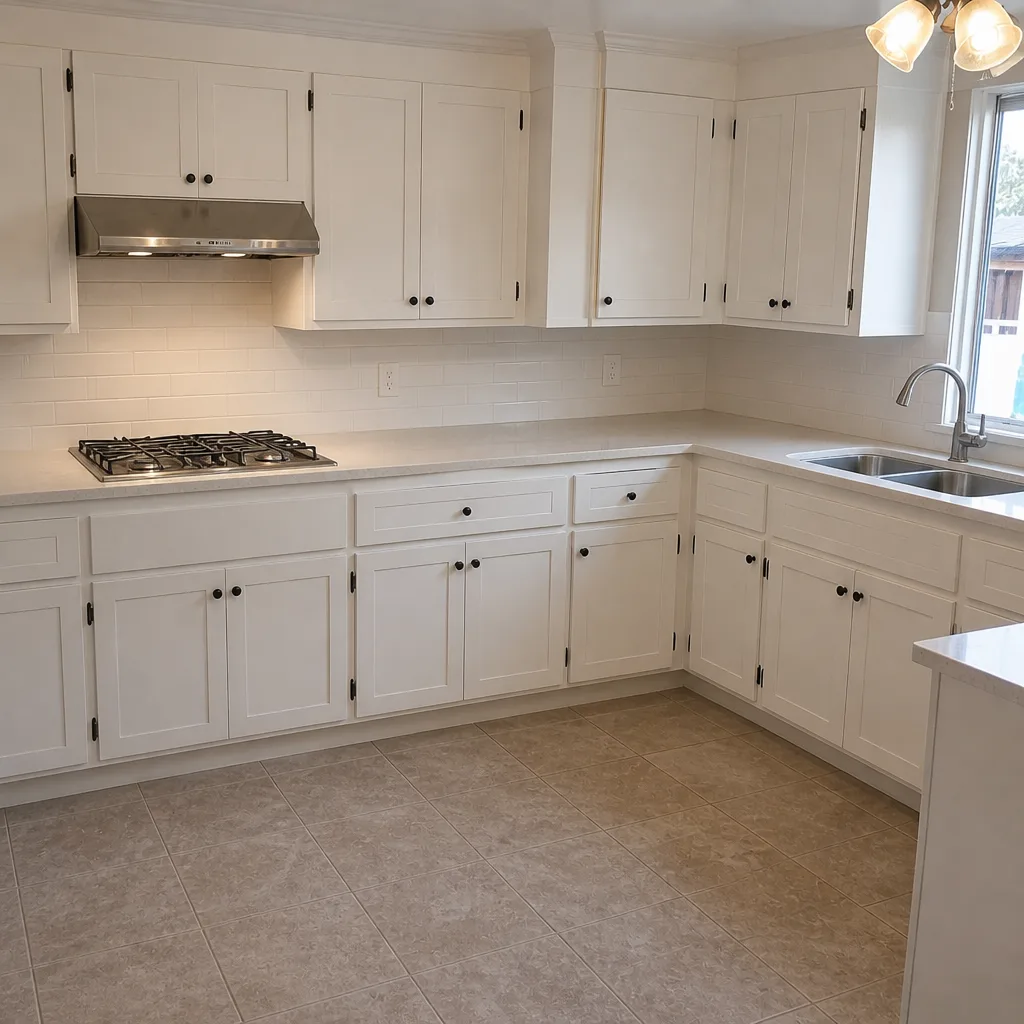 After
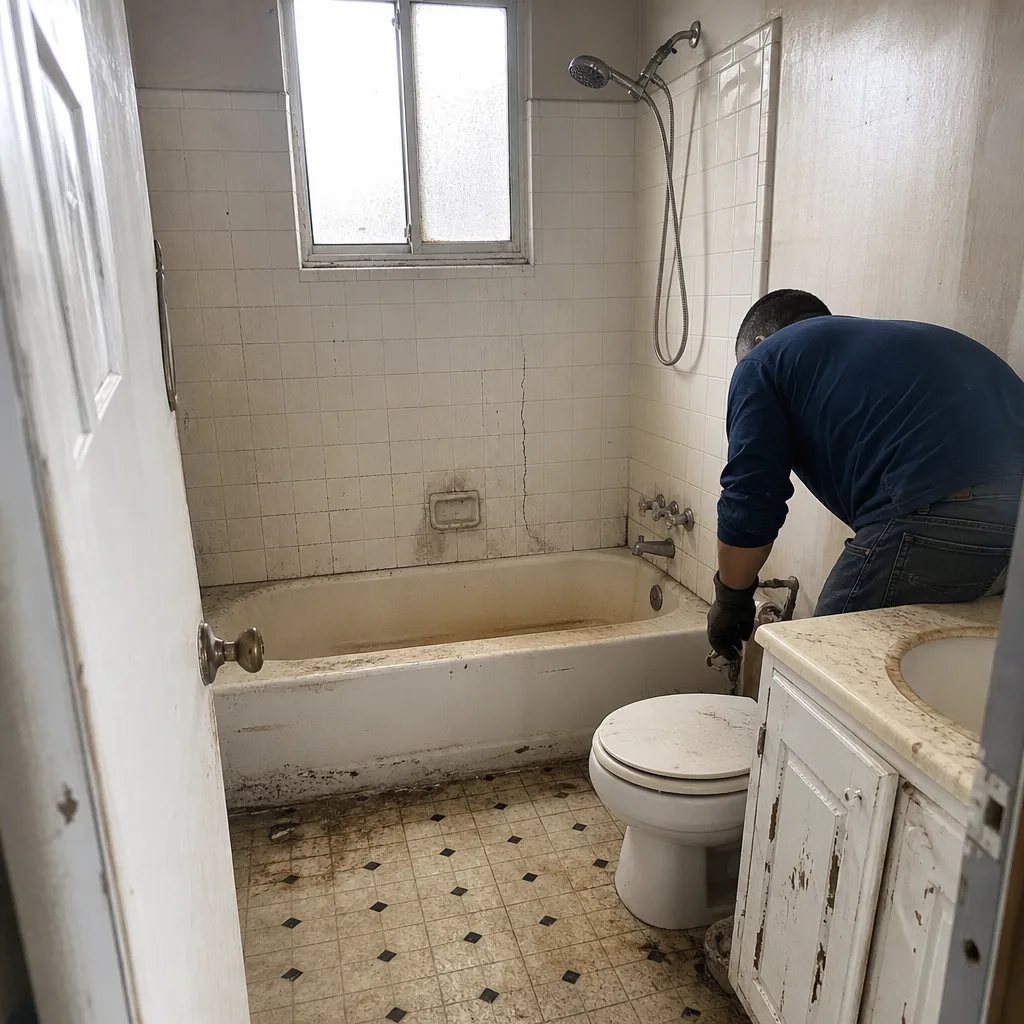 Before
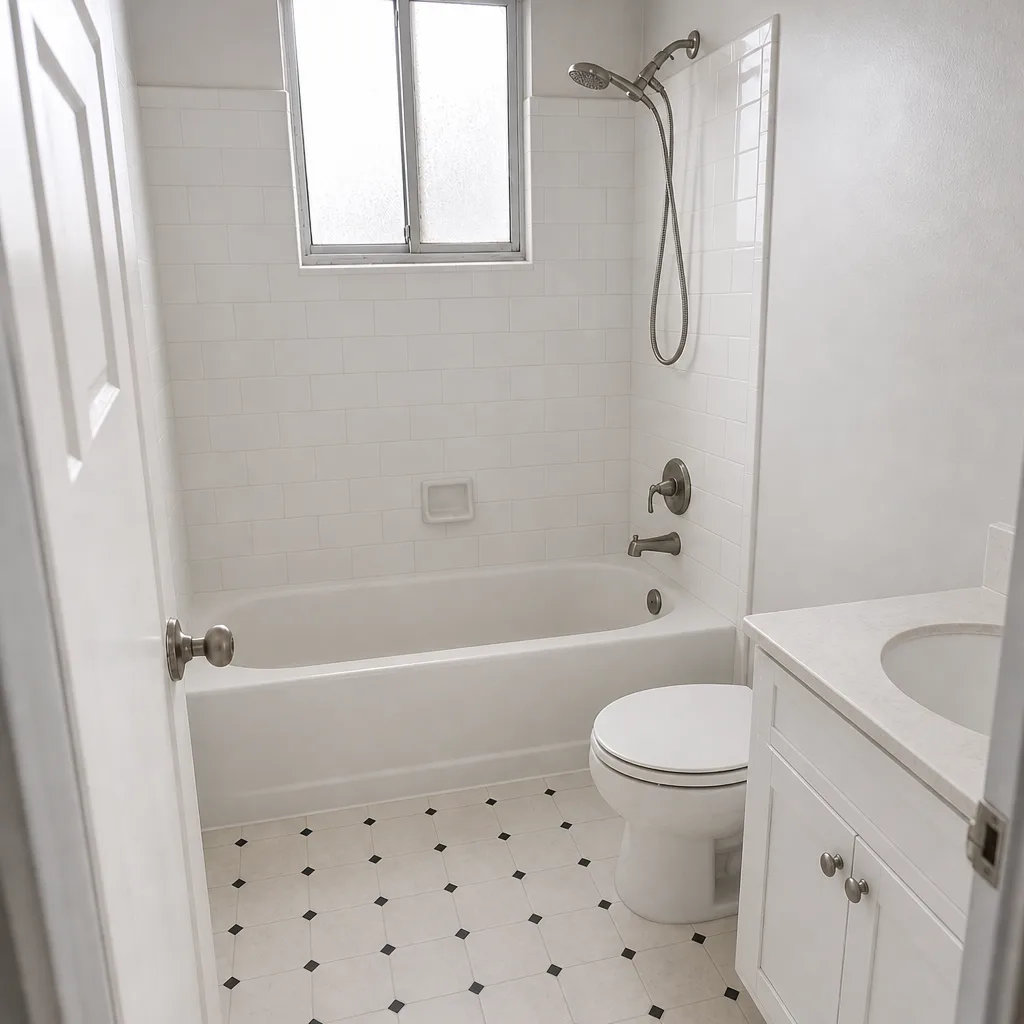 After
How to Find a Roof Leak in Buena Park, CA: Follow the Water, Not the Stain
The short answer: you find a roof leak by testing the roof in sections from the eave upward while someone watches the attic for the first sign of water, then tracing that water back to the actual entry point rather than trusting the ceiling stain. On Buena Park’s 1950s and 1960s single-story ranch homes, the fast version of that answer matters, because with a slab floor and an attic that can be as tight as 18 to 30 inches of clearance, water doesn’t fall straight down. It runs sideways along the ceiling joists and drips out somewhere that has nothing to do with the roof surface above it. If you’re already watching a bucket fill, call (833) 522-5059 and we’ll triage it.
Key takeaways
- The wet spot on your ceiling is usually not the leak point on a Buena Park ranch home. Expect them to sit up to three feet apart, horizontally.
- A garden-hose test in three-foot sections, worked from the eave up, is the reliable method. It needs two people: one on the roof, one in the attic with a flashlight.
- The three most common culprits on this housing stock are failed valley flashing at rear addition transitions, cracked mortar on hip-and-ridge caps, and dried-out plumbing vent boots.
- Santa Ana wind events create a different failure mode that only shows up during the wind and vanishes afterward.
Why Your Ceiling Stain Sits Three Feet From the Leak
Buena Park is a fully built-out Orange County suburb. Almost nothing here is new subdivision development; the work is remodel, addition, and tear-down or rebuild on a mature tract fabric. That means most of the roofs we look at sit over 1950s and 1960s stucco-on-wood-frame ranch plans with slab foundations. No basement. No framed second story to give water a vertical path.
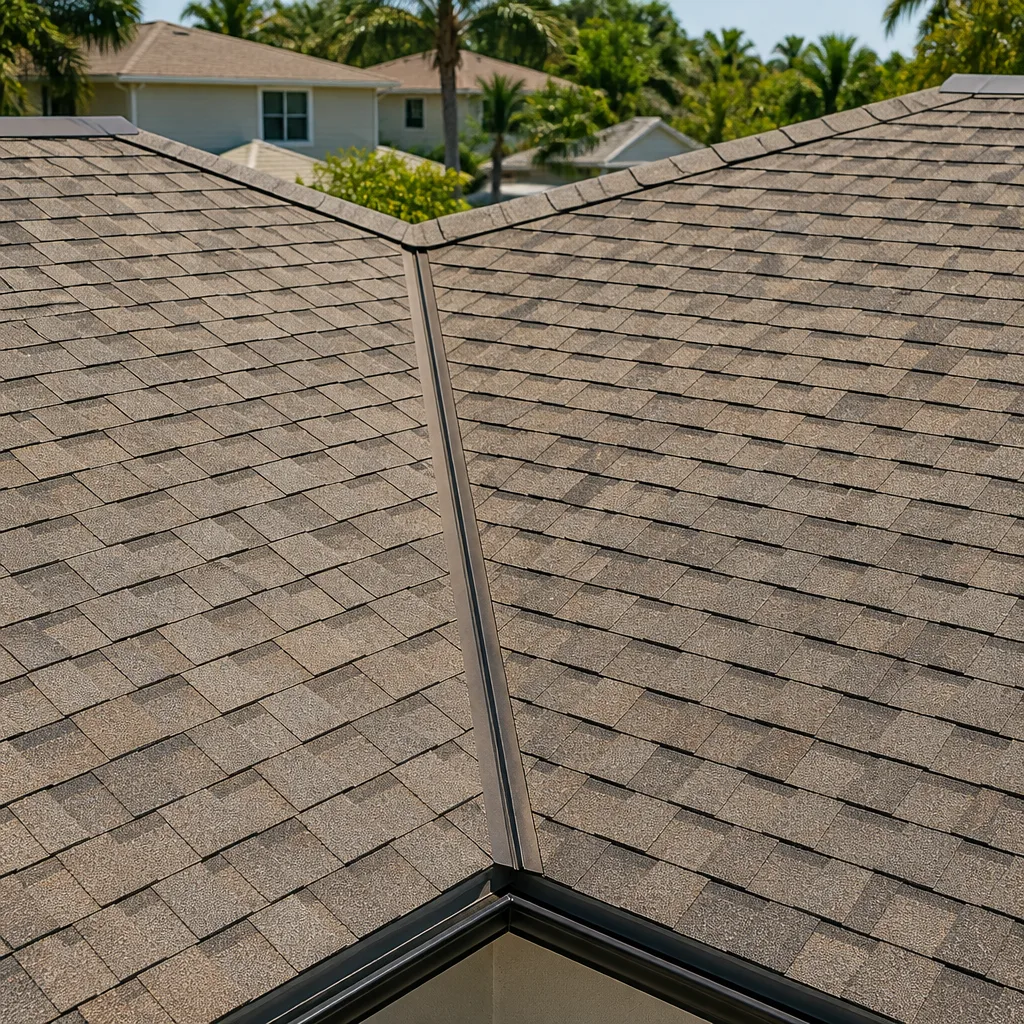
So when a shingle or a flashing detail fails, water hits the roof deck, slips under the underlayment, and then follows the path of least resistance: the top edge of a ceiling joist. It travels along that lumber, sometimes for several feet, until it finds a seam, a penetration, or a low spot in the drywall and drops through. That’s why the stain lands over a hallway when the actual entry point is above the back bedroom. Reading the stain as a map is the single most common mistake homeowners make, and it’s the reason a leak that looks “fixed” keeps coming back.
On homes where a rear addition was tied into the original roof, the geometry gets worse. The transition between the two roof planes is where water gets its cleanest sideways runway.
How Do You Run a Garden-Hose Test on a Single-Story Ranch Roof?
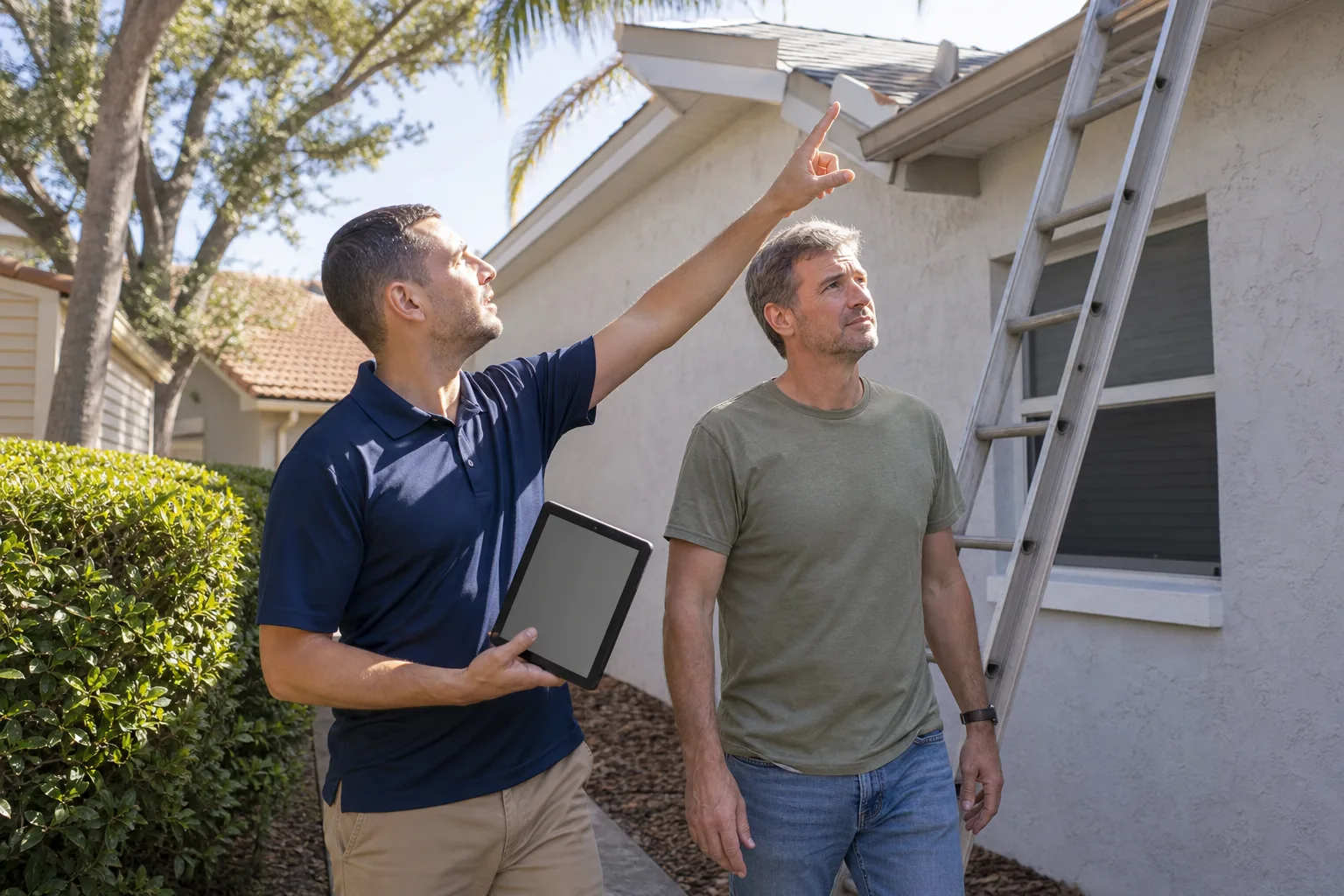
You run it in sections, from the bottom up, and you stop the moment water shows up inside. Work with a second person who stays in the attic with a flashlight; on a low-clearance Buena Park attic they’ll be crawling or using a phone camera on a stick, and they need to watch the underside of the deck and the tops of the joists, not the insulation. Here’s the sequence that works:
- Start at the eave with a hose on low flow, no nozzle spray. Water under pressure climbs and gives you false readings.
- Soak a three-foot-wide vertical section for a full five to ten minutes. Long enough for water to travel the lateral distance it will travel.
- Have your spotter call out the first moisture they see. Note where the hose is. That’s your candidate zone.
- Move up three feet and repeat. If you get water inside at section two but not section one, the entry point is between them.
- Never test upward from the ridge down. You’ll saturate the whole assembly and lose the ability to isolate anything.
What your spotter is looking for in a tight attic is specific: darkening on the wood, a drip line running along a joist edge, water beading on a nail point, or stained insulation batting. Because the clearance can be under two feet, a flashlight beam held at a low angle across the wood shows moisture far better than pointing it straight up. Expect this to take a couple of hours on a single-story ranch. It’s tedious work, and it’s the reason most people eventually hand it off. When the leak needs real repair rather than diagnosis, our Roofing team picks up where the garden hose leaves off.
The Three Leak Sources We Find Most on Buena Park Roofs
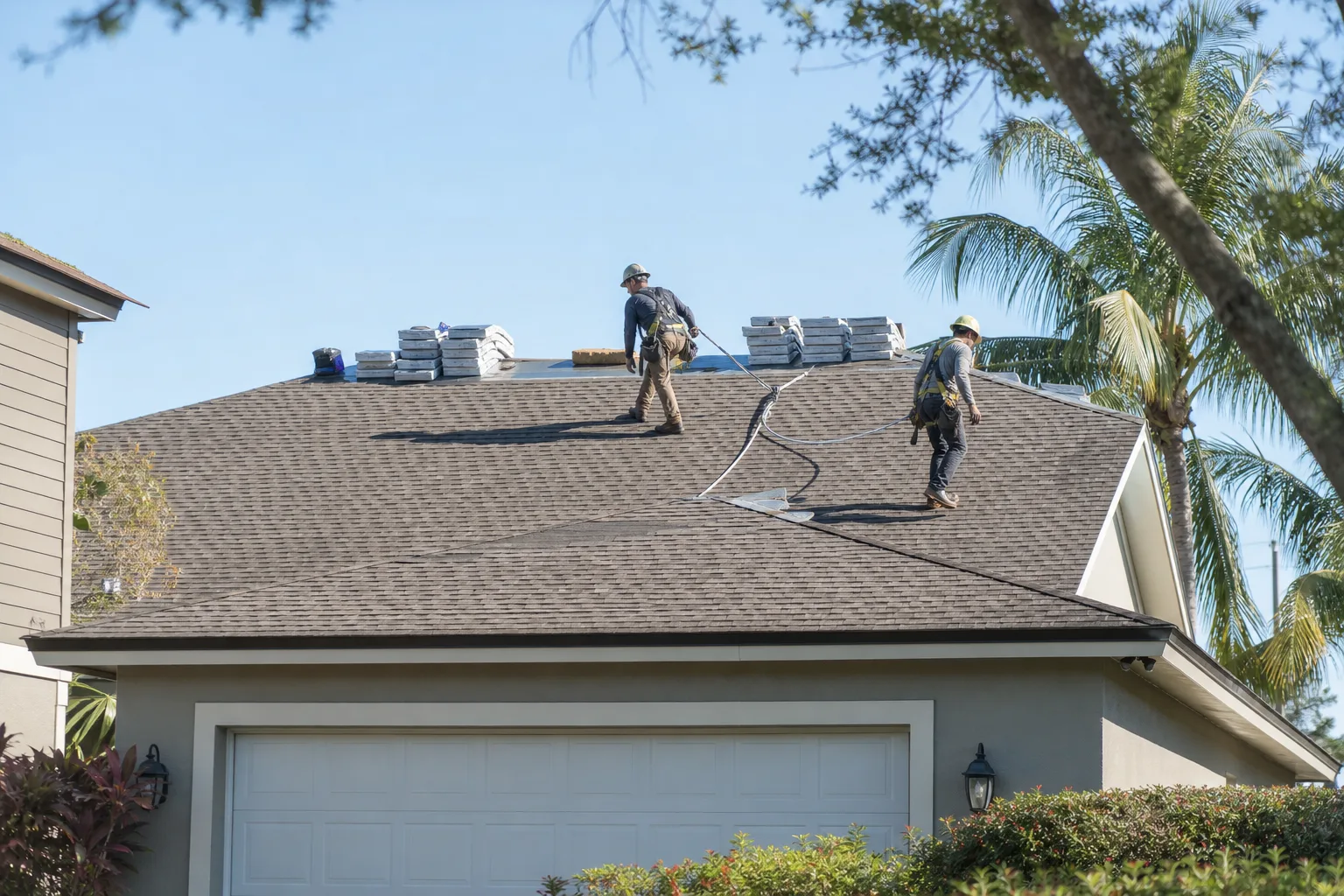
Every neighborhood has its own failure pattern, and ours is shaped by mild wet winters followed by long dry stretches. Here’s what the housing stock here tends to produce:
- Failed valley flashing at rear addition transitions. When a 1950s ranch got a family room added in the 70s or 80s, the new roof plane met the old one in a valley. Those original flashing details weren’t built for the thermal cycling we get, and the sealant at the valley edge is often decades past its service life.
- Cracked mortar on hip-and-ridge caps. Original concrete caps on these hip roofs crack as the wood frame moves with the seasons. It’s a narrow entry point, but wind-driven rain finds it, and the water lands on the deck right below the ridge line.
- Plumbing vent pipe boots that have dried out. The rubber collar around a vent pipe bakes in our dry-season sun and cracks before the shingles around it show any wear. On a Buena Park roof, a failed boot is often the first leak on a roof that’s otherwise holding up fine.
The climate also drives the schedule. Roofing and stucco work here gets done in the dry summer and fall window, and the detailing has to account for wind and ember exposure. When we replace or repair on these homes, we use systems like GAF and CertainTeed that carry the wind ratings to match, and the work is covered by our 730-Day Done Right Promise. Built to last, backed in writing.
Wind-driven rain: the leak that only shows up during a Santa Ana
Most Buena Park homeowners don’t connect wind with leaks, because it’s dry here and rain is a winter event. But when a Santa Ana pushes hard across an exposed ridge or a corner at the eave, it can force water backward and upward under a shingle course that’s lifted slightly. The failure appears during the event and is gone by the next dry day, so a garden-hose test run in July will find nothing. If your leak only shows up in wind, tell the person who inspects it. That detail changes where we look, and it saves you a repeat visit.
Diagnosis or Repair: What Does It Cost in Buena Park?
Prices here track the local market, and we quote upfront with no surprises: the number you see is the number you pay. Typical ranges for this work:
| Scope | Typical Buena Park range |
|---|---|
| Roof repair (isolated leak, flashing, boot) | $400 – $1,800 |
| Tile roof repair | $600 – $2,500 |
| Full roof replacement (asphalt, ranch profile) | $8,000 – $20,000 |
| Metal roof installation | $15,000 – $40,000 |
An honest diagnosis comes first. A $400 boot replacement doesn’t need a $20,000 roof, and we’ll tell you which one you have. On larger projects, 0% financing for 18 months and $1,000 off projects over $10,000 keep a full replacement within reach without stretching the budget.
The 11pm leak call and why a live person matters
Water found at 11pm during a January rain event is a different problem from water found on a Saturday afternoon. Ceiling drywall sags fast once it’s saturated, insulation gets soaked, and water starts finding light fixtures and wall cavities. Reaching a live person who can triage the situation, tell you whether to move furniture and cut power to a wet circuit, and dispatch if it’s warranted has a real dollar value compared to leaving a voicemail and waiting until morning. Our calls are answered by a live person 24/7, and the technicians who arrive are background-checked and in uniform.
When Should You Stop Hunting and Call a Pro?
Stop the search when you’ve run the hose test through every section and found nothing, when the leak only appears under wind, when water is anywhere near electrical fixtures, or when the ceiling is bulging. Those are the cases where a trained eye with moisture readings and a look at the roof profile will save you more than the inspection costs. Our technicians have up to 12 years of experience, and they know this housing stock because they work on it, from the tight side-yard setbacks on these post-war lots to the slab-on-grade conditions underneath. If you want a sense of the area we cover, see our Buena Park service area page or start at our home page.
FAQs
You test the roof in three-foot sections from the eave upward with a garden hose while a second person watches the underside of the deck and the ceiling joists in the attic. On a Buena Park ranch with tight attic clearance, the water runs laterally along the joists, so you’re looking for the first sign of moisture inside rather than judging by the ceiling stain. Call (833) 522-5059 if the test turns up nothing and the stain keeps growing.
Yes, and on a single-story slab-on-grade home that’s typical rather than unusual. Water enters at the deck, travels the top of the ceiling joists, and drips out at a low point that can sit up to three feet or more from the entry point. That’s why we start every diagnosis at the entry point on the roof and work backward, never from the stain. Call (833) 522-5059 to have us trace it for you.
Most isolated leak repairs in Buena Park run $400 to $1,800, and tile roof repair falls in the $600 to $2,500 range. A full replacement, if the roof has passed its service life, runs $8,000 to $20,000. We quote upfront so the number you see is the number you pay. Call (833) 522-5059 for an exact quote, free.
A wind-only leak usually means water is being forced backward under a lifted shingle or flashing at the eave, and it won’t show up during a calm-day garden-hose test. Santa Ana wind events push hard enough to reverse the normal drainage path on an exposed roof section. Tell your inspector it’s wind-driven and they’ll check the eave and ridge details specifically. Call (833) 522-5059 to get it looked at before the next wind event.
If you’d rather have it looked at than crawl through a two-foot attic with a flashlight, Groundwork Construction Co. of Buena Park offers a no-pressure assessment in Buena Park. We’ll trace the leak, show you what we find, and quote it upfront. Call (833) 522-5059 – estimates are free, and a live person answers around the clock.
Written by the team at Groundwork Construction Co. of Buena Park, serving Buena Park, CA.