






Free written scope consultation - allowances, timeline, and change-order rules on paper before a single trade is scheduled
Styles & brands we work with
- Kitchen remodeling
- Bathroom remodeling
- Home additions & ADU
- Roofing
- Windows & doors
- Driveway & pavers
- Fence
See the difference
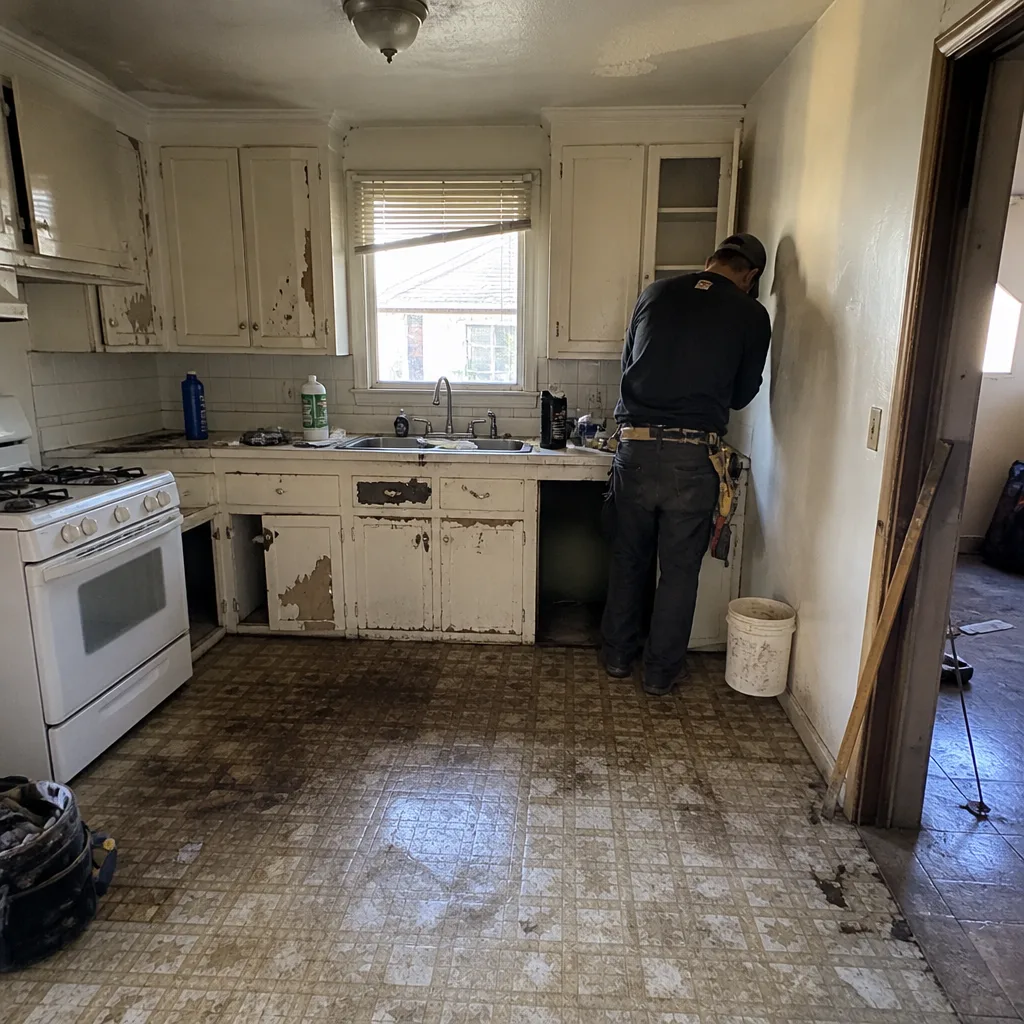 Before
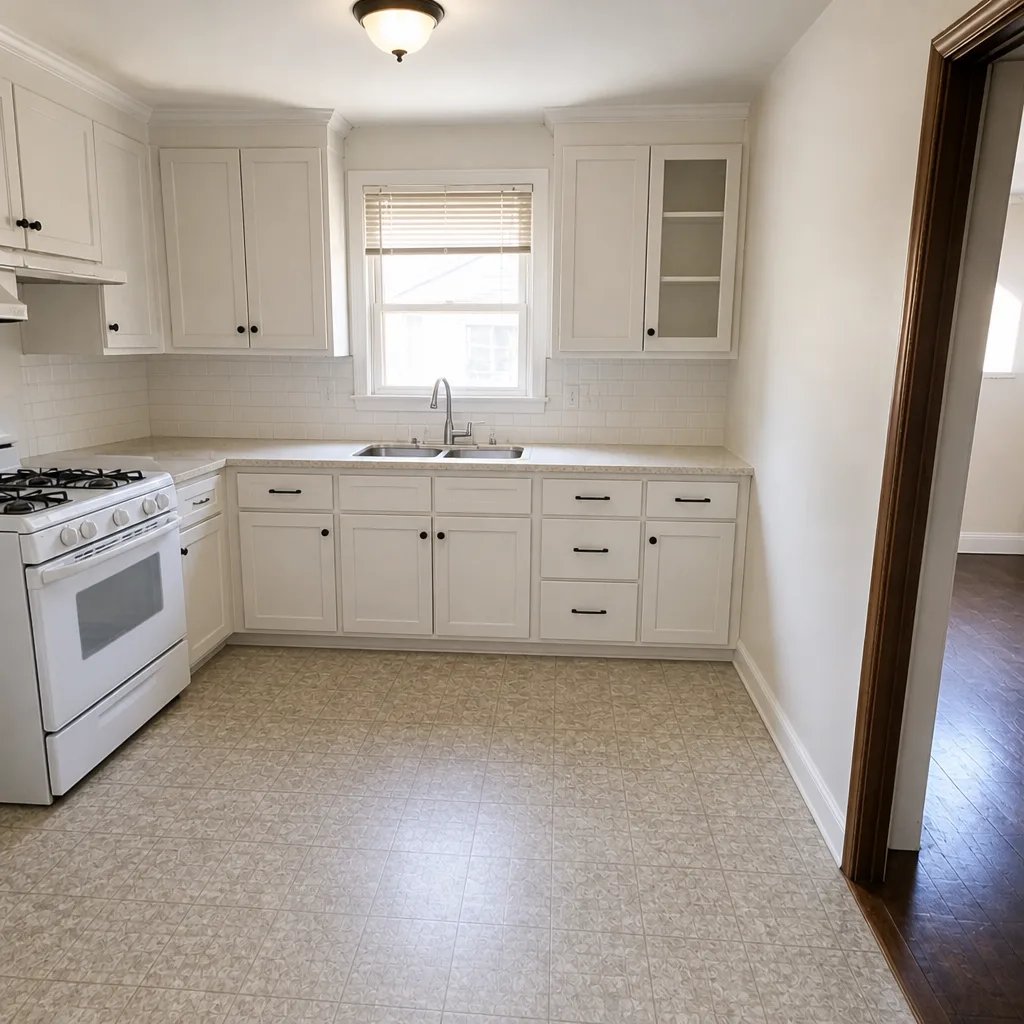 After
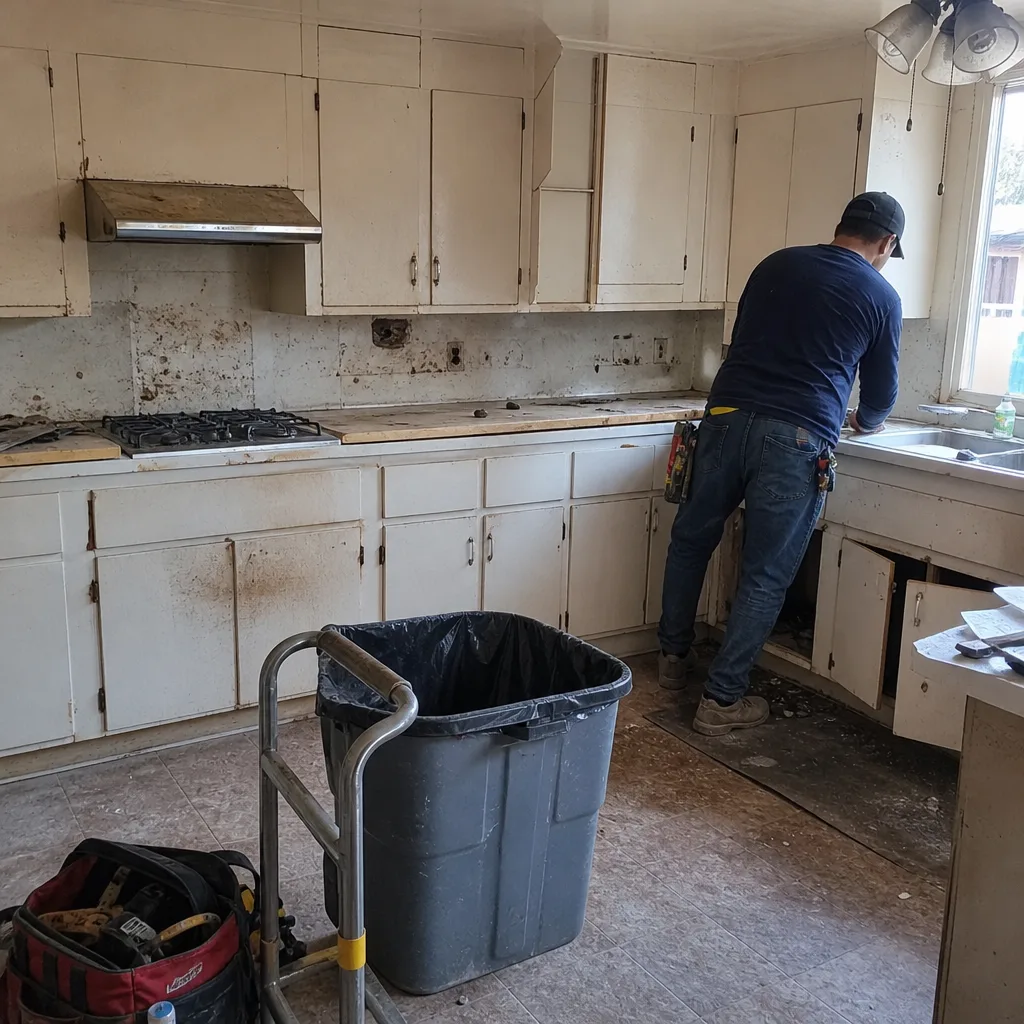 Before
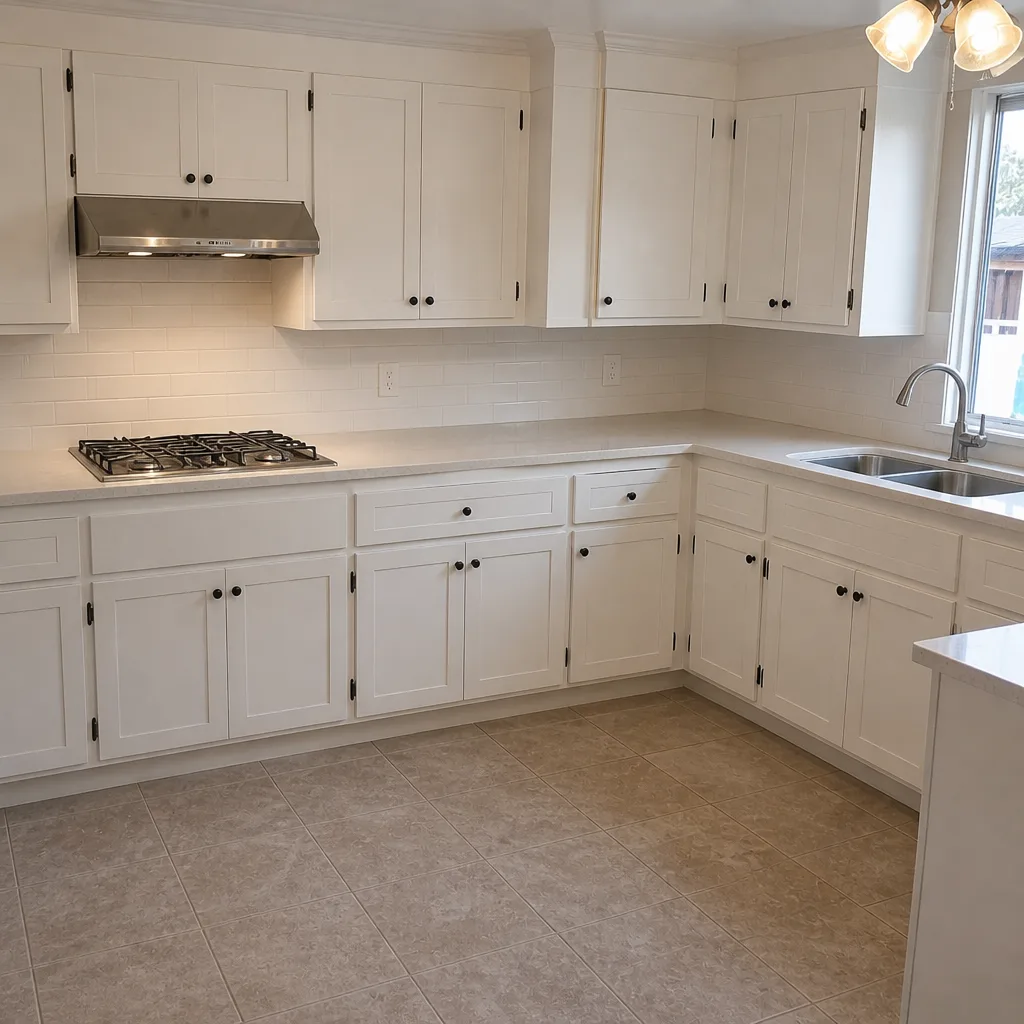 After
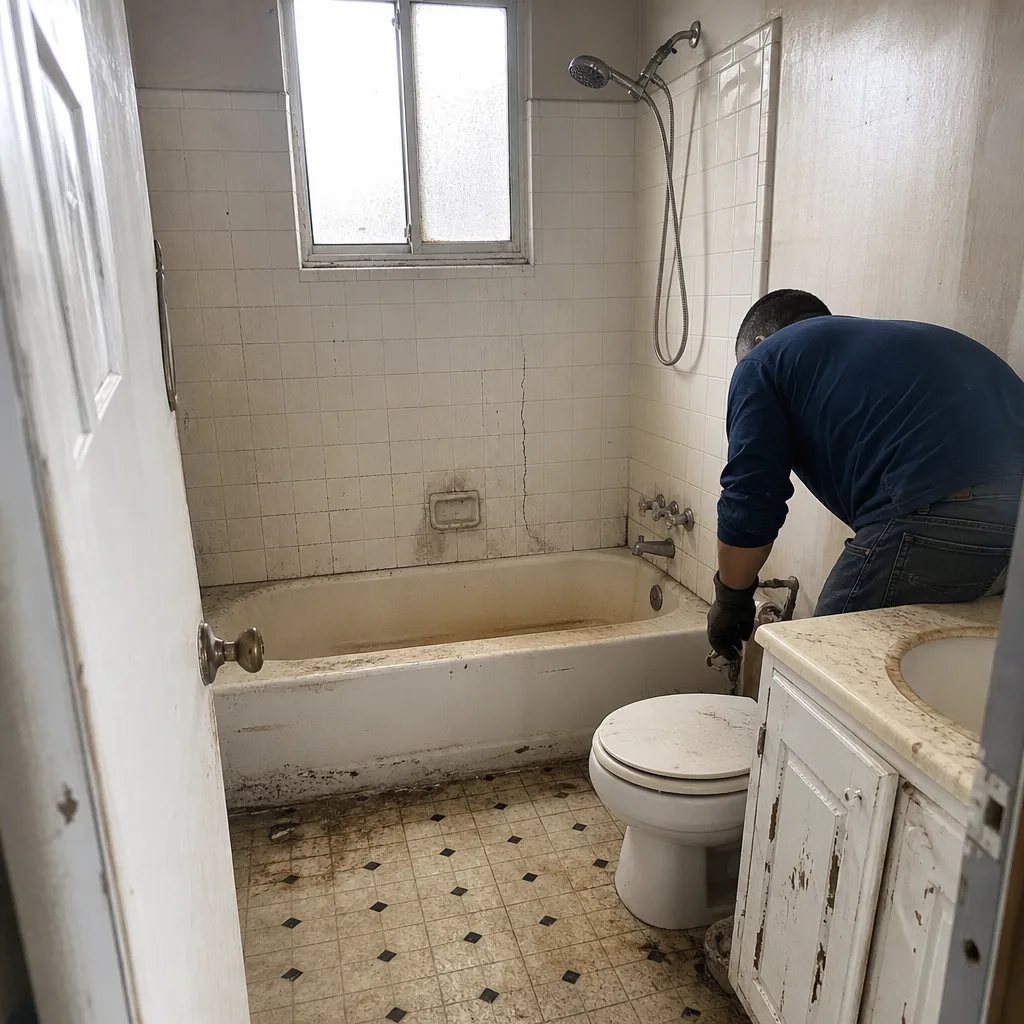 Before
 After
What Causes Roof Leaks in Buena Park, CA? The Short Answer Is Heat, Not Rain
In Buena Park, the most common cause of a roof leak is dry-season thermal expansion that opens flashing joints months before the first rain, followed closely by failed plumbing vent boots and the stucco-to-roofline transitions on 1950s tract additions. The water shows up in January; the damage usually started back in October. We’re Groundwork Construction Co. of Buena Park, and the leaks we diagnose here rarely trace back to a missing shingle. They trace back to our climate and our housing stock. If you’ve got a stain spreading on a ceiling and you need it looked at now, call (833) 522-5059 and a live person picks up.

Why Buena Park Roofs Fail Differently Than What Generic Guides Describe
Most “causes of roof leaks” articles describe snow load, ice dams, and hail. Buena Park gets none of that. What we get is a coastal-influenced Southern California climate with long, warm, dry summers and Santa Ana wind events that push humidity near zero for days at a stretch. That climate stresses a roof in ways a Midwest roofing guide never mentions.
Our housing stock makes it worse. The majority of Buena Park’s homes are 1950s and 1960s single-story ranch tract homes – stucco on wood frame, slab foundations, three bedrooms and two baths on small lots. On a low-attic ranch, the underside of the roof deck sits a few feet above the insulation, so attic temperatures climb hard in August and September. Roofing and stucco work here follows the dry summer-fall season, which means the season that’s best for installation is also the season that punishes every joint on your roof. Here are the four failure modes we find most often on Buena Park homes, in rough order of frequency.
1. Thermal Expansion Opens Flashing Gaps Without a Drop of Rain
Metal flashing – the aluminum and galvanized steel strips around chimneys, skylights, and wall intersections – expands during the day and contracts at night. In a Buena Park September, that swing can run 35 to 40 degrees between afternoon heat and a cool early morning. Over a decade, that cycle is thousands of small movements.
Sealant doesn’t fail all at once. It fatigues. A flashing joint that was sealed tight when installed develops a hairline gap you can’t see from the ground. Then comes a wet winter, the gap swells, and caulk gets pushed into it during the wet months and pulled open again in the dry months. We see this on homes across the Buena Park flats, and it’s the single biggest reason a roof that “looked fine in summer” drips in a January storm. The fix isn’t more caulk – it’s re-flashing the joint properly. That’s the difference between a Roofing repair that lasts a season and one that lasts twenty years.
2. The Stucco-to-Roofline Transition on 1950s Tract Additions
This is the failure mode that fools people most often, because the leak shows up on a ceiling in the middle of the room, nowhere near the roof.
Here’s what happens. A previous owner adds a room or a second-story pop-up to a 1950s Buena Park ranch. The new roof deck now meets the original stucco exterior wall. That intersection is one of the hardest details in residential construction to flash correctly – stucco doesn’t accept flashing the way siding does, and the wall cavity behind it is a direct path for water. When the transition is flashed inadequately (or not at all), water gets into the wall cavity, runs down the framing, and appears as a ceiling stain several feet away from the actual entry point. Many Buena Park additions run tight to side-yard setbacks, which makes both the original build and the repair harder to get at. If you’ve had a leak chased twice and it keeps coming back in the same spot, the roof isn’t the problem – the wall-to-roof junction is.
3. Plumbing Vent Boots That Age Faster in Buena Park Heat
Every plumbing vent pipe that comes through your roof passes through a rubber boot. That boot is exposed to sustained 90°F-plus heat combined with direct UV, and in Buena Park those conditions run for months at a time. Rubber that would last fifteen years in a cooler climate can crack and split in eight to ten here.
On a low-attic ranch, the good news is that failed boots are visually accessible. The bad news is almost nobody looks. A vent pipe boot that’s split open is one of the cheapest roof repairs we do – typically $400 to $1,800 for a standard roof repair – and one of the most expensive to ignore, because a boot that lets water in for two seasons rots the decking around it. When we inspect a Buena Park roof, the boots get checked photographically, every time.
4. When a “Roof Leak” Is Really a Gutter Sizing Problem
Buena Park doesn’t get a lot of rain, but the rain it does get can come down hard and fast. Undersized gutters and downspouts can’t move that volume, so water backs up under the first course of shingles at the eave, gets behind the fascia, and shows up inside as a leak. Homeowners replace shingles chasing a problem that a gutter and fascia repair would have solved. This one gets misdiagnosed constantly, and it’s worth ruling out before anyone sells you a new roof.
How We Actually Diagnose a Roof Leak in Buena Park
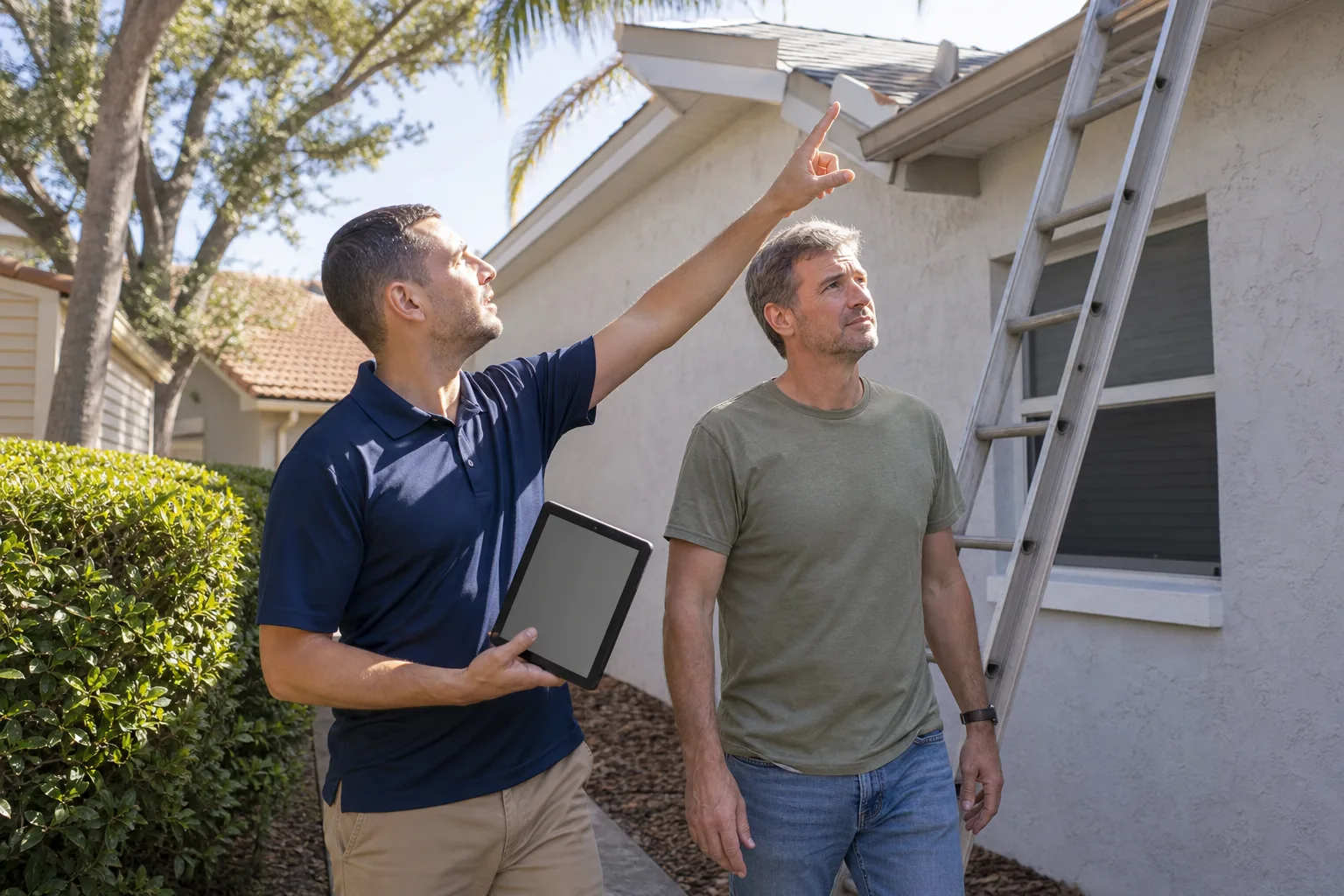
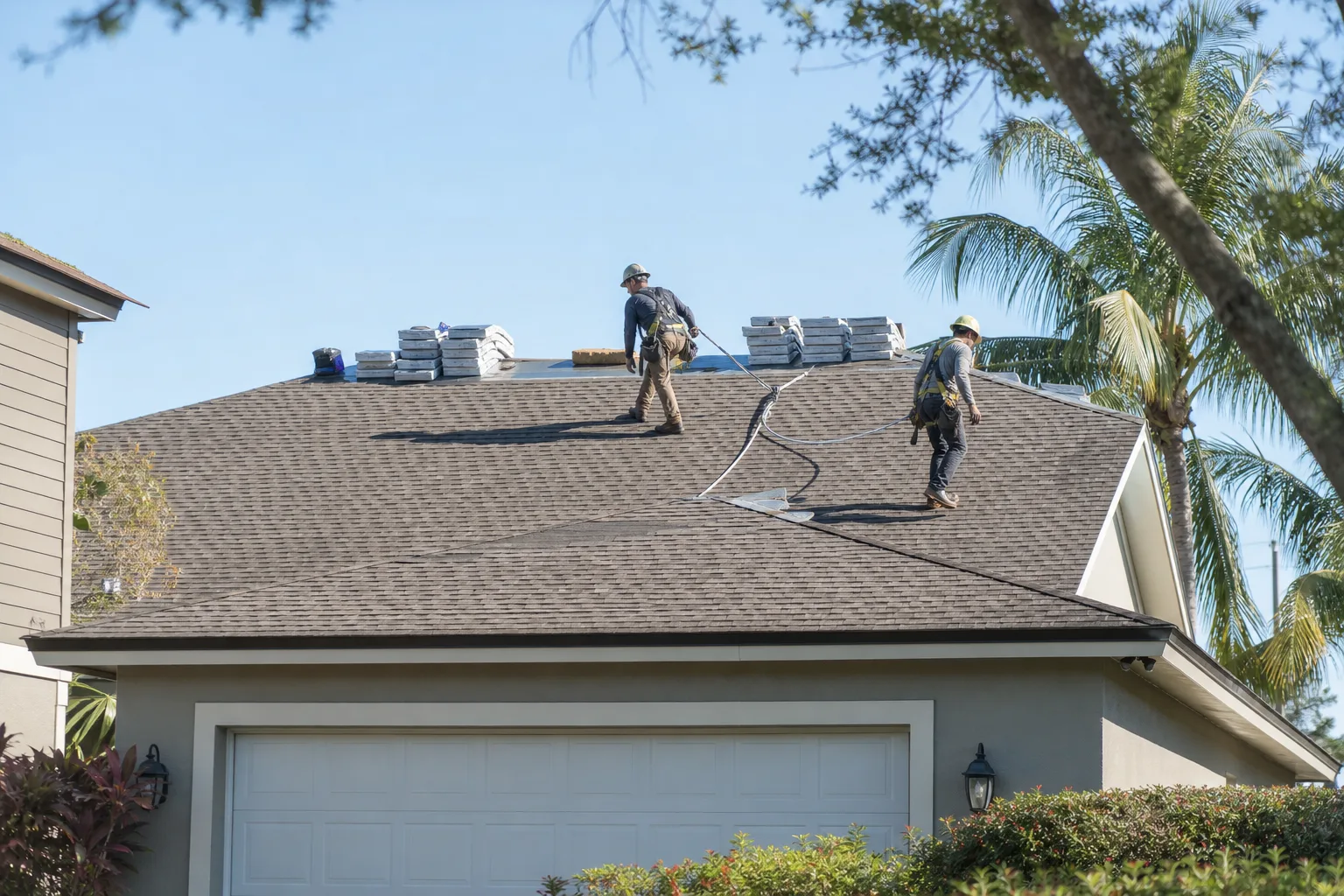
A trained eye doesn’t start with the stain. It starts with the cause. When our technicians walk a Buena Park roof, they’re checking the four failure modes above in order: flashing joints for sealant fatigue, stucco-to-roof transitions for inadequate flashing, vent boots for UV cracking, and eave and gutter conditions for backup. Attic access tells us where the water is actually traveling, which is often nowhere near where it’s landing.
Our technicians have up to 12 years of experience, and every one of them is background-checked and arrives in uniform. That matters more than it sounds. The unmarked-van contractor problem isn’t just about trust – it’s about diagnosis. A crew that patches the visible stain without finding the cause leaves you calling someone else in six months. We work on Orange County tract homes every week and we know exactly how they fail.
What Roof Leak Repair Costs in Buena Park
Roof repair in Buena Park typically runs $400 to $1,800, depending on the failure mode. A split vent boot sits at the low end; a stucco transition re-flash sits at the high end because it involves wall work as well as roof work. Full roof replacement runs $8,000 to $20,000, metal roof installation $15,000 to $40,000, and tile roof repair $600 to $2,500. Here’s the honest breakdown:
| Cause | Typical Buena Park Repair |
|---|---|
| Split plumbing vent boot | $400 – $800 |
| Failed flashing joint (chimney, skylight) | $600 – $1,500 |
| Stucco-to-roofline re-flash | $900 – $1,800 |
| Gutter and fascia repair at eave | $400 – $1,200 |
| Full roof replacement (if beyond repair) | $8,000 – $20,000 |
Every number we quote is upfront pricing, no surprises – the number you see is the number you pay. We also offer 0% financing for 18 months and $1,000 off projects over $10,000 when the repair has grown into a replacement. And every job is backed by our 730-Day Done Right Promise: if it’s not done right, we make it right.
Key Takeaways
- The most common Buena Park leak cause is dry-season thermal expansion opening flashing joints – the damage starts months before the rain.
- Stucco-to-roofline transitions on 1950s tract additions cause wall-cavity leaks that look like ceiling leaks.
- Rubber vent boots age faster in sustained Buena Park heat and UV – and rarely get inspected.
- A “leak” at the eave is often an undersized gutter backing water under the first shingle course.
- Roof repair in Buena Park runs $400 to $1,800; replacement runs $8,000 to $20,000.
FAQs
Dry-season thermal expansion is the leading cause of roof leaks in Buena Park. Summer-to-fall temperature swings and near-zero humidity contract and expand metal flashing until sealant fatigues and micro-gaps open. The gap seals itself in wet weather, which is why the leak seems to come and go, but the joint gets worse every year. Call (833) 522-5059 for a free inspection – estimates are free and a live person answers.
Because the leak is usually in a wall cavity, not on top of the roof. On Buena Park’s 1950s tract homes, inadequately flashed stucco-to-roof transitions let water into the wall, where it runs down framing and appears as a ceiling stain several feet from the entry point. That’s why a visible-only inspection misses it. A proper diagnosis traces the path. Call (833) 522-5059 and we’ll send a background-checked technician out.
Roof repair in Buena Park typically costs $400 to $1,800, depending on the cause. Split vent boots run $400 to $800, failed flashing joints run $600 to $1,500, and a stucco-to-roofline re-flash runs $900 to $1,800. Call (833) 522-5059 for an exact quote – estimates are free.
In most cases, yes. Calls are answered by a live person 24 hours a day, seven days a week – no voicemail, no waiting until Monday. If water is actively coming into your home, call (833) 522-5059 right away and we’ll work to get a technician out the same day.
Get It Looked At Before the Next Rain
If you’d rather have it looked at than keep guessing, Groundwork Construction Co. of Buena Park offers a no-pressure assessment in Buena Park – call (833) 522-5059. We’ll find the actual cause, quote it upfront, and back the work with the 730-Day Done Right Promise. Dry season is the right time to fix what the next storm will find.
Written by the team at Groundwork Construction Co. of Buena Park, serving Buena Park, CA.