Last updated November 18, 2026



Free written scope consultation - allowances, timeline, and change-order rules on paper before a single trade is scheduled
Seasonal Construction Care for Buena Park: Year-Round Homeowner’s Guide
October is the most consequential month on a Buena Park homeowner’s calendar, and most people miss it entirely. Between the dry heat of September and the first real rain in November, there’s a six-week window to seal, inspect, and fix everything summer dried out. Wait until the first storm and you’ll spend December dealing with water intrusion instead of holiday lights. In our experience, the majority of post-rain repair calls we handle in Buena Park trace back to a task someone could have handled in that October window. This guide lays out the full year-round care calendar for your home’s exterior envelope, flatwork, roofing, fencing, windows, and drainage – tailored to the specific climate of North Orange County. You’ll learn what to check each season, when to self-perform, and when to hire out.
Quick Answer
Seasonal home maintenance in Buena Park follows a two-season cycle: a hot, dry stretch from roughly May through October that degrades concrete, sealants, stucco, and wood, followed by a wet stretch from November through April that exposes every deferred repair. The single highest-value task is a full pre-rain inspection in October covering drainage, roof penetrations, window and door seals, fence posts, and driveway cracks. Completing that October checklist prevents the majority of water-damage repair calls that Buena Park homeowners face each winter.
Styles & brands we work with
- Kitchen remodeling
- Bathroom remodeling
- Home additions & ADU
- Roofing
- Windows & doors
- Driveway & pavers
- Fence
Table of Contents
- Why Buena Park Has Two Seasons, Not Four
- The October Pre-Rain Inspection Checklist
- How Santa Ana Winds Affect Roofs, Cladding, and Fences
- Summer UV Degradation: When to Intervene vs. Monitor
- The Spring Post-Rain Assessment
- What You Can Do Yourself vs. When to Call a Professional
- Material Choices That Survive Buena Park’s Climate
- Common Mistakes to Avoid
Why Buena Park Has Two Seasons, Not Four
Most national maintenance guides assume a Northeast climate with brutal winters and spring thaws. That framework doesn’t apply here. Buena Park sits in a coastal-influenced zone of North Orange County where winters rarely drop below 45°F and summers routinely push past 90°F inland from the coast. What we actually get is a long dry stress period and a shorter wet stress period. Different concerns, different timeline.
The dry months matter more than people realize. From late spring through fall, UV exposure, low humidity, and constant thermal cycling attack every exterior surface on your house. Concrete slabs expand during the day and contract at night. Sealants around windows and doors lose elasticity. Stucco hairline-cracks widen. Wood fence rails dry-split. None of this announces itself dramatically – it’s a slow grind that only becomes visible when the first rain hits and water finds every gap that opened over the summer.
The wet months then do the diagnosis. Rain doesn’t cause most water intrusion problems in Buena Park. It reveals problems that were already there. That’s the core insight of this guide: the rainy season isn’t when you fix things, it’s when you find out what needed fixing back in October.
We’ve walked hundreds of Buena Park properties across neighborhoods like the tracts near Knott’s Berry Farm, the older homes along Beach Boulevard, and the newer developments off Orangethorpe. The pattern repeats. A house that got a proper October once-over stays dry through February. A house that skipped it does not. The cost difference between those two outcomes runs into the thousands.
What makes this useful in practice isn’t just knowing the pattern – it’s having a calendar you can actually follow. The rest of this guide breaks the year into specific windows, each with its own checklist. If you want the full context of how the construction side ties in, start with our Groundwork Construction Co. of Buena Park home page for a broader look at how these seasonal tasks connect to larger projects.
The October Pre-Rain Inspection Checklist
This is the most important section in this guide. Do these eight checks between the first week of October and the end of the first week of November. After that, you’re gambling.
1. Walk the perimeter for standing water evidence
Look for staining, algae rings, or mud lines on your foundation walls and slab edges. Any line of dirt or green growth on a foundation is where water pooled during the last rain. That tells you the grading near the house is either flat or back-pitched. In Buena Park, we regularly see this on the north-facing sides of homes where the slab meets the planting bed and nobody’s thought about slope in fifteen years.
2. Check the grade along the entire foundation
Soil should slope away from the house at roughly six inches of drop over the first ten feet. Bring a level or just use your eye against the siding line. If soil has settled against the foundation – which happens after two dry summers with no recharge – fill it in and re-slope. A bag of topsoil costs almost nothing. Hydrostatic pressure against a foundation costs a great deal.
3. Inspect every window and door seal
Run your hand along the exterior trim around each window and door. Feel for gaps, brittle caulk, or separated joints. Caulk that has lost its flex will fail on the first cold, wet night. Pay particular attention to south and west-facing windows where UV exposure is highest. If the caulk is chalky and cracking when you press a thumbnail into it, it’s done.
4. Clear gutters and downspouts
Buena Park rarely gets heavy debris loads in gutters, but eucalyptus and ficus can drop enough material to clog a downspout. If your downspouts discharge within three feet of the foundation, add an extension that carries water at least six feet away. This single change solves a disproportionate share of the foundation moisture complaints we hear about.
5. Seal concrete driveway and walkway cracks
Any crack wider than a credit card should be filled before rain season. Water gets into the crack, freezes (yes, it does get cold enough at night in Buena Park for minor freeze-thaw in the cracks), and widens it season after season. A tube of polyurethane concrete sealant and an hour of your time saves hundreds later. Driveways that are already badly cracked or heaved are a different story – that’s usually a sub-base issue and worth having looked at. See Driveway & Pavers in Buena Park for how we diagnose those.
6. Test every hose bib and exterior faucet
Turn each exterior faucet on and watch the wall penetration for drips while the water runs. A slight seep at the penetration point usually means the flange seal has failed. Fix this before the wet season, not during.
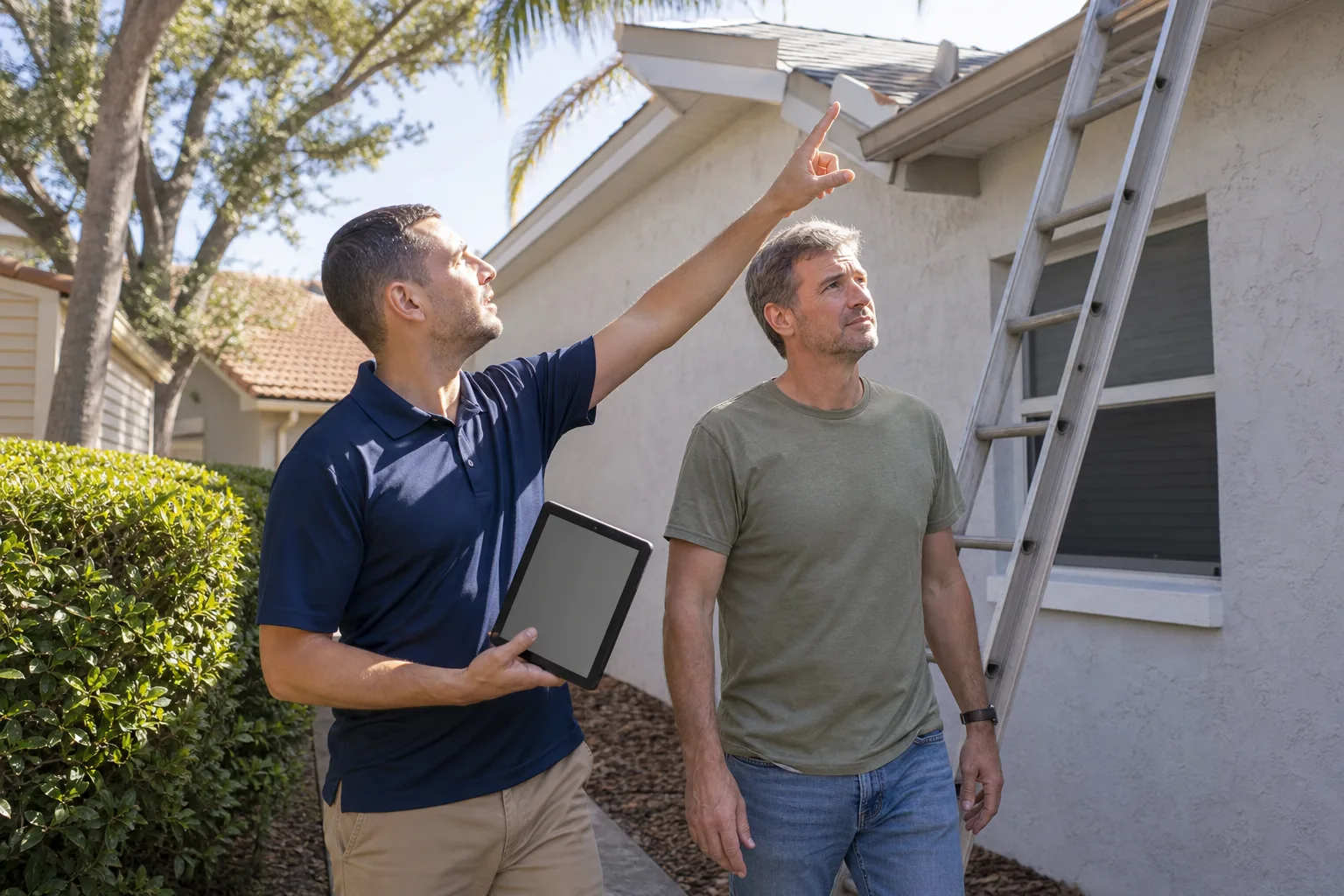
7. Inspect the roof from the ground
Binoculars work fine. Look for lifted, curling, or missing shingles, especially on the south and west slopes. Check flashings around chimneys and vents. If you see granules pooling in gutters or at downspout discharge, that roof is aging. Do not walk your own roof to inspect it – more injuries happen that way than from any other maintenance task. Get a roofer to look; if you need the roof replaced, we can point you to GAF and CertainTeed systems that hold up well in this climate.
8. Walk your fence line
Push on each post. A post that moves more than an inch at ground level has rot or has lost soil contact. A fence that goes into the winter wobbly will be a fence you’re rebuilding in spring. Whether the fence is wood, vinyl, or composite, the post footings matter more than the panels. Our Fence Installation in Buena Park page covers what a properly set post looks like.
How Santa Ana Winds Affect Roofs, Cladding, and Fences
Fall in Buena Park means Santa Ana wind events – the dry, hot, offshore gusts that push through the canyons and pick up speed as they reach the Orange County flatlands. Sustained winds of 25-35 mph with gusts over 50 mph aren’t unusual in a strong event. The North Orange County wind corridor catches these differently than coastal Buena Park because there’s less friction from terrain and vegetation.
What happens to a house in a Santa Ana event is not just stress testing – it’s cumulative damage. Each event does a little more than the last one.
- Roofs: Lifted shingle tabs are the first thing to look at after a wind event. Once a tab lifts, the adhesive strip underneath is compromised, and the next wind event lifts it further. Ridge caps and hip caps are the most vulnerable points on a tile or asphalt roof. Walk the yard after any significant wind event and pick up loose shingles – they’re evidence you need to see.
- Stucco and cladding: Stucco hairline cracks widen under wind-driven thermal cycling because the substrate and the stucco move at different rates. Any crack wider than a hairline should get patched and resealed before rain. Fiber cement siding (James Hardie is what we install) holds up well in wind events as long as it’s properly nailed and the joints are sealed.
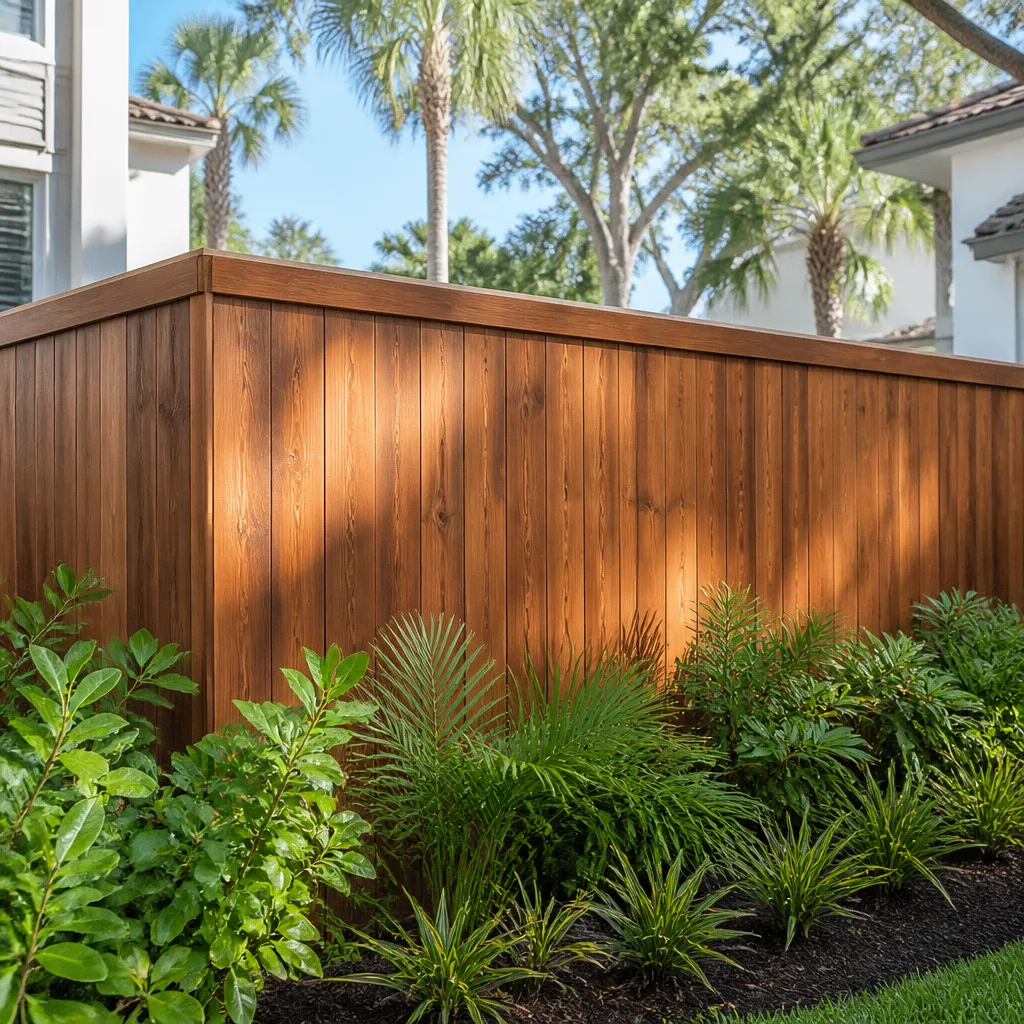
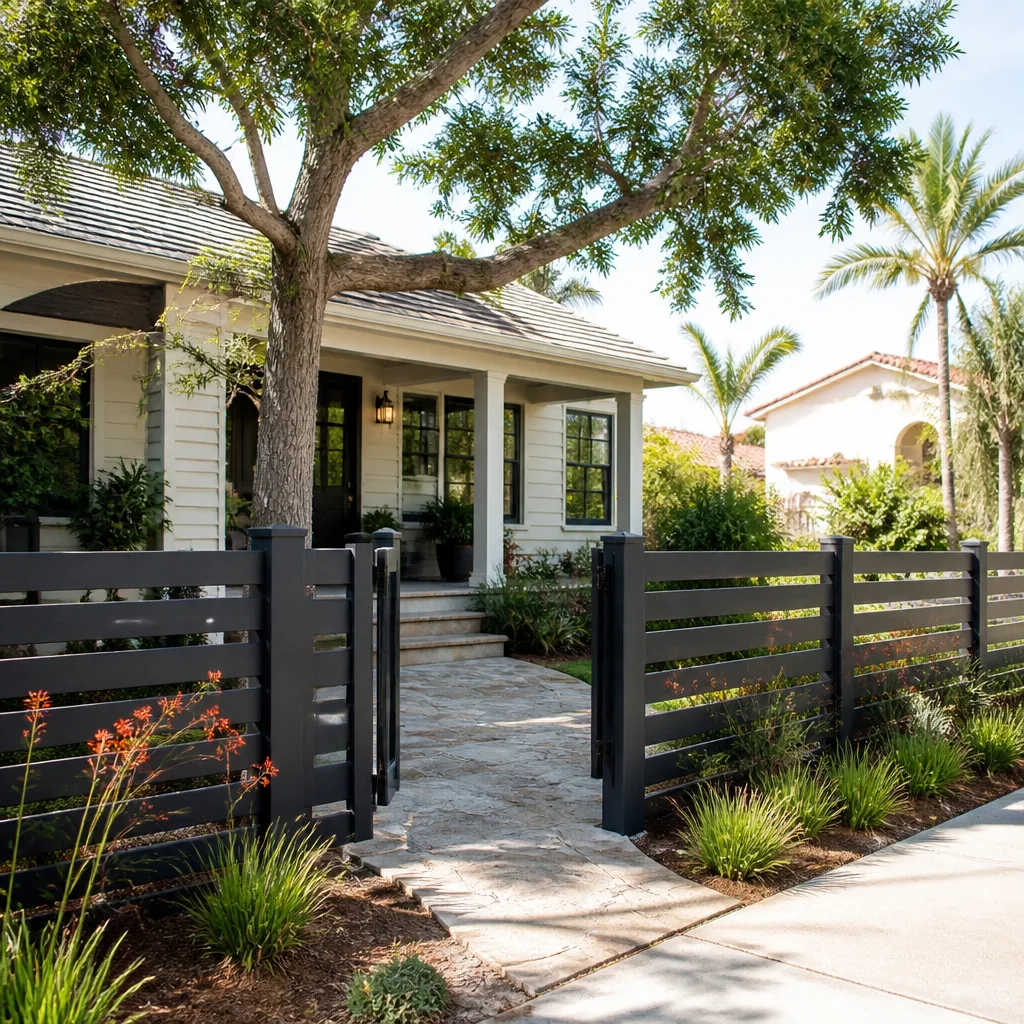
- Fences: This is where Santa Ana events do the most visible damage. A wood fence panel acts like a sail. Posts that are already compromised at the footing fail under wind load, not under lateral pressure. Vinyl fences with hollow posts fail more often than solid-core posts. Composite fences with correctly engineered posts handle wind well but the post-to-panel fasteners have to be right.
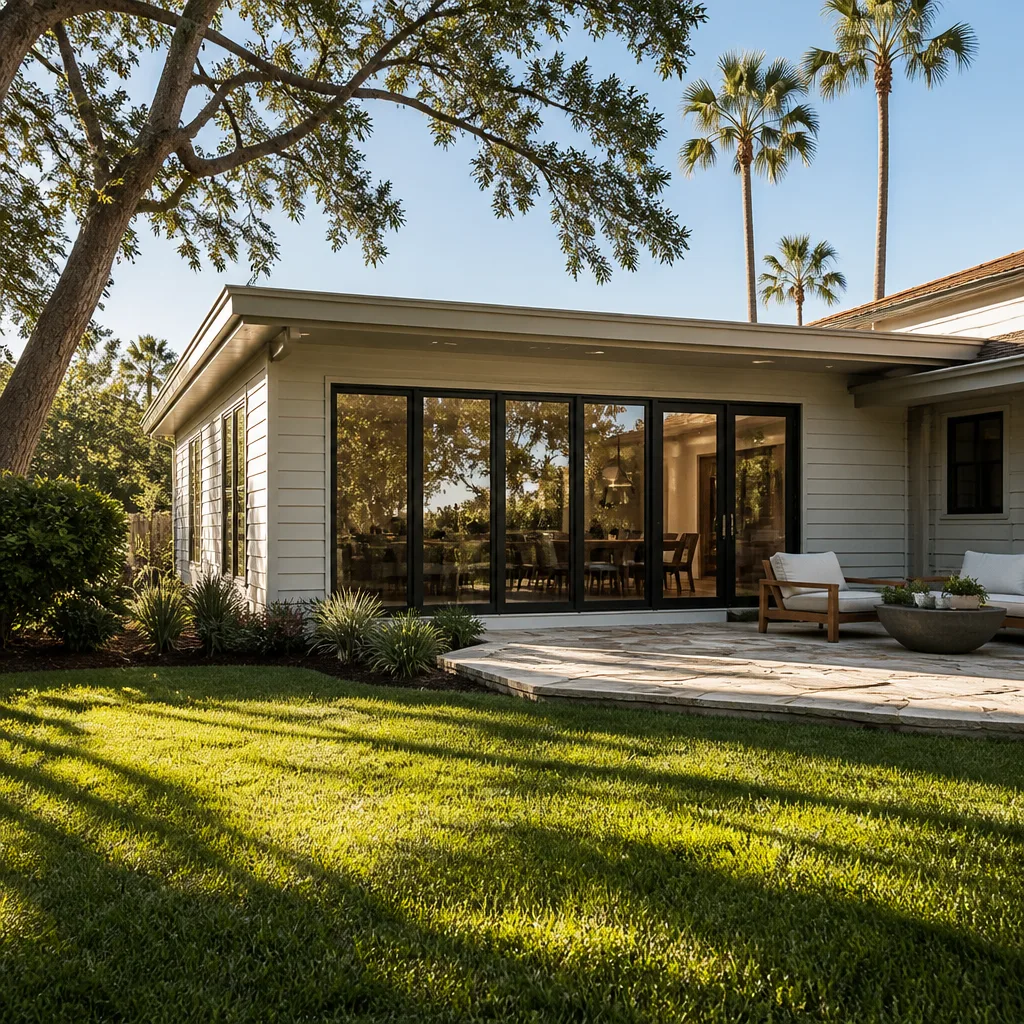
- Windows: High wind events test every seal around every window unit. A window that’s been installed with a proper flashing and sealant system doesn’t leak in a wind event – a window installed with a bead of caulk and hope does. If you’re considering a window upgrade, systems from Andersen, Marvin, or ES Windows that are specified for this wind zone are the right conversation.
- Tree risk: Not a construction item, strictly, but the single most expensive wind-related call we see involves a tree limb landing on a roof. Get trees trimmed before Santa Ana season if any limb overhangs a structure.
After each Santa Ana event, do a quick pass: pick up fallen shingles from the yard, look at the fence line for loose panels, and glace at siding for new cracks. It’s a fifteen-minute task and it catches the problems while they’re still small.
Summer UV Degradation: When to Intervene vs. Monitor
Buena Park’s inland neighborhoods see UV levels high enough that exterior surfaces degrade on a predictable timeline. Knowing when a surface has crossed from “aging normally” to “needs intervention” is the difference between a $200 touch-up and a $15,000 replacement.
Concrete and flatwork
Hairline surface cracks and slight surface discoloration are cosmetic. Monitor. Cracks wider than 1/8 inch, or any crack with vertical displacement (one side higher than the other), indicate sub-base movement and need intervention. Concrete driveways and walkways in Buena Park typically show meaningful surface wear every 10-15 years depending on mix design and sun exposure. South-facing concrete ages faster.
Pavers
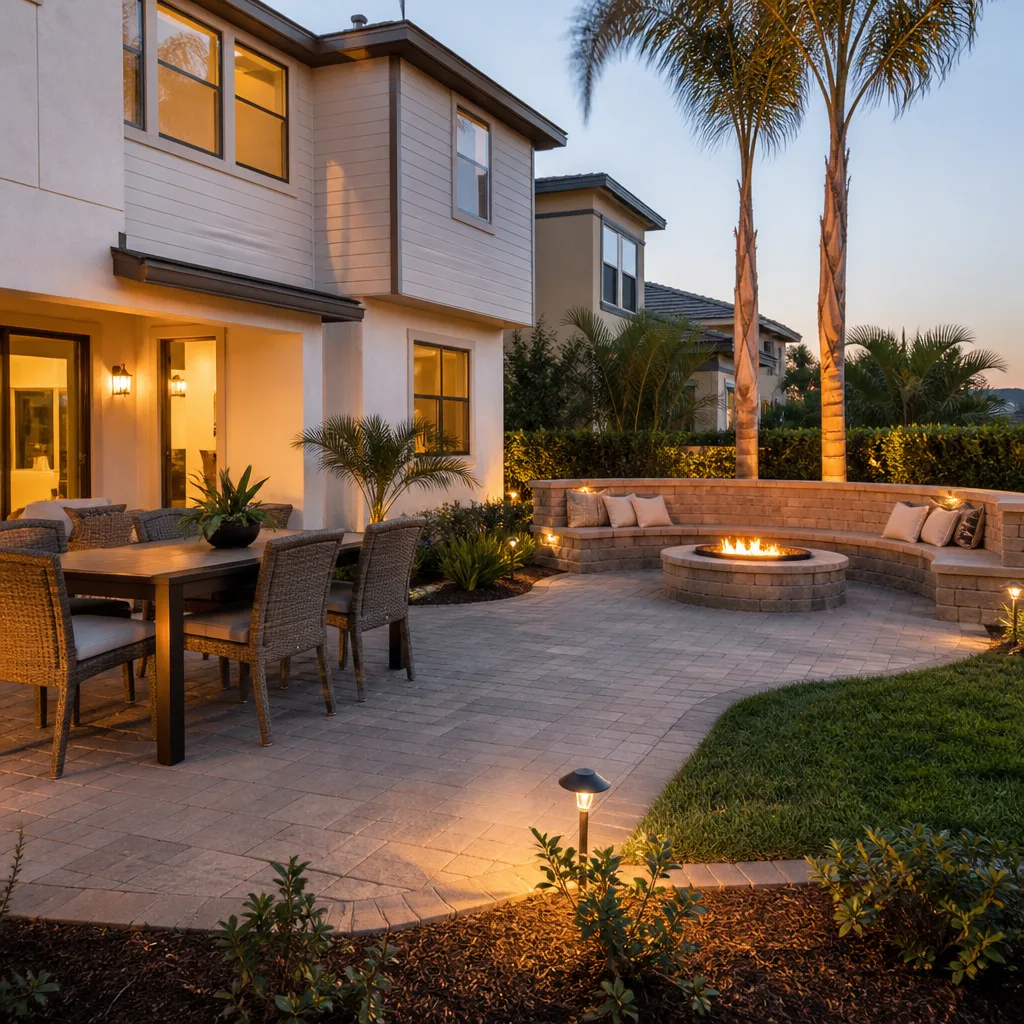
Pavers hold up extremely well in this climate. What fails is the joint sand and the polymeric sand between them. When the joint sand washes out or blows out, paver edges chip and the base erodes. The fix is inexpensive – re-sand the joints every few years. If pavers start to heave or show uneven settling, that’s a base problem. See Driveway & Pavers in Buena Park for how we approach base and grading issues, and note that Belgard systems are what we typically specify for their UV stability.
Stucco
Hairline cracks in stucco are normal in a climate that swings 40°F between night and day. Monitor them, and re-seal annually with an elastomeric coating if you want to be proactive. Larger cracks – wider than 1/16 inch or longer than 12 inches – suggest movement in the substrate and should be looked at by a professional before they become water paths.
Wood elements
Fascia, trim, and wood fences weather predictably here. The rule of thumb: if you can push a screwdriver tip into the wood a quarter inch without much effort, that piece of wood is compromised. Re-staining or re-sealing wood every 2-3 years is the intervention. Replacing boards is what happens when you skip that step for a decade. Wood exposed on the south and west sides of the house needs attention most often.
Sealants and caulk
Exterior sealant around windows and doors in Buena Park typically lasts 3-5 years before UV exposure makes it brittle. That’s the intervention point. Let it go 8 years and it starts falling away, and that’s when you get interior water damage during the first heavy rain.
A useful framework: any surface that flexes when you press it can be monitored indefinitely as long as it’s still flexing. Any surface that’s hardened or cracked has already failed – intervene now.
The Spring Post-Rain Assessment
By March or April, the wet season has done its diagnostic work. What it reveals in Buena Park tells you what the rest of the year’s projects should be. Ignore these signals and you’ll see them again next year, larger.
Water staining
Brown or gray vertical stains near the top of a wall, under a window, or under a roof penetration are the simplest evidence of an active leak. Trace the stain upward to find the entry point. In Buena Park, the most common culprits are failed window flashing, roof vent boots that have cracked under UV, and inadequately sealed chimney caps. A single persistent stain that grows season over season is not cosmetic; it’s structural over the long run.
Efflorescence
That white, powdery deposit on concrete, stucco, or masonry is efflorescence – salt deposits left behind by water migrating through the material. A little efflorescence after a rainy season is normal. Persistent efflorescence, especially at the base of a wall or around the slab edge, tells you water is moving through the material repeatedly. If you see it on an interior wall of a garage or below-grade space, that’s an active moisture problem that’s costing energy and structural life every month.
Soil movement
Look at the crack patterns in your concrete flatwork and around your foundation. New cracks – or old ones that got wider – from one spring to the next indicate soil movement. Buena Park has pockets of expansive clay soil that swell when wet and shrink when dry, and these pockets move flatwork more than the homeowner expects. If your driveway cracks have visibly widened since last spring, call someone to look at the drainage and grading, not just the cracks. See Driveway & Pavers in Buena Park for how we approach these in older Buena Park neighborhoods.
Roof granules in gutters
If gutter cleanout in spring reveals a thick layer of roofing granules, your roof is shedding its UV-protective surface layer. That’s not urgent if the roof is otherwise intact, but it means the clock is running. Plan on a replacement within the next few years and start the conversation early rather than in the middle of a leak.
Window and door operation
Windows and doors that stick in spring indicate wood swelling from moisture absorbed over the winter. Exterior doors that won’t latch cleanly, or windows that drag, are telling you the frame has taken on water. This is often a flashing or sealant problem upstream of the visible symptom. ES Windows and ECO Window Systems both build products for this climate – if your current windows are aluminum single-pane units from the 1970s, that swelling may just be a signal it’s time.
What You Can Do Yourself vs. When to Call a Professional
Not every maintenance task requires a contractor, and not every task should be attempted by a homeowner. Here’s the honest split.
Homeowner-appropriate tasks
- Gutter cleanout and downspout extensions
- Caulking accessible exterior seams on the ground floor
- Filling and sealing concrete cracks under 1/4 inch
- Replacing joint sand between pavers
- Re-staining or sealing wood trim and fences at ground level
- Raking and re-grading soil along the foundation
- Visual roof inspection from the ground with binoculars
- Testing hose bibs, sprinklers, and drainage paths
- Replacing downspout splash blocks
Tasks that need a licensed professional
- Anything on the roof: Walking a roof to repair or replace is genuinely dangerous, and a bad roof repair can void the manufacturer’s warranty on the whole roof system. Roof work should always go to a roofer.
- Window and door replacement: Improperly installed windows leak and void warranty. Windows are one of the categories where the wrong installation method makes a good product fail.
- Any work that touches structural components: Fence post replacement that involves footing work, foundation repairs, and load-bearing changes to any part of the house.
- Stucco crack repair beyond cosmetic: Larger cracks that suggest substrate movement should be diagnosed professionally.
- Drainage corrections beyond surface grading: French drains, catch basins, and any work below grade require professional assessment.
- Any project requiring a permit: California code requires permits for most structural, electrical, plumbing, and mechanical work. Homeowners who pull permits themselves and then hire the labor anyway usually discover the cost is higher than hiring a permitted contractor.
The warranty issue is the one that catches people off guard. Most material warranties – roofing shingles, window units, exterior siding – are conditional on professional installation. If you replace a window yourself and the flashing fails and water gets into the wall, the manufacturer isn’t going to cover it. That’s not a legal technicality; it’s a real exposure that can cost far more than the professional installation would have.
Material Choices That Survive Buena Park’s Climate
If you’re looking at replacing any exterior element – roof, windows, fence, driveway – the material you choose decides how much maintenance you’re signing up for. This matters more in Buena Park’s two-season climate than most product literature acknowledges.
Roofs: Architectural asphalt shingles from GAF or CertainTeed hold up well in Orange County’s UV exposure, provided the attic ventilation is right. Poor attic ventilation is what kills roofs here faster than sun exposure alone. Tile roofs last longer but require correct underlayment and proper flashing detailing.
Windows: The best window for this climate has low-E glass, argon fill, and a properly detailed installation. We specify ES Windows for coastal-influenced Buena Park projects and Andersen or Marvin for projects where the design aesthetic calls for a specific profile. The product matters, but the flashing and sealant system around it matters more. A high-end window installed poorly leaks; a mid-grade window installed correctly doesn’t.
Fencing: Vinyl fences hold color well in this sun but need solid-core posts to survive Santa Ana wind events. Wood fences look great and are less expensive but need re-staining every 2-3 years. Composite combines the longevity of vinyl with the look of wood and performs well here. Our Fence Installation in Buena Park page covers the trade-offs in detail.
Pavers: Belgard systems hold color well in this climate and the joint sand stays put longer than generic alternatives. Paver base design (compacted aggregate, proper grading) matters more than paver selection for durability.
Siding: James Hardie fiber cement is what we specify for exterior cladding replacement in this climate. It handles the thermal cycling and UV here without the repainting burden of wood or the thermal expansion issues of vinyl.
Whichever products fit your project, the theme is consistent: buy for longevity and install correctly. The materials only matter if they’re backed by a real warranty. That’s why every exterior project we do comes with the 730-Day Done Right Promise – if it’s not done right, we make it right.
Common Mistakes to Avoid
- Skipping October because the weather is still nice. That’s exactly the point. October is easy to skip because nothing seems wrong – and winter doesn’t start failing until you need it not to. Set a calendar reminder for the first weekend in October every year.
- Sealing a wet surface. Sealant applied to concrete, paver joints, or stucco that holds any moisture will fail early and can trap water against the material. Wait for a dry stretch of at least three days before applying any exterior sealant in Buena Park.
- Trusting a fresh coat of paint over a failing substrate. Paint hides cracks and rot temporarily. In Buena Park’s climate, that temporary can be one winter. Get the substrate checked first if you’re seeing paint failure at seams or around window trim.
- Extending downspouts onto a neighbor’s lot. Very common in denser Buena Park neighborhoods, and a recurring source of neighbor disputes and lot drainage problems that come back to your foundation later. Route the extension within your own lot.
- Replacing roofing shingles as a DIY project without checking permit requirements. Roof replacement requires a permit in most California jurisdictions, and skipping it can void the material warranty and complicate a future home sale. Check with the city before you plan the project.
- Ignoring the first hairline crack that appears each spring in the same place. A recurring crack in the same spot on your driveway is a message from the sub-base. Fill the crack, yes, but also diagnose why it keeps coming back.
- Assuming a tile roof doesn’t need maintenance. Tile roofs in Buena Park fail at the underlayment long before the tiles themselves, and the underlayment is what keeps water out. Underlayment replacement is a real expense to plan for at the 20-25 year mark.
When to Call a Professional
Call a licensed contractor when the task involves height (roofs, second-story work, tall fences), structure (foundation cracks, load-bearing changes, footings), permits (anything the city requires a permit for), or warranty-sensitive work (window replacement, roofing, exterior siding, driveway replacement). Also call when a maintenance task has failed two years in a row – a driveway that keeps cracking in the same place, a window that keeps leaking after you re-caulk it, a fence section that keeps loosening. The pattern tells you the underlying problem isn’t cosmetic. If you’re thinking about a larger exterior project, our Home Additions & ADU in Buena Park page covers how these seasonal issues fold into bigger scope conversations. Groundwork Construction Co. of Buena Park offers free estimates in Buena Park – call (833) 522-5059. Calls are answered by a live person, 24/7.
See the difference
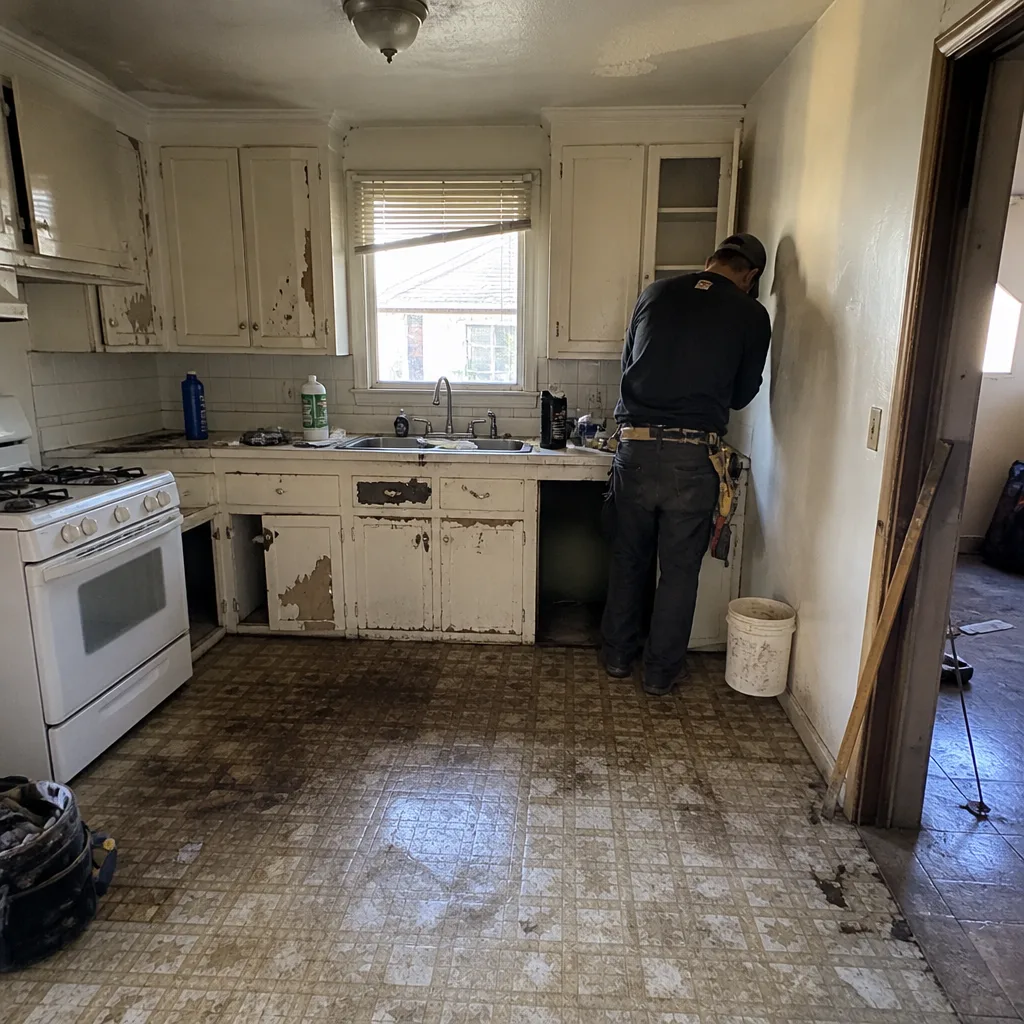 Before
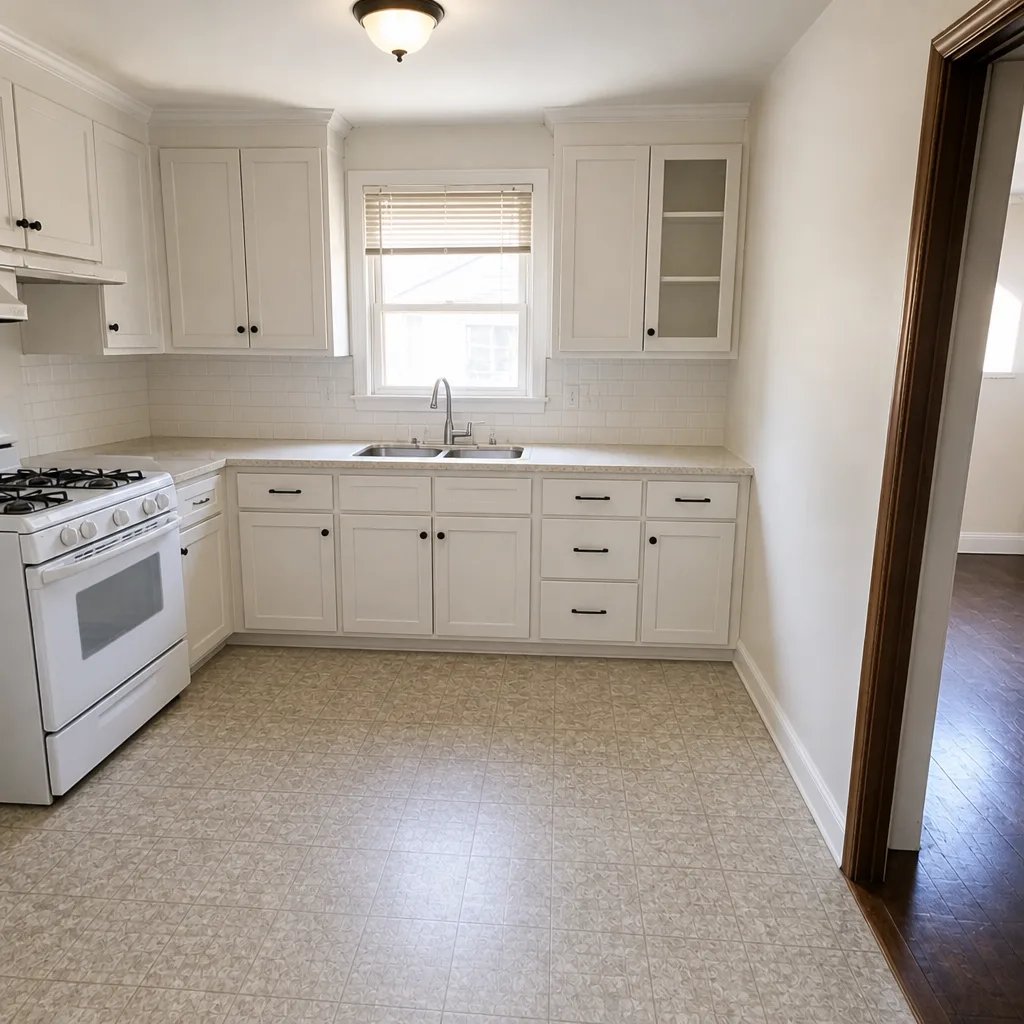 After
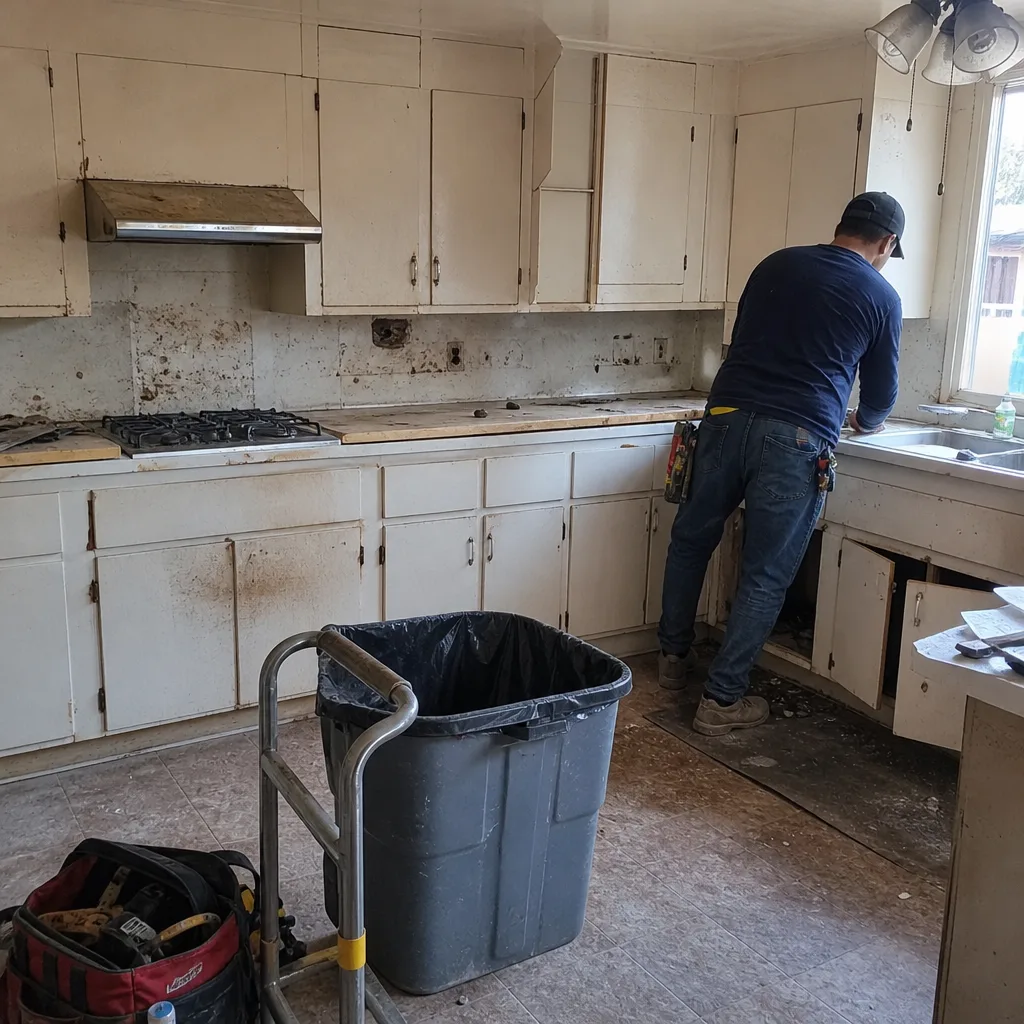 Before
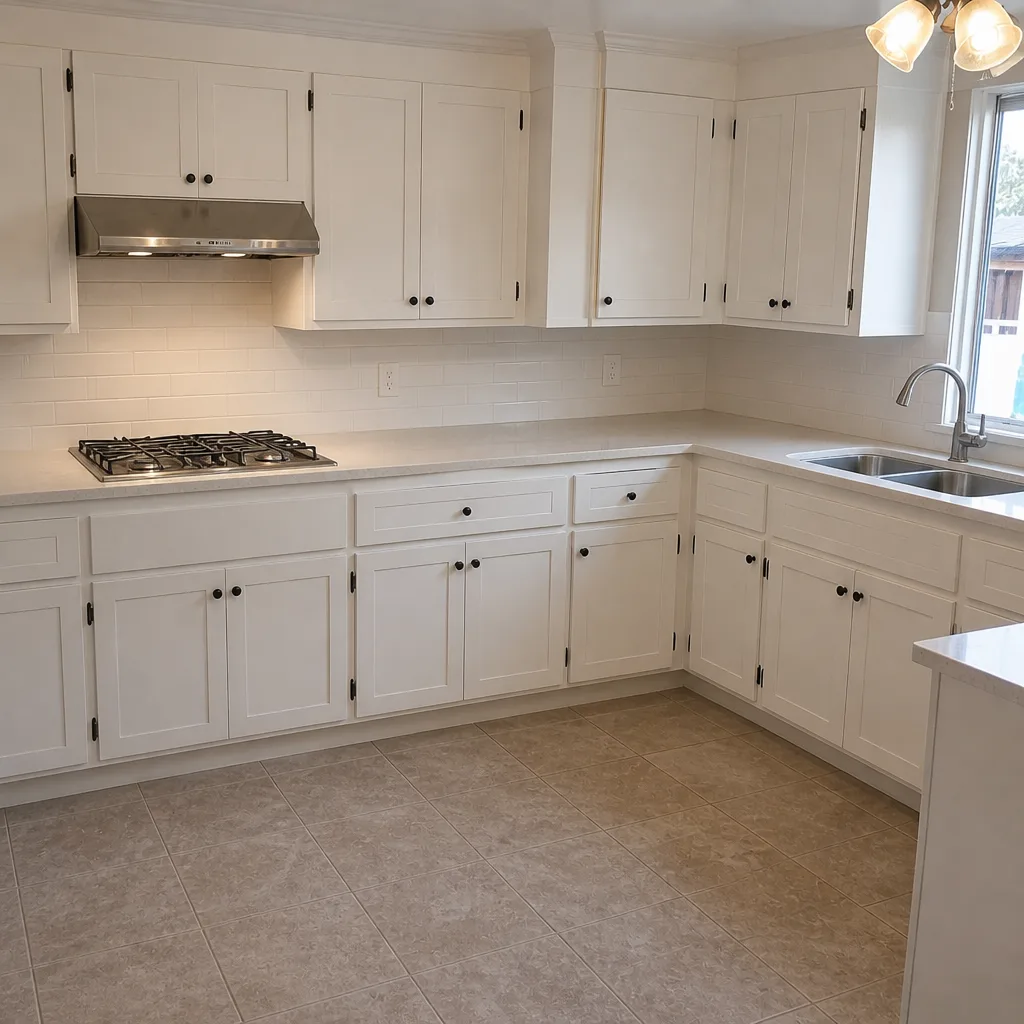 After
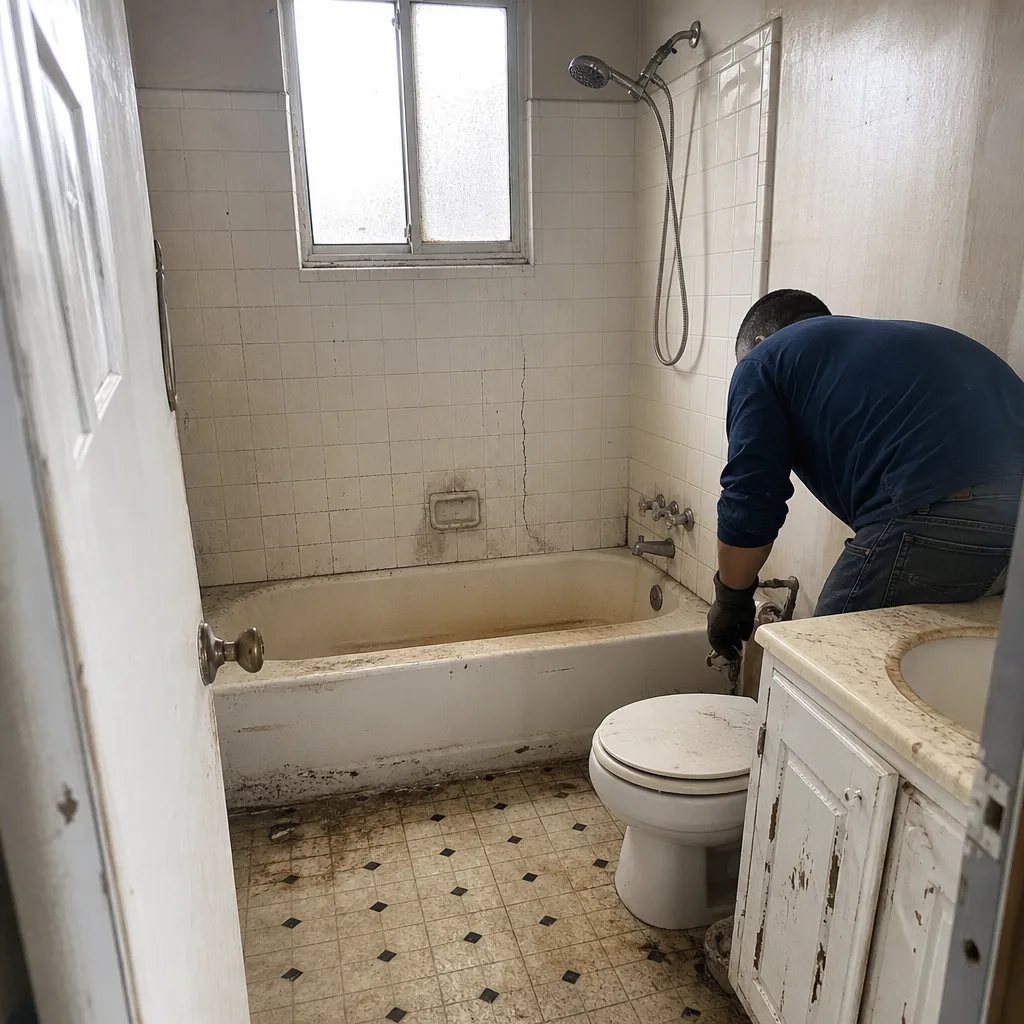 Before
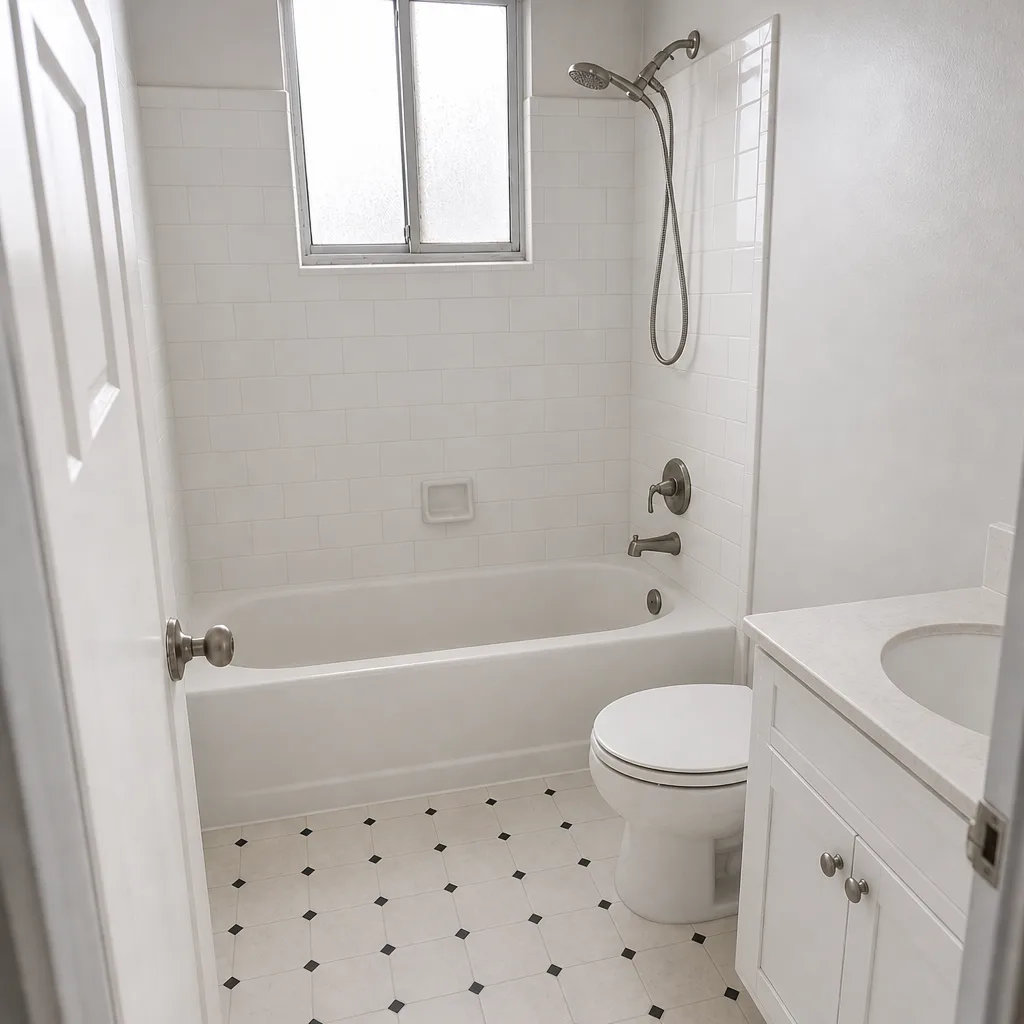 After
Frequently Asked Questions
Start the first weekend of October and finish by the first week of November, before the first significant rain of the season. October gives you dry weather for sealants and grading work, and enough runway to schedule any professional repairs before contractor schedules fill up with storm response work. If you’re going to call a professional for anything on the October checklist, call in September.
Every 3-5 years for exterior sealant around windows and doors, depending on exposure. South and west-facing seams fade fastest. If a caulk joint has lost its flex or crumbles when you press it, replace it. Call (833) 522-5059 for a free estimate if you want a full exterior assessment rather than spot touch-ups.
Yes, but use moderate pressure and keep the wand moving. High pressure on concrete with existing cracks drives water into the cracks and accelerates damage. On pavers, high pressure can blow out the joint sand, which is the paver system’s water management layer. A garden hose and gentle pressure is usually enough for typical Buena Park surface dirt.
The October grading and drainage check along the foundation. Nothing else on the seasonal list protects against more expensive damage. If soil has settled against the foundation and the grade has back-pitched, every other repair on your list will be undermined by a wet foundation wall each winter. Grade correction is a bag of soil and an afternoon of work; foundation repair is a five-figure project.
Usually no. Most material warranties for fencing and concrete products require professional installation, so DIY replacement typically voids them. That’s true for Belgard paver systems and most engineered fencing products. Professional installation costs more up front and less across the full life of the project. Call (833) 522-5059 for a free estimate if you’re comparing options.
Look at the pattern of damage. Wind damage typically shows as lifted or missing shingles clustered on one slope or along the ridge, with the damage appearing suddenly after a wind event. Aging shows as widespread granule loss, curling edges, and shingles that break easily when touched. Wind-damaged roofs are often insurance-recoverable; aging roofs aren’t. Get a roofer to inspect after any major wind event that produces debris in your yard. Call (833) 522-5059 for a free estimate if you need a full roof assessment.
The Bottom Line
Buena Park’s climate doesn’t demand the four-season maintenance cycle most national guides describe – it demands a two-season approach built around dry stress and wet exposure. The October pre-rain inspection is the single highest-leverage investment you make in your home each year, and it takes an afternoon. The spring assessment tells you what the wet season revealed, and it’s your diagnostic window for planning bigger work. Anything touching height, structure, permits, or manufacturer warranty goes to a licensed contractor – that’s a rule, not a preference. Stay on the calendar and most of what needs fixing never gets big enough to notice. Our technicians have up to 12 years of experience and are background-checked, arriving in uniform on every project. From foundation to finish line, every project we do is covered by the 730-Day Done Right Promise – if it’s not done right, we make it right.
Contact
If you’re looking at a maintenance item on this list and want an honest read on whether it’s a self-perform task or a professional one, call Groundwork Construction Co. of Buena Park at (833) 522-5059 for a free estimate. Reach us for exterior projects, drainage corrections, roof assessments, fence work, or any larger scope – we offer upfront pricing, no surprises and 0% financing for 18 months on qualifying projects. New customers receive $1,000 off projects over $10,000. A live person answers around the clock – no voicemail, no waiting until Monday morning. Call today to schedule your free estimate and walkthrough.
Written by the team at Groundwork Construction Co. of Buena Park.