Last updated November 18, 2026

Free written scope consultation - allowances, timeline, and change-order rules on paper before a single trade is scheduled
Fence Installation Maintenance Schedule: What to Do and When
The wood fence that needs full replacement at year eight had a problem you could have fixed for $40 at year five. It just didn’t look like a problem yet. In Buena Park, we watch cedar and pine fences fail on a predictable clock, and it isn’t the clock you’d expect. It’s not age. It’s a ground-contact moisture cycle that runs quietly for three years before it ever shows a soft spot. This guide lays out the season-by-season schedule we bring to every Buena Park property: what to check, when to check it, and the exact maintenance window that makes a $40 repair instead of a $4,200 replacement.
Quick Answer
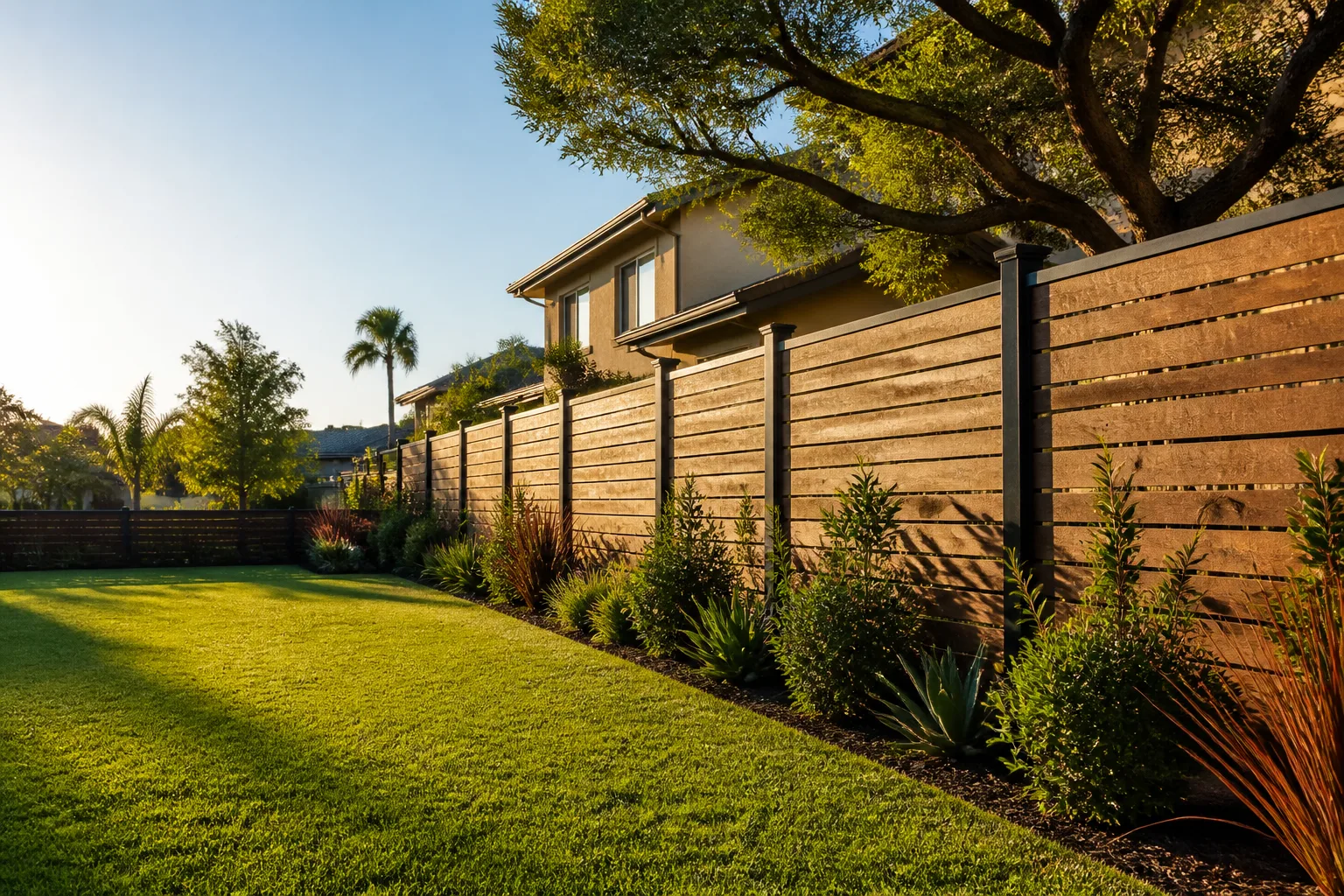
Wood fences in Southern California should get a two-hour inspection every fall and a spot-check in spring, with full clean-and-seal every 2 to 3 years depending on sun exposure. The single most important task is checking post bases for rot at ground contact, because that’s what actually kills fences here. Staining beats painting in Buena Park’s UV index, and gates need a hardware check once a year.
Styles & brands we work with
- Kitchen remodeling
- Bathroom remodeling
- Home additions & ADU
- Roofing
- Windows & doors
- Driveway & pavers
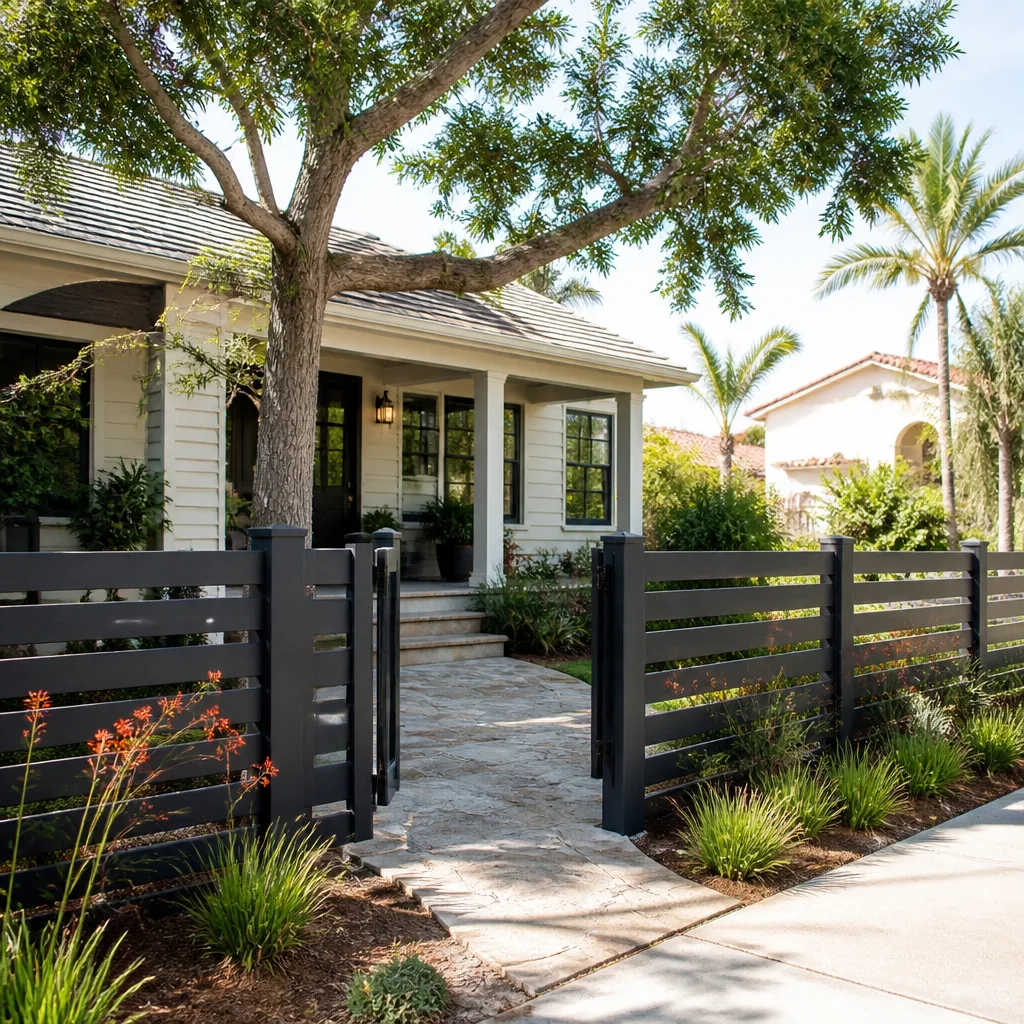
- Fence
Table of Contents
- Why Wood Fences Fail in Southern California (It Isn’t Age)
- The Season-by-Season Buena Park Fence Calendar
- How to Spot Post-Base Rot Before It Kills the Run
- Stain vs. Paint vs. Sealant: What Actually Lasts in Buena Park UV
- The Annual Gate Hardware Check
- Vinyl and Aluminum: The Truth About “Zero Maintenance”
- Repair or Replace? The Decision Points
- When to Call a Professional
Why Wood Fences Fail in Southern California (It Isn’t Age)
Walk any Buena Park block built between 1990 and 2010 and you’ll see the same pattern: fences that were installed within a few years of each other failing in clusters. The gate-side post leans first. Then a couple of panels cup and split along the top rail. By year eight or nine the homeowner is getting quotes for full replacement, convinced the fence “just aged out.”
What actually happened is more specific. Orange County’s climate is a split-personality system: eight to nine months of arid, high-UV days where wood dries and shrinks and pulls away from fasteners, followed by a wet winter window that dumps moisture into every check, crack, and post base. Wood expands and contracts at dramatically different rates across that cycle. Concrete footings don’t move. The post at the ground line becomes a hinge, and moisture that wicks into the end-grain at the base has nowhere to escape.
That’s the dry-climate failure mode most general fence advice misses, because it’s written for humid climates where the fight is against mold and moss. Buena Park’s fight is against UV-driven embrittlement and one moisture season that packs a year’s damage into six weeks.
- UV embrittlement: Southern California UV index peaks at 10-11 through June and July, which cracks unprotected cedar and pine grain in two to three seasons.
- Thermal cycling: Boards expand up to 1/8″ per foot across a warm day; fasteners that hold on the shrink side pull loose on the swell side.
- Ground-contact wicking: The bottom 4 inches of any post are the failure zone, and the failure is invisible until it’s structural.
- El Niño rain events: A single winter storm system in Buena Park can deliver more moisture in a week than the prior summer removed in four months.
The upside: every one of these failure modes has a maintenance response that costs almost nothing compared to replacement. The schedule below exists to catch them in sequence.
The Season-by-Season Buena Park Fence Calendar
This is the calendar we walk through on Buena Park properties, tuned to Orange County’s specific rain and sun windows. It’s not a generic four-season list. Fall matters more than spring here because the wet season is coming and every defect that holds water is about to get a stress test.
Spring (March through May): Inspection and Repair
- Walk the run and mark every loose board, popped fastener, and split panel. Do this in early March, before the sun bakes the fence dry and hides moisture defects.
- Push-test every post at the top. Firm resistance in all directions means the footing is sound. Any flex or wobble is a rot signal.
- Check the gate swing. Winter rain swells wood, and gates that stuck in February are the first sign of hinge wear.
- Inspect for rain damage from the wet winter. El Niño winters push water under the fence and into post bases – look for dirt lines and separation at ground contact.
- Schedule any replacement boards now. Spring is the window to catch a bad panel before summer sun locks the split in place.
Summer (June through September): Protection Window
- Clean and re-seal in early June, before the peak UV weeks. A fresh sealer coat applied in May-June carries you through the worst sun of the year.
- Water the fence lightly once a month during drought-stretched summers to keep boards from checking. It sounds counterintuitive, but a fence that stays slightly hydrated cracks less.
- Check gate alignment in July, when the hottest and driest wood is at its smallest dimension. A gate that swings free now will bind back up in winter.
- Trim vegetation back 12 inches. Ivy and climbing vines trap moisture against the boards and hide rot until the damage is done.
Fall (October through November): Pre-Wet-Season Triage
- Full inspection walk under the fence line. This is the two-hour inspection that saves the fence. Every post gets a push, every panel gets a tap.
- Clear drains and grade behind the fence. Buena Park’s rainy season starts hitting hard in November; water pooling at the base of the fence is the number-one cause of post rot.
- Seal or re-seal every exposed end-grain. Cut ends and post tops wick water like a straw. A dab of end-grain sealer on each one adds years.
- Touch up any exposed fasteners. A popped nail head or loose screw lets water into the joint behind it.
Winter (December through February): Monitoring Only
- Watch for storm damage and loose panels after each rain system. Quick reattachment now prevents a panel tearing off later.
- Don’t stain or paint in wet weather. Sealer applied to damp wood traps moisture and fails within a season.
- Note any new sagging or leaning posts for spring repair. Winter is diagnosis season, not repair season.
One thing to note about weather data: Buena Park’s rainfall varies wildly year to year, and the wet years are the years that do the damage. Treat 2023-style El Niño seasons as the standard you build the calendar around, not the exception. If you keep a maintenance log, note the rainfall totals next to your inspection results. You’ll see the correlation fast.
How to Spot Post-Base Rot Before It Kills the Run
Post-base rot is the fence killer in Buena Park, and it works silently for years. The post looks fine above ground. The boards are attached. The fence stands straight. But at the 4-inch ground line, water has been wicking into the end-grain since installation, and the wood is slowly turning to structureless mush. When it finally fails, the whole fence run goes with it – a single post failure can take down six panels, because everything is nailed to it.
Here’s the sequence to check it without pulling the post:
- Push-test from the top. Stand at the top of the post and push firmly in all four directions. Resistance should feel solid. Any movement – even a little – means the base has lost integrity.
- Probe the ground contact area with a screwdriver. Press the tip into the wood at ground level. If it sinks more than about 1/4″, you’ve found rot. Solid wood resists firm pressure.
- Look for a waterline stain. Any dark staining, peeling finish, or white fuzzy fungus at the base is a red flag for moisture trapped against the post.
- Check the base for soil contact. Soil piled against the post is a rot accelerant. Pull any soil back to expose at least 2-3 inches of post and improve drainage.
- Inspect the deck-style post cap or saddle hardware. If you have metal post saddles, look for corrosion where the metal meets wood – that’s a moisture trap.
What you’re looking for is early-stage rot: a post that has lost some structural density but hasn’t failed. Catching it at the probe stage lets you clean, treat with a wood hardener or rot treatment, and repack the base with a rot-resistant cap. Missing it means replacing the post, which means pulling the panel and footings – a job that starts pushing four figures. In Buena Park, we’ve found that roughly two out of three “full replacement” quotes are driven by two or three rotted posts that could have been saved at the two-hour fall inspection.
Pay special attention to any post that sits next to a slope, a downspout, or a lawn irrigation head. Those three spots are the rot hot zones in Buena Park, and they fail first on every fence I’ve inspected.
Stain vs. Paint vs. Sealant: What Actually Lasts in Buena Park UV
Buena Park’s UV index doesn’t care what the label says. Here’s how the three main finish options actually perform in Orange County’s sun, with realistic reapplication timelines:
| Finish | Protection Level | Typical Reapplication in Buena Park | Best For |
|---|---|---|---|
| Clear sealer | Moderate UV blocking, no color | Every 12-18 months | New cedar, natural-wood look |
| Semi-transparent stain | High UV blocking with visible grain | Every 2-3 years | Most Buena Park residential fences |
| Solid stain | Highest UV blocking, opaque | Every 3-5 years | Older fences with repairs to hide |
| Paint (latex/acrylic) | Highest UV blocking, film-forming | Every 3-4 years with sanding and priming | Stylistic preference only |
Stain wins in Buena Park for one structural reason: it penetrates wood and moves with it. Paint sits on top as a film, and film fails the moment the wood behind it expands and contracts. In a climate with thermal cycling as wide as ours, paint cracks faster than stain – usually within two summers.
The realistic numbers, from fences we’ve seen in Buena Park:
- A quality oil-based semi-transparent stain holds 24-30 months on a south-facing fence line and 36 months on north-facing runs.
- A clear sealer on cedar needs a recoat every 12-18 months, sometimes sooner on a full-sun side.
- Paint (if you’re committed to it) needs spot-sanding and touch-up every 18 months and a full recoat at 36-48 months.
- Any finish on poplar or pine needs to be reapplied 30% sooner than cedar or redwood, because the base wood takes up UV damage more readily.
The application matters as much as the product. If you’re installing a new fence, give untreated wood 4-6 weeks to dry before the first coat. Sealing green or damp wood is the most common way a Buena Park homeowner wastes a $400 stain job. Our fence installation in Buena Park crews spec the finish schedule from day one so it’s on the books from the start rather than five years later.
The Annual Gate Hardware Check
Gates are the highest-use, highest-stress part of any fence. Every swing opens and closes the hinge hardware, backs out fasteners, and works the tension on the closure spring or self-closer. In Buena Park, thermal cycling shapes the failure: fasteners that are just slightly loose in July become handle-wobbly by January as the wood shrinks. The annual check takes about 15 minutes and prevents nearly every gate failure.
Walk through this every fall before the wet season:
- Tighten all hinge bolts and lag screws. Hinge fasteners are the ones that back out most – they take the entire load of the gate. If a lag screw spins without gripping, drill out and drive a slightly larger one, or pack the hole with a hardwood dowel and wood glue.
- Lubricate hinges with a dry silicone spray. Oil-based lubricants attract dust and grit; silicone spray is what the hardware actually wants. One short spray per hinge, twice a year.
- Adjust the self-closer spring tension. If the gate doesn’t fully close on its own in cold weather, the tension is set for summer wood. Dial it in during fall, and recheck in spring.
- Check the latch and the strike plate alignment. A latch that’s fighting the strike is a sign the gate has swung out of square, which usually traces back to a hinge sag.
- Test the gate swing arc. Open it through the full arc. Any binding against the ground, the post, or a neighboring fence means the gate is out of true. Easiest fix is often shimming the hinge.
- Check the bottom of the gate for ground drag. In Buena Park, hard summer soil means the gate clears in July but drags after the first rain; raise the gate 1/4″ if it’s dragging after the wet season.
The one thing most people miss: the gate post. Because the gate is always opening and closing against it, the gate post is the fastest-failing post on the entire run. If you’re doing the gate check and the gate post fails the push-test, that post needs a successor footing, not just tighter hinges. Catching it annually is the entire fix.
Vinyl and Aluminum: The Truth About “Zero Maintenance”
If you’re considering a vinyl or aluminum fence and the sales pitch includes “never touch it again,” be skeptical. Both are excellent products in Buena Park’s climate, and both beat wood on long-term maintenance. Neither is maintenance-free, and the failure modes of each are very different from wood.
Vinyl fences
- Dirt and pollen: Vinyl doesn’t need sealing, but the textured surface holds Buena Park’s spring pollen and dust. An annual garden-hose rinse with a mild dish detergent keeps it looking new.
- UV chalking: Even UV-stabilized vinyl chalks slightly over 10-15 years under Southern California UV. It’s cosmetic, but it’s real, and the fence needs a soft wash to look right.
- Post stability: Vinyl posts are hollow and lighter than wood. In a Buena Park Santa Ana wind event, a poorly-set vinyl post is more likely to shift than a properly-footed wood post. Footing depth is where the money should go.
- Heat expansion: Vinyl expands and contracts significantly in our summer heat. Panels installed tight in a cold month can bow by July. Good installers leave expansion gaps.
Aluminum fences
- Powder-coat: The finish holds for 10-15 years in Buena Park’s UV before it starts fading or chalking. Once it does, spot re-coating is possible but a full recoat is rarely worth the cost.
- Fastener corrosion: The aluminum won’t rust, but the steel screws holding it to posts can. Check and replace any corroded fasteners once a year – particularly on fences near the coast or pool areas.
- Touch-up: Small scratches (a lawnmower knock, a dog) expose bare aluminum that oxidizes white. A dab of touch-up paint each spring keeps the finish clean.
What the salespeople get wrong: they tell you a vinyl or aluminum fence needs zero attention, and that wood always needs constant attention. In reality, the maintenance advantage of vinyl and aluminum is smaller than advertised, and the failure modes are different. Vinyl and aluminum win for anyone who wants to skip the annual staining cycle. Wood wins for anyone who wants the natural look and is willing to spend two hours a year keeping it. Both need an annual inspection, and both need post footings done right on day one. If you’re planning a new install and comparing options, our Groundwork Construction Co. of Buena Park home page has the full service lineup, and a free estimate is how it gets sorted in your yard instead of on a spreadsheet.
Repair or Replace? The Decision Points
This is where Buena Park homeowners get talked into replacing a fence that has three or four years left, or talked into repairing one that’s on its last leg. Here’s the honest decision matrix we use:
- Repair is the right call when: 2 or fewer posts fail the push-test, more than 80% of panel boards are solid, the fence is under 12 years old, and any rot is confined to a single corner or run segment.
- Replace is the right call when: 3 or more posts fail the push-test, more than 20% of the boards are split or rotted, the fence has failed at two or more corners, or you’re facing multiple section failures 15+ years in.
- Gray-zone case: good structure, bad finish. If the fence is solid but the finish has failed and the wood is checking deeply, a full clean and refinish brings it back to a decade-plus of life for 10-15% of the cost of replacement.
- Never patch around a bad post. A new board nailed to a rotted post fails in the next storm. If the post is gone, the run segment has to be rebuilt, not topped up.
For the sections that do need replacing, remember that the finish is part of the install, not an afterthought. If you’re going with a wood fence and planning to sell within a few years, spec cedar or a cedar-adjacent species – it ages better under UV than pine and takes stain more predictably. Brand-wise, we build fences around well-proven material partnerships just like we do on the exterior side of a home, where James Hardie siding and similar long-life materials are the standard. Fences deserve the same thinking.
While you’re planning the work, also check the concrete and pathway adjacent to the fence. Footings that fail get pulled and reset, and that often disturbs the nearest slab. If your fence repair overlaps a driveway edge, look at the Driveway & Pavers in Buena Park service so both get done in one mobilization instead of two.
Common Mistakes to Avoid
- Sealing a fence too soon after install. New pressure-treated wood needs 4-6 weeks to dry, and cedar needs even longer. Sealing green wood in Buena Park traps moisture and the finish peels within one summer.
- Staining without cleaning first. Dust and mildew under a fresh stain coat guarantee an early failure. A quick pressure-wash and a full dry-out before staining adds 12-18 months to the recoat cycle.
- Piling soil against the post base. Rerouted landscaping and fresh mulch against the bottom of a fence post is a rot accelerant. Always leave the ground-contact zone visible.
- Ignoring a gate until it stops closing. Hinge loosening is progressive – by the time you notice the gate dragging, the hinge has been working loose for months and the box of the gate is beginning to twist.
- Skipping the fall inspection. The single biggest repair bill we see in Buena Park comes from fences nobody looked at between Labor Day and the first El Niño storm.
- Assuming vinyl is truly zero maintenance. Vinyl chalk, hold pollen, and can bow in extreme Buena Park summer heat if not installed with the right expansion gaps.
- Painting a fence that should be stained. In our climate, film-forming paint is the most failure-prone finish choice on exposed fence lines. Only choose paint if you accept the 3-4 year recoat.
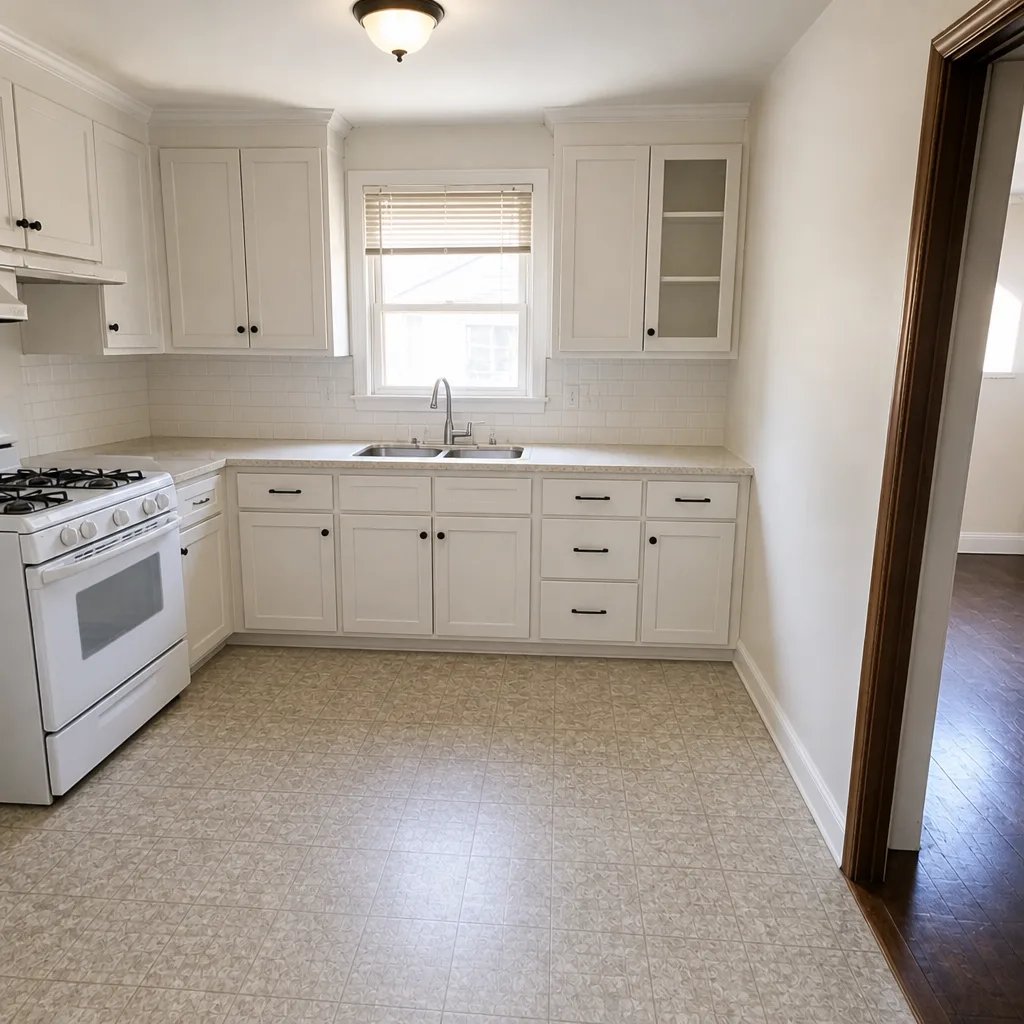
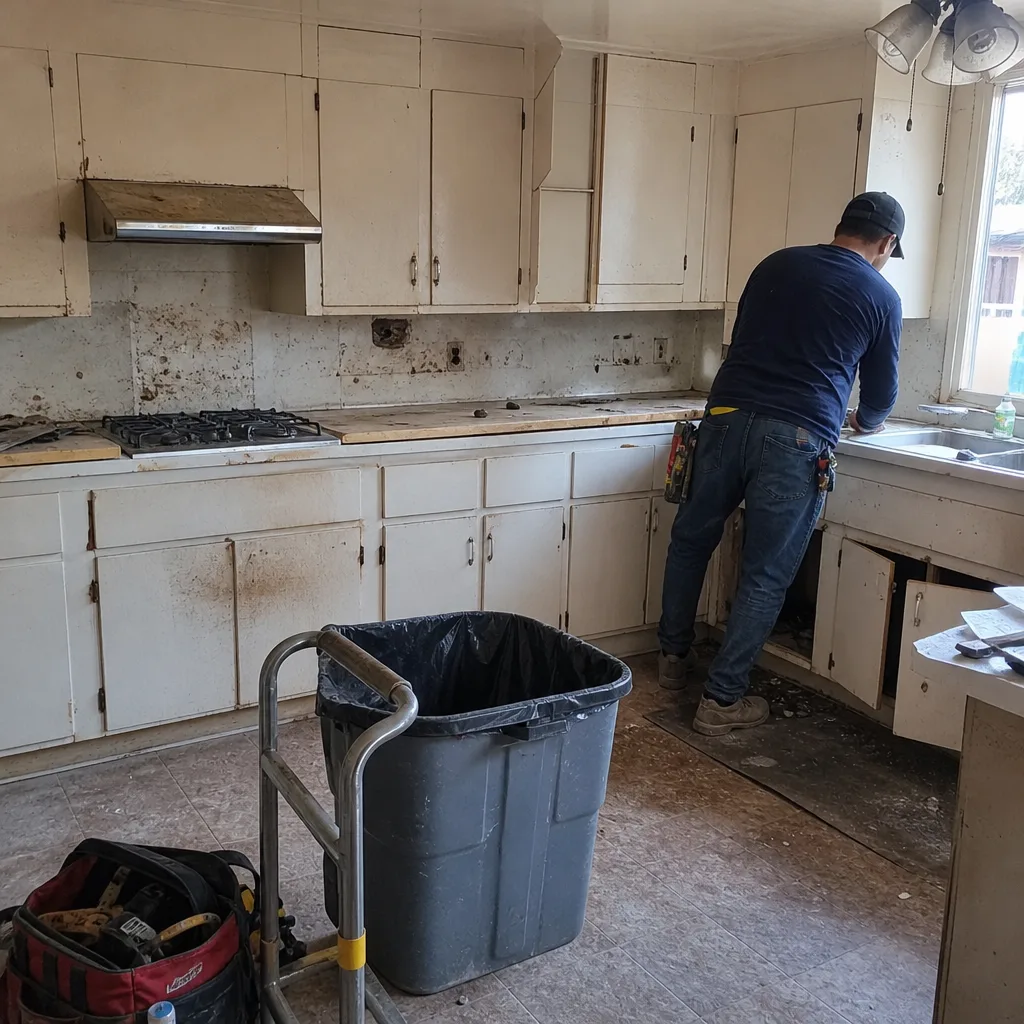
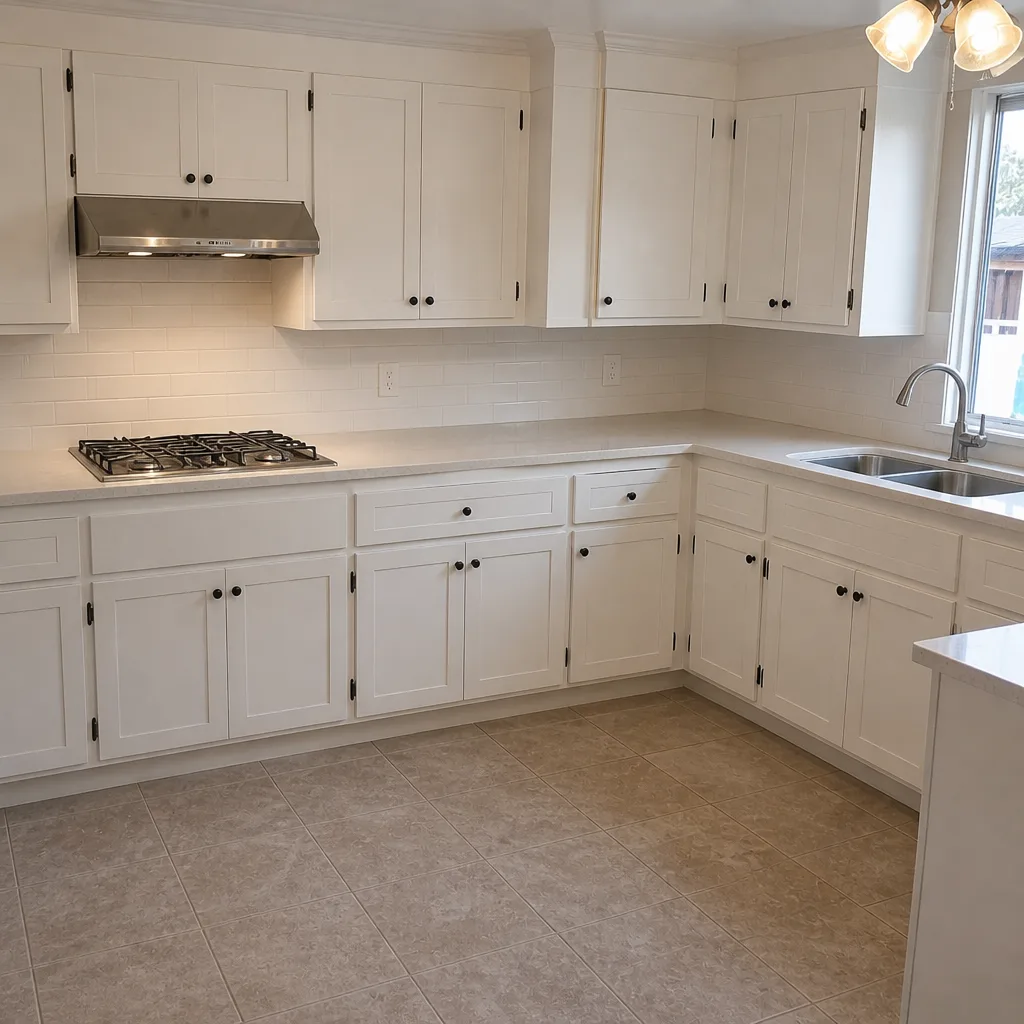
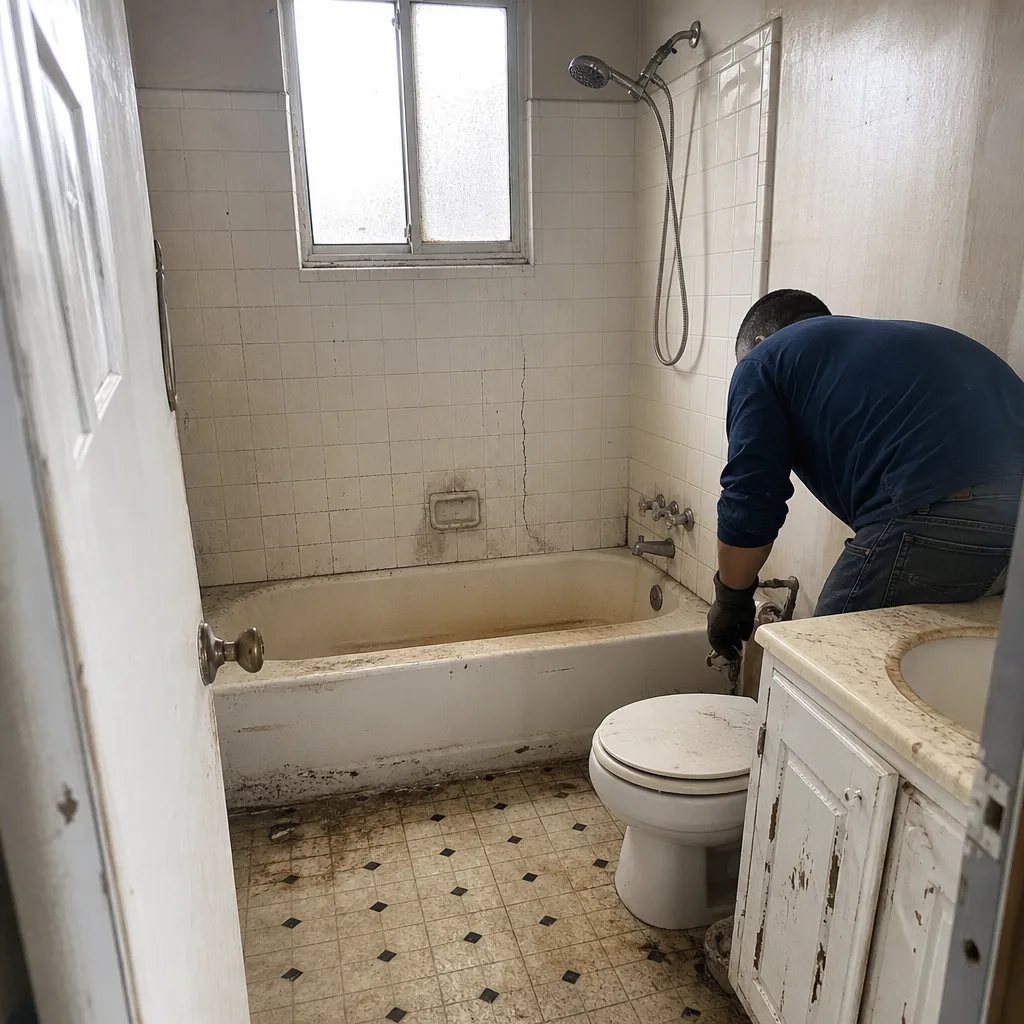
See the difference
 Before
 After
 Before
 After
 Before
 After
When to Call a Professional
Most of this guide is work you can do on a Saturday morning with a screwdriver, a hose, and a can of end-grain sealer. But there are clear scenarios where calling a professional saves money, time, or both:
Any post that fails the push-test. Post replacement involves pulling the footing, resetting it in fresh concrete, and rebuilding the adjacent panels – and once the foundation is compromised, “repairing around it” doesn’t work. A full section replacement when multiple posts fail. Anything involving structural movement, a leaning run, or multiple panel failures in one storm. And any fence over 6 years old that has never been inspected – we’ve found that a single $200-$400 professional inspection catches enough issues to save the $4,000 replacement.
Groundwork Construction Co. of Buena Park offers free estimates in Buena Park – call (833) 522-5059. Every install is backed by the 730-Day Done Right Promise, and our technicians have up to 12 years of experience in Orange County’s climate. From foundation to finish line, we build fences that hold up to the sun and the storms.
Frequently Asked Questions
Every 2-3 years with a quality semi-transparent stain, or every 12-18 months with clear sealer. Buena Park’s UV index is high enough to break down most finishes on the south and west faces faster than the label claims. If your fence gets full sun from noon to sunset, plan on the shorter end of that timeline and check it each fall before the wet season. Call (833) 522-5059 for a free estimate if you want a professional recoat done right.
The first sign is a soft spot at the 4-inch ground line that pushes in easily with a screwdriver, often accompanied by a dark water stain on the wood. It’s usually invisible from a distance because the wood above ground looks fine. If the post flexes at all when you push it from the top, the rot has already started. That’s why the annual fall push-test is the single most valuable maintenance task here.
No. Vinyl needs an annual wash with mild detergent to remove pollen and Buena Park’s spring dust, and it chalks slightly under long-term UV exposure. Vinyl posts also need proper footing depth to hold in Santa Ana wind events. It’s a lower-maintenance product than wood, and it deserves its reputation, but “zero” isn’t the right word.
Typical fence repair in Buena Park runs $250 to $1,800 depending on scope – a single panel replacement is on the low end, post replacement with a new footing and section rebuild is on the high end. A full fence replacement on a typical residential run runs several times that. The gap is why the annual inspection is worth doing: a $40 fix at year five is a $0 repair at year eight. Call (833) 522-5059 for a free, no-pressure estimate.
Stain wins in Buena Park’s climate, and it’s not close. Stain penetrates the wood and moves with the seasonal expansion and contraction. Paint forms a film on the surface, and film fails when the wood beneath it swells in winter and shrinks in summer. If you’re committed to paint for a stylistic reason, plan on spot touch-ups every 18 months and a full recoat at 3-4 years.
Most repair work (replacing boards, restaining, or patching panels) doesn’t require a permit, but full fence replacement or any fence over the local height limit typically does. Buena Park’s fence height rules align with the broader Orange County standard, and approval timelines vary by project. If you’re planning a full replacement, we pull the permits and handle the inspection – call (833) 522-5059 and we’ll walk you through what applies to your property.
The Bottom Line
Wood fences in Buena Park don’t fail from age. They fail from deferred maintenance on a completely predictable cycle: post-base rot, UV embrittlement, and thermal cycling, all survivable with a two-hour fall inspection and a stain cycle every 2-3 years. The vinyl-is-zero-maintenance pitch is also half-true at best, and stain clearly outperforms paint in our sun. Catch the $40 problem at year five, and you’ll skip the $4,200 replacement at year eight. That’s the entire guide in two sentences.
If your fence is past the point where a Saturday morning will save it – or if you’d rather have a professional inspection before the next wet season – we’re here. Groundwork Construction Co. of Buena Park backs every install with the 730-Day Done Right Promise, answers the phone with a live person 24/7, and brings background-checked, uniformed technicians to every job. We offer free estimates in Buena Park with upfront pricing and no surprises, plus $1,000 off projects over $10,000 and 0% financing for 18 months. If the fence project gets bigger than expected – an ADU at the back fence line, a home addition shifting the living space – our home additions & ADU in Buena Park team can scope the whole plan with one crew from foundation to finish line. Call (833) 522-5059 to schedule your free estimate today.
Written by the team at Groundwork Construction Co. of Buena Park.