Last updated November 18, 2026




Free written scope consultation - allowances, timeline, and change-order rules on paper before a single trade is scheduled
Home Additions & ADU Maintenance Schedule: What to Do and When
Most homeowners wait for something to go wrong before they look at their new addition. That’s the wrong instinct. The caulk joints, roof connections, and foundation drainage around new construction need a first-year inspection that your builder won’t remind you to do. New doesn’t mean maintenance-free; it means the highest-risk window for settling, movement, and small failures is the first 24 months, when fixes are cheap and the 730-Day Done Right Promise is still standing behind the work. This schedule tells you exactly what to check, when to check it, and what becomes your responsibility at the one-year mark. We’ve walked Buena Park homeowners through this timeline on additions from the small to the substantial.
Quick Answer
Your new ADU or home addition needs a structured maintenance pass at 30, 60, and 90 days after completion, then again at the one-year mark, then annually. The 30-60-90 checkpoints catch settling cracks, caulk separation, and drainage problems while they’re still minor. The one-year inspection is where you compare what’s covered under your contractor warranty against what becomes homeowner maintenance. The most expensive mistakes are the ones nobody looks for in year one.
Styles & brands we work with
- Kitchen remodeling
- Bathroom remodeling
- Home additions & ADU
- Roofing
- Windows & doors
- Driveway & pavers
- Fence
Table of Contents
- Why New Construction Needs More Attention Than Old
- The 30-60-90 Day Post-Completion Checklist
- Annual Exterior Inspection: Flashing, Caulk, Grading, and Drainage
- HVAC and Electrical Maintenance for Added Square Footage
- Maintaining Rental-Ready Condition in an ADU
- Contractor Warranty vs. Homeowner Responsibility at the 1-Year Mark
- A Seasonal Calendar for Southern California
- Common Mistakes to Avoid
Why New Construction Needs More Attention Than Old
A brand-new addition is still moving. Lumber dries and shrinks, framing settles, and the soil around a new foundation compacts differently than the ground that’s been undisturbed for decades. That movement doesn’t mean something is wrong; it means the structure is finding its equilibrium. The problem is that most of this settling happens quietly, behind drywall, under siding, and around window openings, and the first visible signs are usually things a homeowner can fix for under $100 before they turn into a $3,000 repair.
Older homes have already gone through this. Their floors don’t bounce anymore, their doors don’t stick in month three, and their foundation has settled into place. A Buena Park addition completed this year hasn’t. We see this constantly in the city’s older neighborhoods, where owners add an ADU to a mid-century house and then assume the new unit needs as little attention as the 1950s structure it sits behind. It doesn’t.
There’s a second reason new construction needs a schedule. The materials are still under warranty from a dozen different manufacturers, and every one of those warranties has conditions. A roof warranty on a GAF or CertainTeed system can be voided if the homeowner doesn’t maintain the flashing or lets debris pile against the shingles. A window warranty from Andersen or Pella requires that the sealant around the frame be maintained. Nobody reads those conditions until something fails.
What Actually Moves in the First Two Years
- Caulk and sealant joints around windows, doors, and siding, which separate as materials expand and contract at different rates.
- Roof flashing connections where the new roof meets the existing house, the highest-leverage leak point on any addition.
- Foundation grading around the new structure, where fresh backfill settles and creates low spots that hold water.
- Interior drywall corners and door frames, where the most common settling shows up as hairline cracks.
- Exterior door and window operation, which gets stiff or sticks as the framing dries.
None of these are emergencies at first. All of them become emergencies if nobody looks. For anything structural or involving the roof connections, bring in the trade. For the routine checks on this list, you can inspect with your own eyes and call when something looks off. If you’re planning an addition in Buena Park and want to understand the scope before you’re maintaining it, our Home Additions & ADU in Buena Park page lays out what a full project involves.
The 30-60-90 Day Post-Completion Checklist
The first three months are when the most settling happens and the least attention gets paid. Here’s what to check at each interval, in order. This is the part builders forget to tell you and the part most homeowners skip because nobody scheduled it.
Day 30: The First Look
- Walk the exterior perimeter. Look for fresh cracks in stucco or siding, separation at window and door frames, and any new gaps where the addition meets the original house.
- Check the foundation grading. Water should slope away from the new structure at a minimum of 6 inches of fall over the first 10 feet. If fresh backfill has settled into a dip that holds water, note it.
- Test every door and window. Open and close everything. Sticking is a settling signal you want recorded now.
- Look inside at drywall corners. Hairline cracks at ceiling corners and above door frames are common in month one and mostly cosmetic, but document them.
- Check the roof from the ground with binoculars. You’re looking for anything obviously out of place. Don’t climb up.
Day 60: The Settling Report
- Re-check every spot you noted at day 30. Is the crack worse, the same, or stable? A hairline that’s stable is cosmetic; one that’s widened is worth a call.
- Inspect caulk joints up close. Where caulk has pulled away from a joint, the joint is open to water. This is the single most common new-construction failure and the cheapest to fix.
- Check drainage after the first rain. Southern California rain is sparse, so wait for the first real storm and walk the perimeter afterward. Watch where water pools.
- Run the HVAC in both modes. Cool and heat. Uneven temperatures between the addition and the original house often show up by month two.
Day 90: The Stabilization Check
- Confirm settling has slowed. By day 90, most movement has worked itself out. If cracks are still actively growing, that’s a look-now item.
- Have the HVAC airflow re-balanced if rooms run hot or cold. Added square footage changes the load on the system, and a balancing adjustment is routine.
- Re-seal any caulk joints that opened. This is homeowner-level maintenance on the exterior, but it’s the job that protects everything behind it.
- Document everything. Photos and dates. If you ever need to make a warranty claim, this record is the difference between a smooth process and a fight.
Get through the 90 days and the really expensive surprises are mostly behind you. The one-year mark is where the next phase starts.
Annual Exterior Inspection: Flashing, Caulk, Grading, and Drainage
Once a year, ideally in early fall before the rainy season, walk the addition with a critical eye. This is the routine that keeps a well-built addition well-built. Do it at the same time each year so the comparison is meaningful, and pair it with a seasonal calendar if you can. We recommend the Buena Park fall window, before the first significant rain typically arrives, so any problems get fixed before water is testing them.
Flashing: The Most Important Item on the List
Flashing is the metal that directs water away from the places where the new roof meets the existing house, where the addition meets the wall, and around chimneys and vents. It’s the highest-risk leak point on any addition and the one thing homeowners never look at. It’s also not a DIY inspection. Roof connections are a fall hazard and the detail work is unforgiving. When you spot staining on the underside of the roof sheathing in the attic, a drip mark on interior drywall after rain, or water showing at the addition-connection wall, bring in a pro. The small cost of a flashing repair now beats the cost of fixing water damage later by an order of magnitude.
Caulk: The Cheapest Job You’ll Ever Do
Walk the entire perimeter and check every exterior caulk joint. Where the caulk has pulled away, cracked, or shrunk, replace it. This is a homeowner task and it’s the most cost-effective maintenance on the addition. A $15 tube of exterior-grade sealant and a couple hours prevents a $1,500 repair of wood rot and moisture intrusion. Check the joints around every window, door, and penetration on the addition. Check where the siding meets the foundation and where the addition siding meets the original house.
Grading and Drainage
This is the item that protects the foundation, and it’s the one Southern California homeowners most often ignore because heavy rain is rare. Rare isn’t never. When it rains in Buena Park, it rains hard enough to matter. Walk the perimeter and confirm that ground still slopes away from the building. Check that downspouts discharge at least 4 to 6 feet from the foundation and don’t dump water next to the addition. Check that any area drains, French drains, or swales added during construction are still clear. In our experience, blocked area drains are the single most common cause of water in the crawl space or against the slab of an otherwise properly built addition.
If you’re looking at the exterior as part of a larger yard project, hardscape and drainage pair naturally. Our Driveway & Pavers in Buena Park page covers how grading is handled around paved surfaces and patios, and our Groundwork Construction Co. of Buena Park home page has the full picture of what we do.
HVAC and Electrical Maintenance for Added Square Footage
An addition doesn’t just add room. It adds load to the systems that serve the whole house, and those systems rarely get the attention the new walls do. Two things need scheduled maintenance because of what the square footage changed: the HVAC system and the electrical panel.
HVAC: Maintain What the New Load Demands
- Change the air filter on schedule. A larger conditioned space means the system works harder. A clogged filter forces the system to work harder still. Every 60 to 90 days is the standard, and more often in dusty stretches.
- Get an annual service visit. A technician checks refrigerant charge, cleans coils, checks the condensate drain, and confirms the system is delivering the airflow the new square footage actually needs. An under-performing system in a newly conditioned room feels like a construction problem when it’s really a maintenance problem.
- Re-balance airflow if rooms run uneven. An addition often gets its own duct run. If the room runs hot or cold, balancing dampers can usually fix it without a system replacement.
- Consider whether the existing system was sized for the addition at all. If the system was already near its limit, it will be over it now. Better to know before the first hot summer.
Electrical: The Panel Load Question
An addition adds circuits, and in many Buena Park homes the panel was already full. If a new subpanel was added or the main panel was upgraded during construction, the maintenance task is to know what’s where. Check that the panel legend is labeled by circuit and accurate, and that any new AFCI and GFCI breakers test and reset correctly. Test GFCIs quarterly. Reach for a towel, not a screwdriver, when something looks off inside the panel. Electrical work is genuinely dangerous and belongs to a licensed electrician. Annual panel inspections are cheap compared to a panel fire.
Smoke and Carbon Monoxide Detectors
New construction comes with new detectors, and detectors have a lifespan. Test them monthly with the button. Replace the batteries on the schedule the manufacturer gives. Replace the whole unit at end of life, which is usually around 10 years. These are required by code for a reason, and they don’t maintain themselves.
Maintaining Rental-Ready Condition in an ADU
An ADU you rent has a different maintenance standard than an ADU you live in. The goal isn’t to spend more. It’s to spend on the things that keep the unit rentable, avoid tenant-caused emergencies, and stay out of the tenant’s way. Over-maintenance is a real problem: paying for services the unit doesn’t need eats your margin without adding life to the building.
Between-Tenant Turnover Checklist
- Inspect the interior for damage and wear. Walls, floors, doors, counters, appliances. Document with photos and address only what needs it.
- Test every appliance and fixture. Run the water heater, dishwasher, and washer and dryer. Confirm water pressure at the faucets and drainage in the sinks and shower.
- Check smoke and CO detectors. Fresh batteries or new units, and test each.
- Inspect caulk in the kitchen and bathrooms. Wet rooms in an ADU take the most wear. Re-caulk where needed.
- Confirm exterior drainage is clear. A tenant won’t know to check it, so it’s on you.
What to Skip
Don’t pay for yearly HVAC service and then ignore a dirty filter. Don’t schedule cosmetic exterior washes if the grading is failing. Spend where the unit is genuinely vulnerable, and save the rest. If your ADU exterior is fenced and gated, an annual check on the gate and fence alignment is worth the walk. Our Fence Installation in Buena Park page covers how ActiveYards and other fencing systems hold up and what maintenance they actually need. The lesson applies to the whole unit: maintain what’s actually under load, and skip the rest.
The Single Most Important Rental Maintenance Habit
Respond to maintenance requests fast. Small leaks and minor damage get worse in a rental because tenants wait to report them. A fast, accessible maintenance contact keeps small problems small. This is where being reachable matters more than any annual schedule.
Contractor Warranty vs. Homeowner Responsibility at the 1-Year Mark
At the one-year mark, the relationship between you and your contractor shifts. Understanding which side of that shift each item falls on is what prevents a nasty argument two years later. Here’s the general framework, though every contract and every warranty is specific and you should read yours closely.
Typically Covered by Contractor Workmanship Warranty
- Structural settling that’s excessive or indicates a construction defect.
- Water intrusion traced to a flashing or roof connection installed by the contractor.
- Failed workmanship in rough framing, drywall, or finish work attributable to how it was built.
- Defects in installation of systems the contractor installed.
At Groundwork Construction Co. of Buena Park, workmanship is covered by our 730-Day Done Right Promise. If it’s not done right, we make it right. Two years is one of the longest workmanship guarantees in residential construction because we’d rather stand behind the work than argue about it.
Typically Homeowner Responsibility
- Routine caulking and sealant maintenance on the exterior.
- Cleaning gutters, drains, and downspouts.
- Landscaping and grading after the build.
- HVAC filters and service.
- Cosmetic wear and the marks that come with living in a space.
- Damage caused by neglect of items on the maintenance list.
Manufacturer Warranties on Materials
The materials in your addition carry their own warranties, and they’re often longer than the workmanship warranty. Roofing systems from GAF and CertainTeed, windows from Andersen and Pella, and similar products from brands like Belgard and Unilock all carry manufacturer coverage, and all of it has conditions. Those conditions almost always require maintenance. Keep your receipts and your inspection records.
The Handoff Conversation
Have an explicit conversation with your contractor at the one-year mark. What’s covered, what’s now yours, what’s on the schedule for year two? Recording that conversation, in writing, saves both parties a lot of trouble. This is also the moment to walk the addition and ask, specifically, what to watch for in year two. At Groundwork, we’d rather have that call now than a surprise call in year four. When warranty and trust are the subject, the 730-Day Done Right Promise is what we build to. Our teams are reachable by a live person, 24/7, so the questions that come up get answered when they come up.
A Seasonal Calendar for Southern California
Buena Park’s climate makes maintenance easier than in most of the country, but it also creates a specific rhythm. No hard freeze, no heavy snow load, no long winter. That means the highest-risk maintenance moments cluster around the rainy season and the summer heat. Here’s how to spread the work across the year.
Fall (September – November): Rain Prep
- Exterior roof and flashing inspection. Due before the first real rain.
- Clear gutters, downspouts, and drainage. Every drain and swale on the property.
- Check grading around the addition. Confirm water still moves away.
- Re-caulk any joints that need it. Do it before the rain, not after.
Winter (December – February): Watch and Document
- Walk the perimeter after rain. Watch where water goes. Look for new drip marks inside.
- Run the heating system. Confirm it heats evenly.
- Check the interior for new cracks. By this time of year, most settling is done, so any movement now deserves a call.
Spring (March – May): Interior and System Service
- HVAC service call. Before summer, so the system is ready for the load.
- Interior deep check. Doors, windows, cabinets, appliances. Confirm everything works.
- Test smoke and CO detectors. Confirm they’re still functional.
Summer (June – August): Exterior and Drainage
- Exterior inspection with a critical eye. Fresh cracks, siding issues, caulk failures.
- Clean exterior surfaces and check for stains. Water stains are the first sign of a flashing issue.
- Re-seal any wood surfaces that need it. Deck rails, wood trim, and the fence if the addition has one.
If you’re new to maintenance around a Buena Park property, our Driveway & Pavers and Fence Installation pages show how hardscape and fencing factor into the same seasonal rhythm.
Common Mistakes to Avoid
- Skipping the 30-day walk entirely. Month one is when most of the informative settling shows up. Skip it and you’ll be diagnosing problems at month twelve that could’ve been caught at month one.
- Assuming an older house in Buena Park means the addition will behave like it does. The 1950s house has settled. The new addition hasn’t. Treat them differently.
- Caulking only when the caulk fails visibly. By the time it’s visibly failed, water’s been getting in. Check the joints, not just the obvious gaps.
- Ignoring the grading around the new addition. Fresh backfill settles. If water pools against the new foundation, that’s on your watch, not the contractor’s.
- Treating the HVAC filter as a once-a-year chore. A larger square footage means the system runs harder. Change the filter on the schedule the manufacturer gives, every 60 to 90 days.
- Never re-reading the warranty fine print. Material warranties have conditions. Miss the maintenance and the manufacturer has an easy out. Read the fine print at the one-year mark and again at year five.
- Never having the one-year warranty conversation. An unclear handoff is how disputes start. Ask the contractor explicitly what becomes yours at year one and write it down.
When to Call a Professional
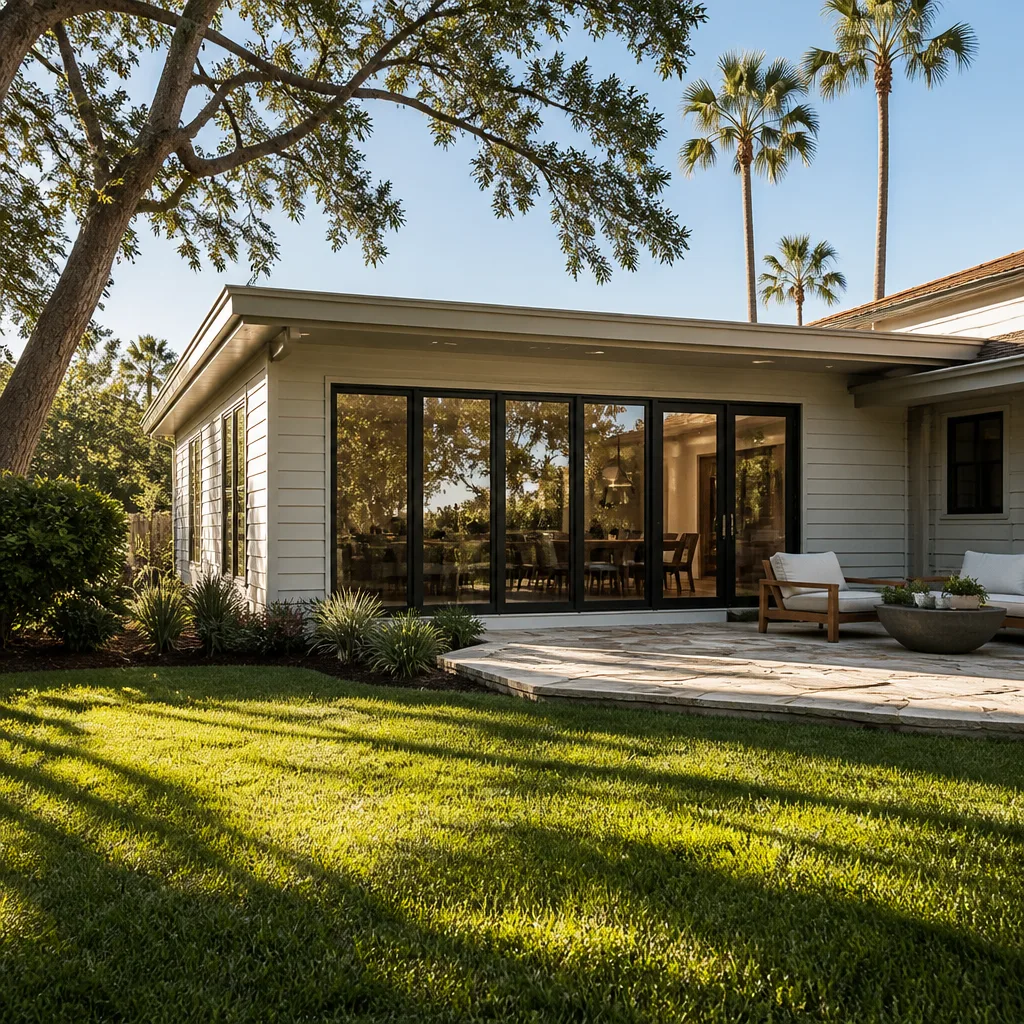
Some maintenance is genuinely homeowner-level. Some is not. Call a professional, not a handyman, for any of the following:
- Water stains on interior drywall after a rain. Where it shows up is a symptom of a flashing or roof connection issue that only a roofer should diagnose. Roof connections are a fall hazard and a detail issue. This is not a DIY inspection.
- Cracks in the foundation or slab. Widening cracks are worth an evaluation. Cracks that leak water are worth a same-week call.
- Any electrical work at all. Panel work, new circuits, or anything beyond flipping a breaker is genuinely dangerous. Electrical panels and wiring belong to a licensed electrician. No exceptions.
- HVAC system replacement or major repair. A system sized wrong for the addition needs a professional load calculation and a proper replacement plan.
- Sagging or deformation in the roof or framing. Not a cosmetic issue, and not a weekend fix.
Groundwork Construction Co. of Buena Park offers free estimates in Buena Park. If you’re not sure whether something belongs to you or to the warranty, call (833) 522-5059 and we’ll tell you straight.
See the difference
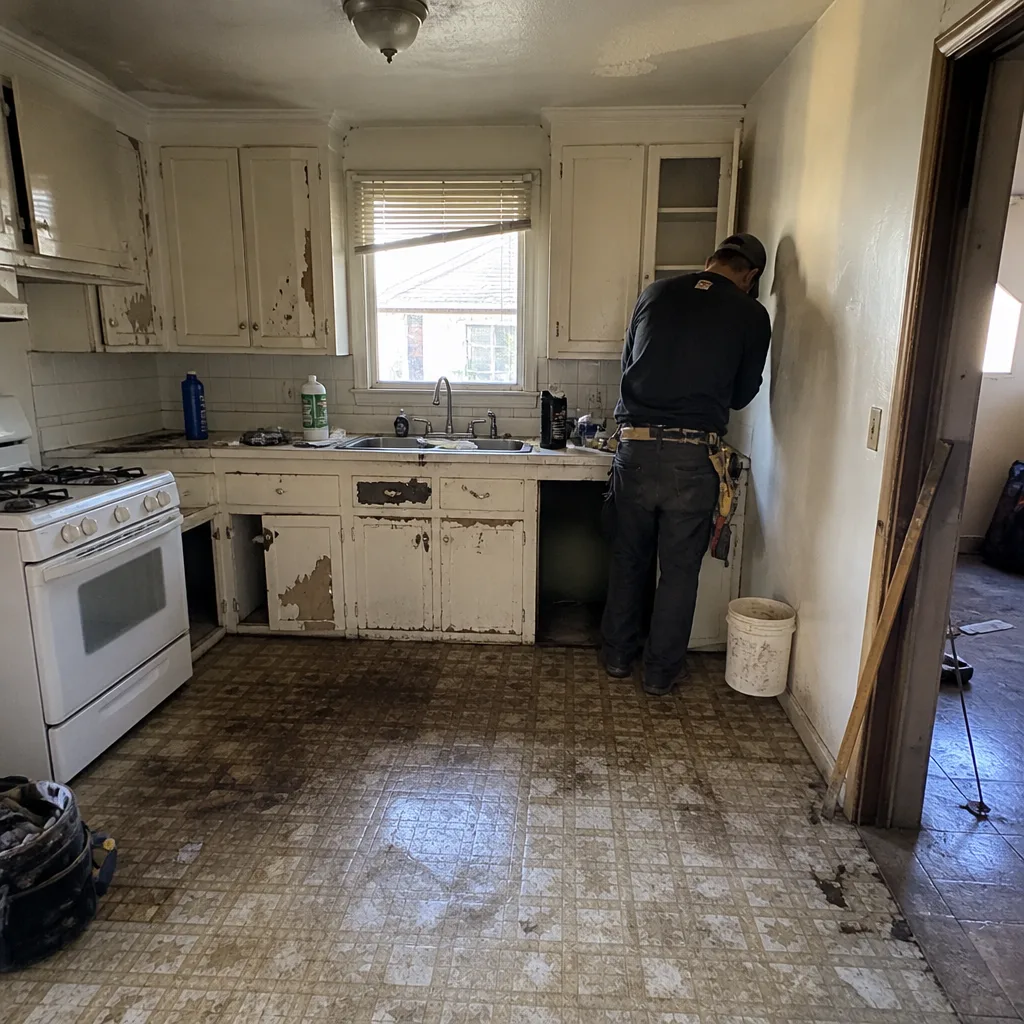 Before
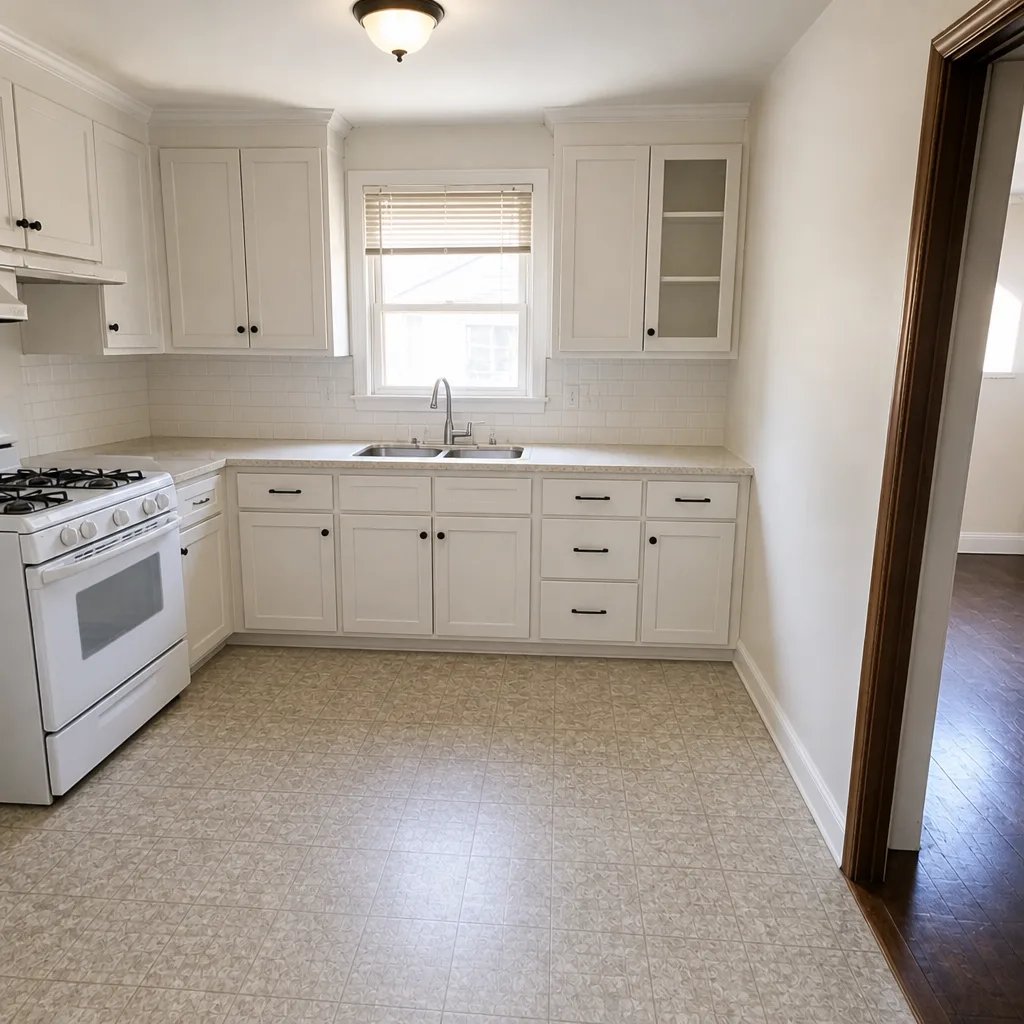 After
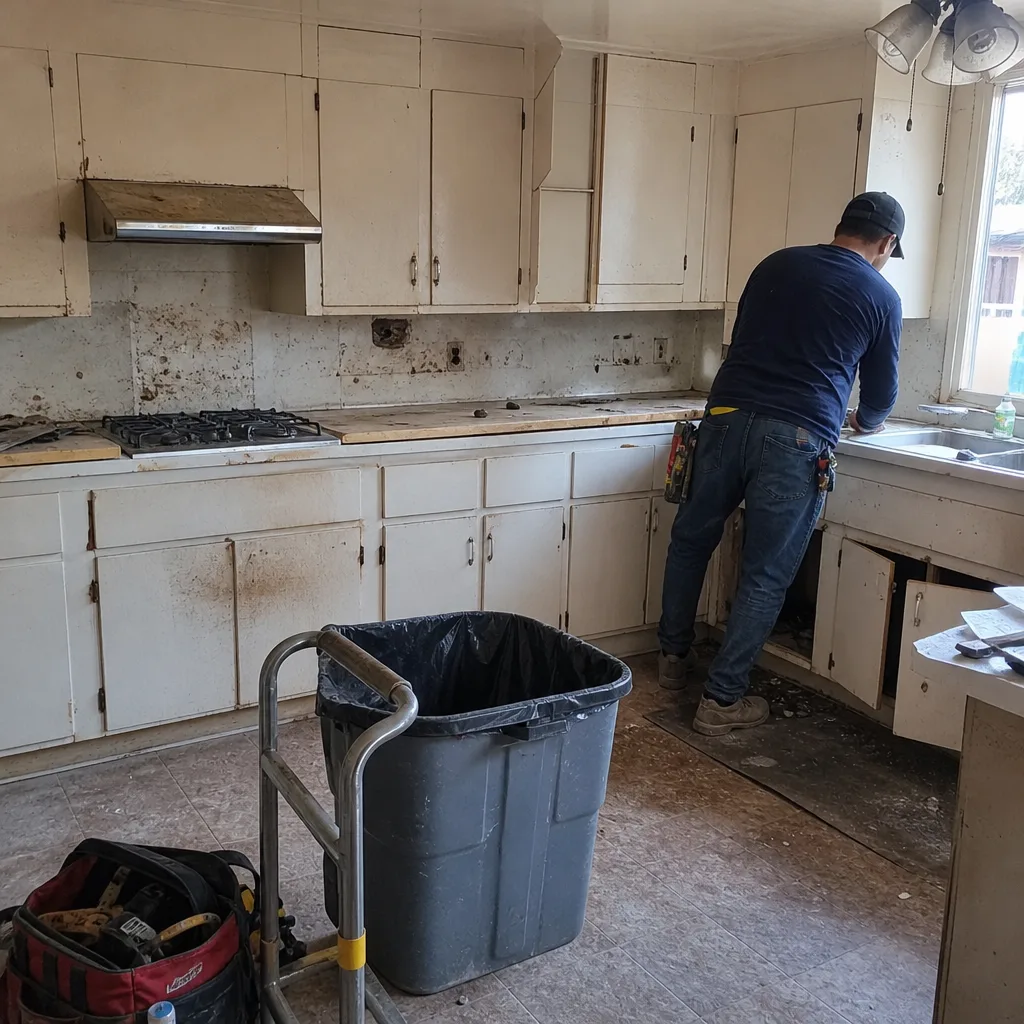 Before
 After
 Before
 After
Frequently Asked Questions
Hit 30, 60, and 90 days post-completion, then again at the one-year mark, and after that, once a year. The first-year schedule is the most important because that’s when settling movement is at its highest. The annual inspection after year one can be a simple walk with photos. Call for an exact checklist or to talk your specific addition through.
Hairline cracks at drywall corners, above door frames, and at ceiling joints are normal in the first 30 to 90 days as the framing settles and dries. Cracks that keep widening, or cracks with water staining, are not normal and should be evaluated. Call us for an exact look if the cracks are growing.
Caulking becomes homeowner maintenance, and it’s the single most important exterior task on the list. Caulk joints open as materials move, and water follows the open joints quickly. Doing a quick check and re-caulk annually costs almost nothing and protects the far more expensive envelope. Call us to walk through what to check.
Often, yes. Added square footage changes the load on the system, and if the new space runs hot or cold compared to the original house, balancing dampers or a service visit usually fixes it. If the system was already near its limit before the addition, a sizing evaluation is worth the call. Estimates are free, and the call is a straight answer.
Workmanship issues are covered under the 730-Day Done Right Promise; routine maintenance stays on the homeowner. The promise covers how the work was built, not how it’s cleaned and re-caulked. Material warranties on brands like GAF, CertainTeed, and Andersen carry their own terms and conditions, and they require the homeowner to keep up with maintenance. Call for an explanation of what’s covered.
Do the exterior inspection before the first significant rain, clear the gutters and drainage, and re-caulk any open joints. Walk the perimeter after the first storm to see where water goes. Anything showing water inside after a rain is a call-now item. For an exact checklist on your specific addition, call us.
The Bottom Line
A new addition or ADU isn’t maintenance-free just because it’s new. The first two years are the highest-risk window, and the schedule that makes them easy is: 30-60-90 days of post-completion checks to catch settling and caulk failures, an annual exterior pass on flashing, caulk, grading, and drainage, scheduled HVAC and electrical attention for the added load, and a clear, written handoff at the one-year mark about what’s yours and what’s under warranty. Do that and a well-built addition stays well-built. Skip it and small things compound. If you’re planning an addition in Buena Park or need help with the maintenance a project deserves, our teams are here.
Schedule Your Free Estimate
If you’re adding a home addition or ADU in Buena Park, the work you put into planning the maintenance is the work that protects the investment for decades. Groundwork Construction Co. of Buena Park builds with a 730-Day Done Right Promise behind the workmanship, no-hassle upfront pricing that puts the number in writing before work starts, 0% financing for 18 months, and a full-scope partner across every trade. From foundation to finish line, we handle the build so you know exactly what you’re maintaining and when. Our calls are answered by a live person, 24/7, and our technicians show up background-checked and in uniform. Call (833) 522-5059 to schedule your free project estimate and design consult.
Written by the team at Groundwork Construction Co. of Buena Park.