Last updated November 18, 2026

Free written scope consultation - allowances, timeline, and change-order rules on paper before a single trade is scheduled
How Long Does Driveway & Pavers Take? Timelines and What to Expect
The contractor who tells you your driveway takes three days is counting installation hours, not the two-week permit wait or the 72-hour cure window you’ll ignore at your own risk. That gap between the sales number and the real calendar is where homeowner plans fall apart. We’ve walked plenty of Buena Park driveways where the pavers looked done on Friday but shouldn’t have seen a tire until Monday afternoon. This guide gives you the unpadded truth: every phase from permit application to first full vehicle load, the variables that push dates out, what special-order pavers really cost you in time, and the questions that put a schedule in writing before you sign anything.
Quick Answer
A typical driveway paver installation in Buena Park runs 3 to 5 days of active on-site work once permits are in hand, but plan on 4 to 8 weeks end to end when you add permit approval, demolition, base prep, and the cure window before you park on it. Special-order pavers can add 2 to 4 weeks. The installation is the fast part; the waiting around it is what most contractors don’t put in the quote.
Styles & brands we work with
- Kitchen remodeling
- Bathroom remodeling
- Home additions & ADU
- Roofing
- Windows & doors
- Driveway & pavers
- Fence
Table of Contents
- The Real Project Timeline, Phase by Phase
- How Long Do Permits Take in Buena Park?
- Demolition and Base Work: Why This Feels Slow
- Installation, Jointing, and the Cure Window
- What Actually Causes Timeline Extensions
- Material Lead Times and Special-Order Pavers
- How to Spot a High-Risk Project Before You Sign
- Questions That Put Your Schedule in Writing
The Real Project Timeline, Phase by Phase
Break a driveway project into its phases and the arithmetic gets honest. Most contractors quote you phase five and let you assume phases one through four happen overnight. They don’t. Here’s how a standard 400 to 600 square foot paver driveway in Buena Park actually moves, with days rather than hours attached to each stage.
- Design, measurements, and the contract: 3 to 10 days. You’re choosing paver style, layout, color, and edging. If you’re using a manufactured stone like Belgard, the product line often determines the lead time in phase six.
- Permit application and approval: 2 to 4 weeks in Buena Park. This is the phase homeowners forget and the phase that quietly eats their schedule.
- Demolition and haul-away: 1 to 2 days. Breaking out old concrete or asphalt, loading it, and getting it off-site. A jackhammer on a weekday morning is not a popular sound on a residential block, so scheduling matters.
- Base prep and grading: 2 to 4 days. Excavation, compacted aggregate base, drainage slope, and forming. This is the phase that determines whether the driveway holds up for 20 years or cracks in three. It also has the widest gap between “quoted” and “real” because nobody knows what’s under the old slab until it’s gone.
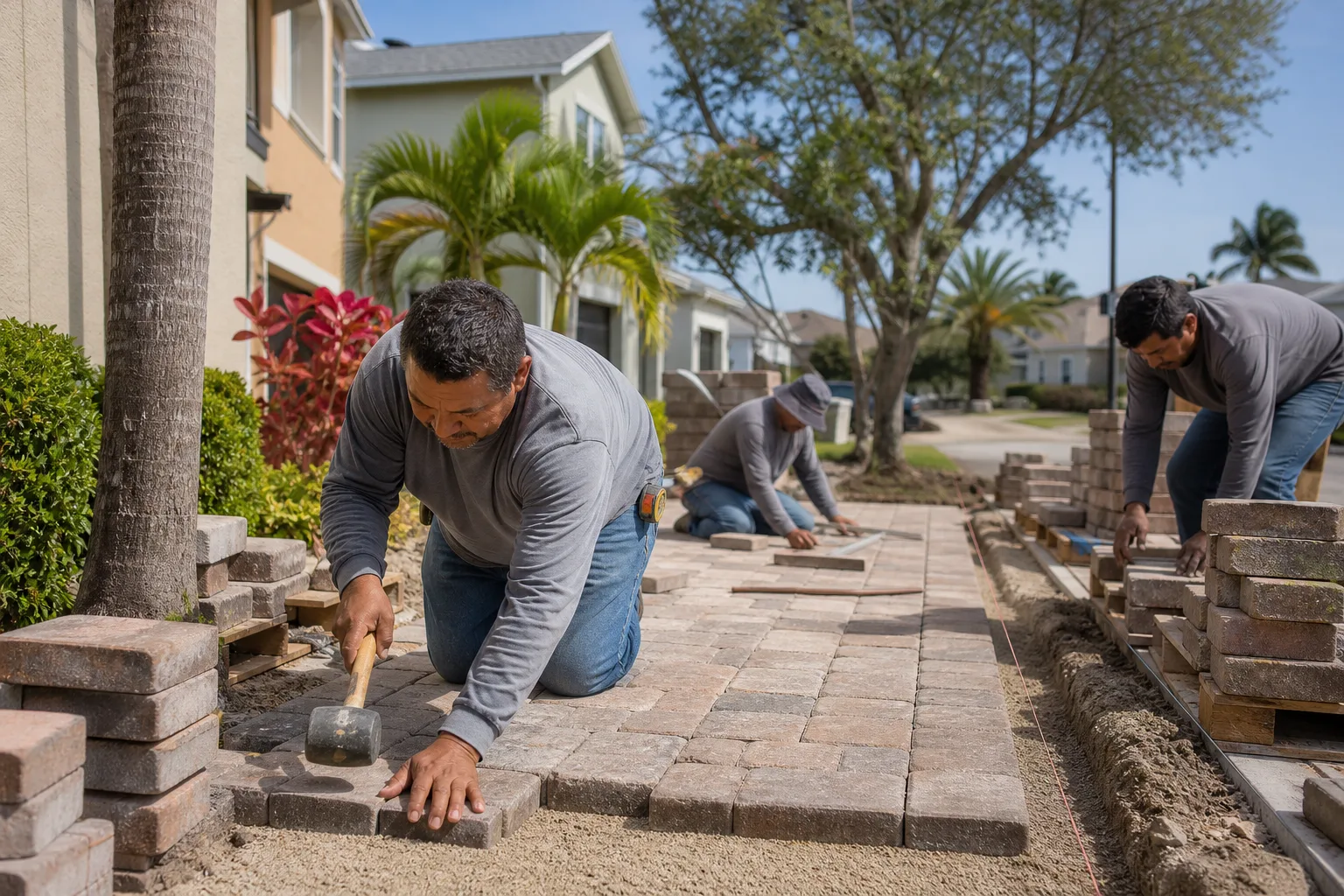
- Paver installation: 2 to 4 days depending on square footage, pattern complexity, and whether cuts are simple arcs or intricate borders.
- Jointing and curing: 24 to 72 hours before foot traffic, up to 7 days before a full vehicle load. We detail this below because it’s where structural mistakes happen.
Add it up and a clean project is roughly 4 to 6 weeks door to door. A project with a material change, a surprise base problem, or an inspection reschedule pushes to 7 or 8. The installation itself is rarely the bottleneck – the waiting around it is.
How Long Do Permits Take in Buena Park?
Plan for 2 to 4 weeks on a driveway permit in Buena Park when your plan set is clean and the work isn’t in a specific flood or hillside zone. That’s the realistic range for a residential driveway replacement with grading changes or new hardscape connection to the public right-of-way. If the project touches the sidewalk, apron, or any portion of the parkway between the curb and your property line, expect a separate encroachment review and a longer clock.
- Standard residential driveway replacement: 2 to 4 weeks for review and issuance.
- Work affecting the parkway, apron, or public right-of-way: add 1 to 3 weeks for encroachment processing.
- Grading changes that alter drainage direction: add plan review and possibly a drainage plan, another 1 to 2 weeks.
- Re-submittals: each correction cycle typically costs 5 to 10 business days. One common miss – a plan set that doesn’t show the drainage slope – can cost you two full resubmission rounds.
Three things speed this up. A complete plan set with a clear slope and a site plan drawn to scale. A contractor who pulls the permit for you rather than handing you a form. And starting the paperwork before demolition day instead of after. In our experience, Buena Park projects that begin permit paperwork the same week the contract is signed stay on schedule; projects where the paperwork sits in a folder for two weeks don’t.
Demolition and Base Work: Why This Feels Slow
Demolition on a typical Buena Park driveway is one day if the old surface is asphalt, two if it’s poured concrete. What sits underneath is what changes the schedule. Many of the homes on the older blocks near downtown and around the Buena Park Historic District were built mid-century and have concrete layouts that don’t match current code for slope or drainage. When we open up the driveway and find a base that was never compacted, or a slab that’s been patched three times and never leveled, the base work gets longer. That isn’t a contractor being slow; it’s a driveway that would have cracked again within five years if it were paved over.
Here’s what base work actually involves, and why you shouldn’t ask anybody to shave days off it:
- Excavation to sub-grade. Removing soil to the depth the paver system requires – often 7 to 9 inches below finished grade, more if you’re correcting slope or adding a drainage channel.
- Sub-base and aggregate base placement. Compacted in lifts, not dumped in one pour. This is the one phase you can’t rush.
- Grading for slope. Water must move away from your garage and toward the street or a drain. In a part of Orange County that averages under 14 inches of rain a year but still gets every drop in a handful of winter storms, the grading matters more than most homeowners realize – sheet flow across a flat yard finds its way to your garage slab if the slope isn’t right.
- Edge restraint and forming. Concrete curbs or metal edging held to the base with hardened spikes prevents paver spread under load.
- Inspection. If your permit calls for an inspection of the base before installation, expect 1 to 3 business days for the inspector to arrive and sign off.
Base work is 2 to 4 days on a clean project and 5 to 7 on one that corrects an existing problem. You want the longer version. The driveway that lasts 20 years is the one where somebody lost a day or two on the base, not the one that arrived early.
Installation, Jointing, and the Cure Window
Paver installation on a residential driveway moves at roughly 100 to 200 square feet per day per crew, faster on simple running-bond patterns and slower on herringbone, tumbled edges, or intricate borders. A 500 square foot driveway with a straightforward layout is 2 to 3 days. A larger driveway with a curved border and a matching walkway is 3 to 4.
Then comes jointing and curing. Polymeric sand is swept into the joints and wetted so it locks. Concrete-set installations (where pavers are bonded to a concrete base) require the concrete itself to cure before the joints go in. Either way, the driveway is not ready for your car the moment the crew leaves.
- Foot traffic: usually fine within 24 hours.
- Furniture or light loads: 48 to 72 hours for a sand-set installation.
- Full vehicle load: 72 hours minimum for sand-set, and up to 7 days for concrete-set installations where the slab needs to reach cure strength. A full-size pickup or SUV should wait the full upper end of that range.
Skipping the cure window is a structural mistake, not a scheduling inconvenience. Polymeric sand needs moisture and time to set into a bonded joint; drive on it too early and the joint loosens across the whole width of the wheel path. A concrete base that hasn’t reached cure strength will develop hairline cracks and, worse, can shear the pavers loose from underneath. We’ve seen driveways that were beautiful on installation day and rocking within 18 months because somebody parked a car on the third day. If your contractor tells you “drive on it tomorrow,” ask why. The answer should be persuasive. Call (833) 522-5059 for an exact quote on your Buena Park driveway – estimates are free, and we’ll tell you the cure window in writing.
What Actually Causes Timeline Extensions
The phase arithmetic in this guide assumes a clean project. Real projects trip on a short list of variables, and you can predict which ones apply to you before signing anything. Here’s what extends the schedule, and by how much.
- Special-order pavers: 2 to 4 weeks added. The single biggest hidden delay. More on this below.
- Permit resubmittals: 1 to 2 weeks per correction cycle, more if the resubmittal triggers another full review.
- Base problems discovered during demolition: 1 to 3 days of extra work plus, occasionally, a stop-work inspection and a re-inspection cycle.
- Weather: a wet winter week in North Orange County is enough to stall grading, and you can’t lay pavers in standing water. Assume 3 to 5 lost days across a winter-scheduled project.
- Inspection scheduling: 1 to 3 business days per required inspection, and there are often two on a driveway with a grading change.
- Utility conflicts: if the old driveway crosses a buried utility lateral that needs relocation, add a week and a permit.
What doesn’t cause extensions? A contractor’s skills and crew size. A three-person crew and a six-person crew install pavers at similar per-crew rates – the big crew runs more jobs at once, it doesn’t run yours faster. Don’t hire on the basis of “we have a big crew.” Hire on the basis of the schedule that’s specific to your driveway.
Material Lead Times and Special-Order Pavers
Stock pavers from a regional supplier arrive in 3 to 7 days against an order. Special-order pavers – custom colors, specific production runs, imported stone, or a line the local yard doesn’t carry – can take 3 to 6 weeks. That’s the 2 to 4 week gap between a contractor’s “three-day” quote and the real calendar. When a contractor quotes you a short timeline without mentioning lead time, one of two things happens: either they haven’t placed the order yet, or they’ve placed the order and the timeline they gave you starts on the day the pavers arrive.
A few material facts that keep timing honest:
- Regional brands like Belgard usually have a stocked line and a fast turnaround in Orange County. Custom order runs within their catalog can run longer.
- Natural stone – travertine, bluestone, flagstone – is quarried and lead times are 4 to 8 weeks depending on the size and grade. Travertine from certain suppliers is a common choice in Southern California and the timelines vary by quarry run.
- Prefab concrete or manufactured systems – including panelized products from companies like Cover – sit at a different lead-time scale, often faster to install but ordered to spec and shipped to schedule. If you’re comparing paver systems against panelized options, get ship dates in writing.
- Mixed paver patterns – multi-color or multi-size mixes – require more careful ordering because the color balance has to be met from a single production run. A split run shows up as a visible color break in the finished driveway.
If your heart is set on a specific paver, order it before demolition begins. If your heart is set on the driveway being finished by a specific date, ask which stocked lines are available now and pick from that list. Those two requests can conflict, and knowing which one matters more to you closes the gap between the schedule you want and the schedule you’ll get.
How to Spot a High-Risk Project Before You Sign
Some driveways are more likely than others to run long. In Buena Park, we’ve seen certain property ages and layouts consistently produce more surprises. Before you commit, ask yourself these questions – each one is a signal.
- Is your home pre-1965? Driveways from that era often have thinner slabs and un-compacted base material. Add 1 to 3 days for base correction.
- Does the driveway slope toward the garage rather than away from it? Correcting a reverse slope requires re-grading that extends base work by 1 to 2 days. It’s a real fix and worth doing, and it changes the schedule.
- Are there existing trees near the driveway? Root systems under the old slab affect excavation and can force a root barrier installation. Add 1 to 2 days.
- Is the paver a special-order color or line? 2 to 4 weeks of lead time.
- Does the project touch the parkway, apron, or sidewalk? Encroachment review, another 1 to 3 weeks on the front end.
- Are there drainage issues in the surrounding block? A neighboring property that floods the parkway suggests a drainage correction you’ll want to include, which extends the grading phase.
- Is your property on a hillside or in a specific flood zone? Additional plan review, and a longer permit timeline.
Any one of these is manageable. Two or three together usually means the schedule is 7 to 9 weeks, and a quote that promises 3 weeks is a promise the contractor can’t keep. Ask them which of these factors they’ve considered in their schedule. A good answer names the specific ones and how they’ve planned around them. A bad answer starts with “don’t worry about it.”
Questions That Put Your Schedule in Writing
A handshake estimate isn’t a schedule. A schedule is a document with dates attached. Before you sign, get answers to these questions in writing, not verbally.
- “When will you pull the permit, and how long do you expect approval to take?” A good contractor gives you the target application date and their estimate of the review window.
- “Is my chosen paver in stock now, or special order? When does it arrive on site?” The answer should be a date. If they can’t give you one, they haven’t ordered the material.
- “What happens to the schedule if you find a base problem?” They should have a contingency range and a clear process for showing you the problem before proceeding.
- “When is the earliest date I can park on the finished driveway?” They should give you a specific day after installation, not “the next day.”
- “When can I expect the final walkthrough, and what does it cover?” The walkthrough isn’t the day the crew leaves; it’s after the jointing has cured and any punch list items have been resolved.
- “Will the written schedule include all inspection dates and material delivery dates?” The clean answer is yes.
- “What’s your workmanship guarantee, in writing, and how long does it run?” This is where the conversation about accountability either gets real or dissolves into vague reassurances.
The Groundwork Construction Co. 730-Day Done Right Promise backs our driveways and pavers for two full years – if it’s not done right, we make it right. That’s not a schedule; it’s what happens if the schedule slips. You want both. When you’re ready to plan a real project in Buena Park, call (833) 522-5059 for your free estimate – upfront pricing, no change orders, and a schedule you can hold us to.
Common Mistakes to Avoid
- Comparing quotes that measure different things. One quote measures installation days, another measures the full project. They feel like the same number but they aren’t. Ask every bidder what end-to-end timeline they’re quoting, and hold them to the phase breakdown.
- Booking the start date before the permit is filed. Buena Park permits are 2 to 4 weeks. If demolition is scheduled “next week” and permits haven’t been filed, the crew is either going to delay, or they plan to work without a permit. Neither is a good sign.
- Choosing a special-order paver without checking lead time. The 2 to 4-week gap between a stocked line and a custom run is the most common reason a driveway feels like it’s not moving.
- Driving on the driveway too early. 72 hours minimum for sand-set, up to 7 days for concrete-set. Skipping this is how joint failure and paver movement start. The joint failure is invisible until it isn’t.
- Skipping the base correction to hit the original timetable. A short schedule with a bad base is a longer schedule later. Replacing a failed driveway in five years costs more than taking three extra days now.
- Not asking about drainage in the contract. A driveway that slopes toward the garage is a driveway that funnels Buena Park winter rain into your garage slab. Get the slope plan in writing.
- Assuming the final walkthrough means the second the crew leaves. The walkthrough is after the cure. Schedule time for punch list items and their resolution before hosting the neighborhood reveal party.
Each of these turns a manageable project into a frustrating one. None of them is exotic. And all of them are caught by asking the right questions before work starts. When you’re planning a driveway in Buena Park, we’re happy to walk through each of these with you. Call (833) 522-5059 for a free estimate.
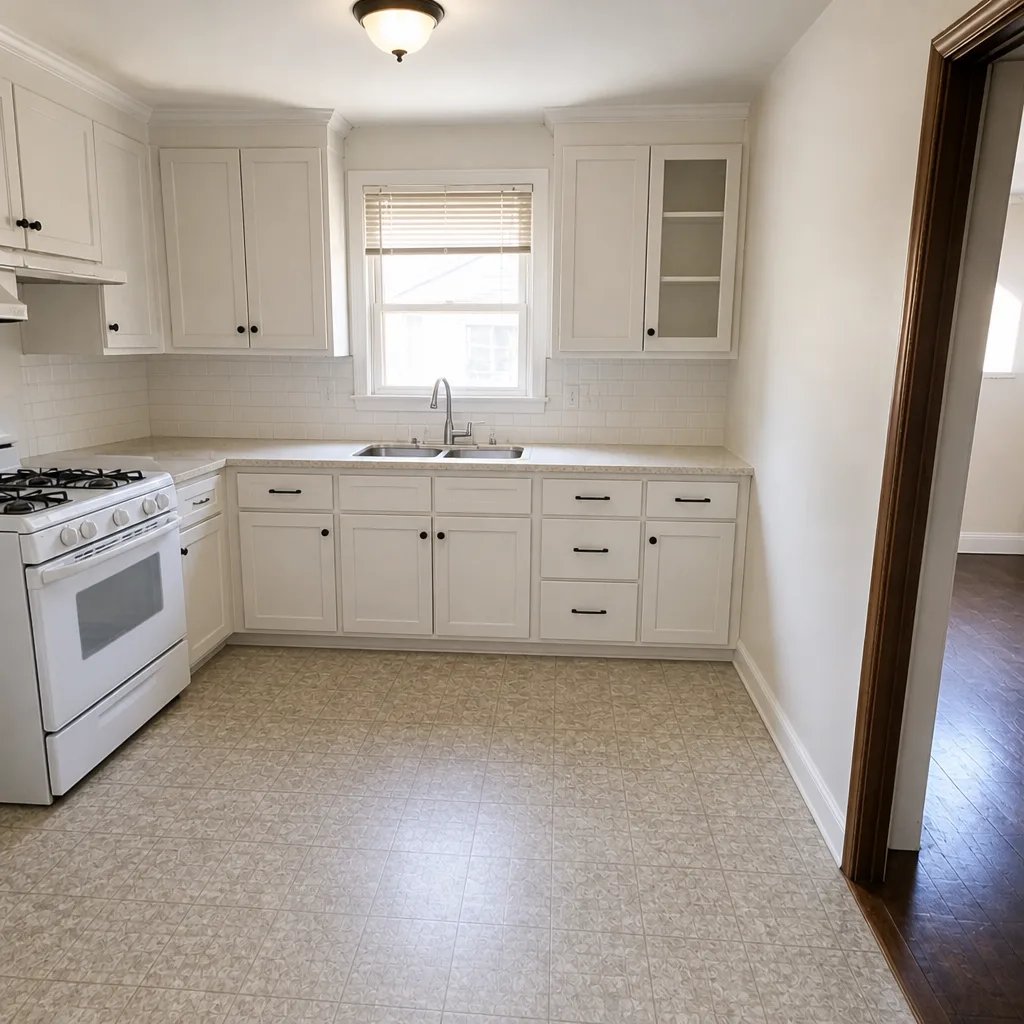
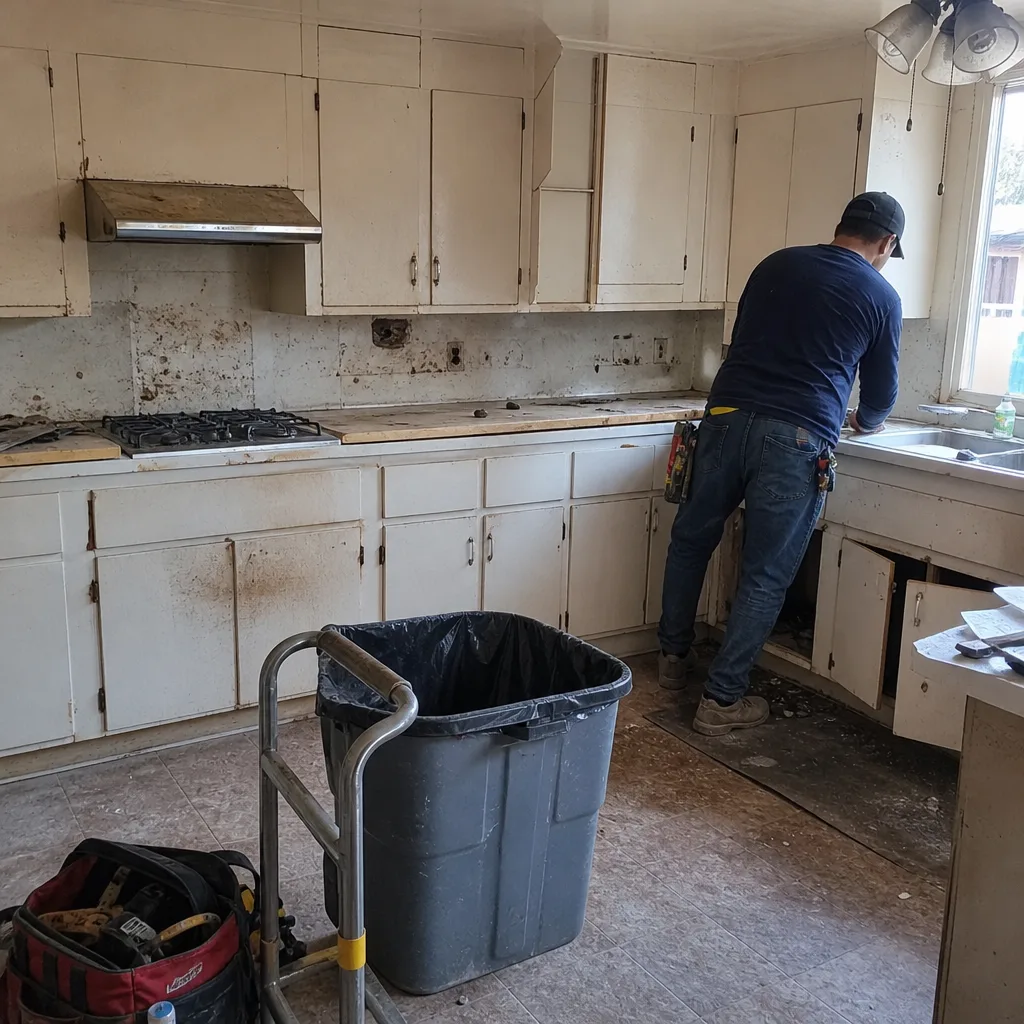
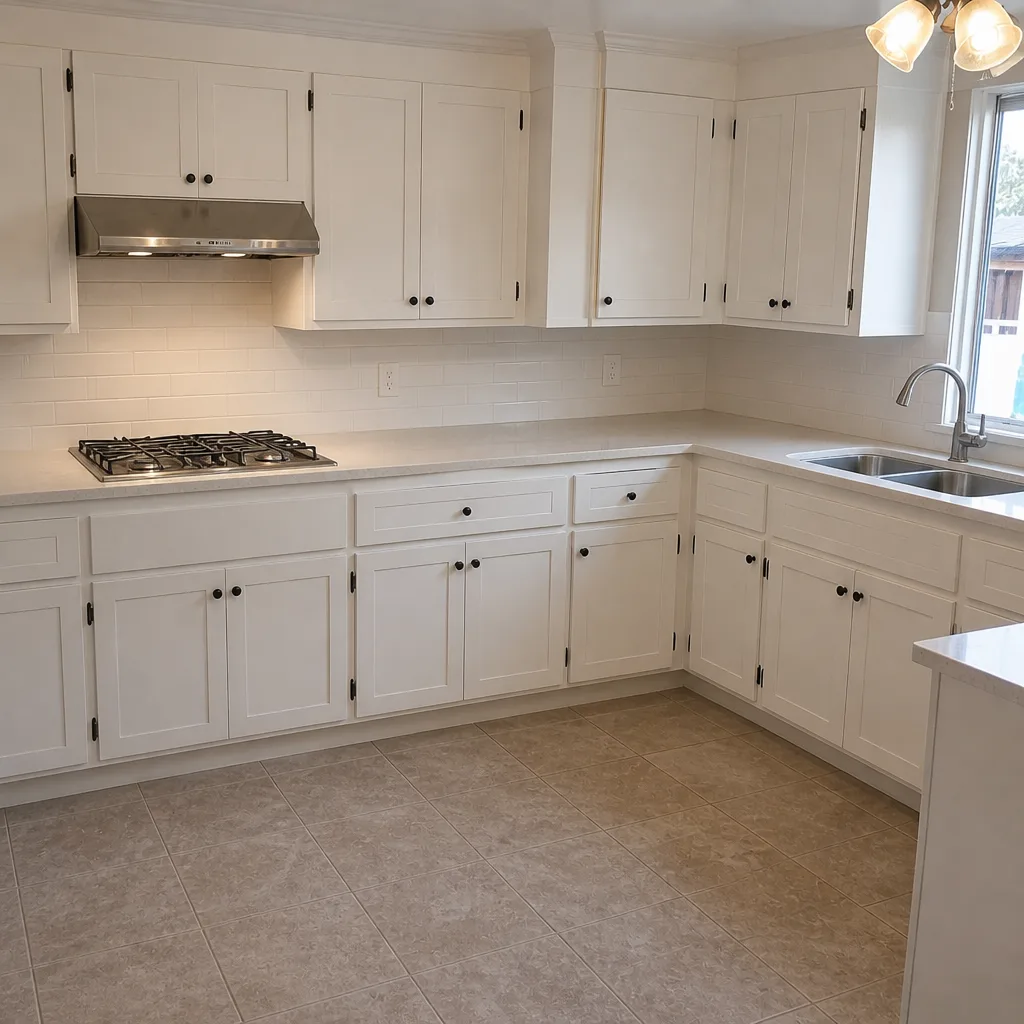
See the difference
 Before
 After
 Before
 After
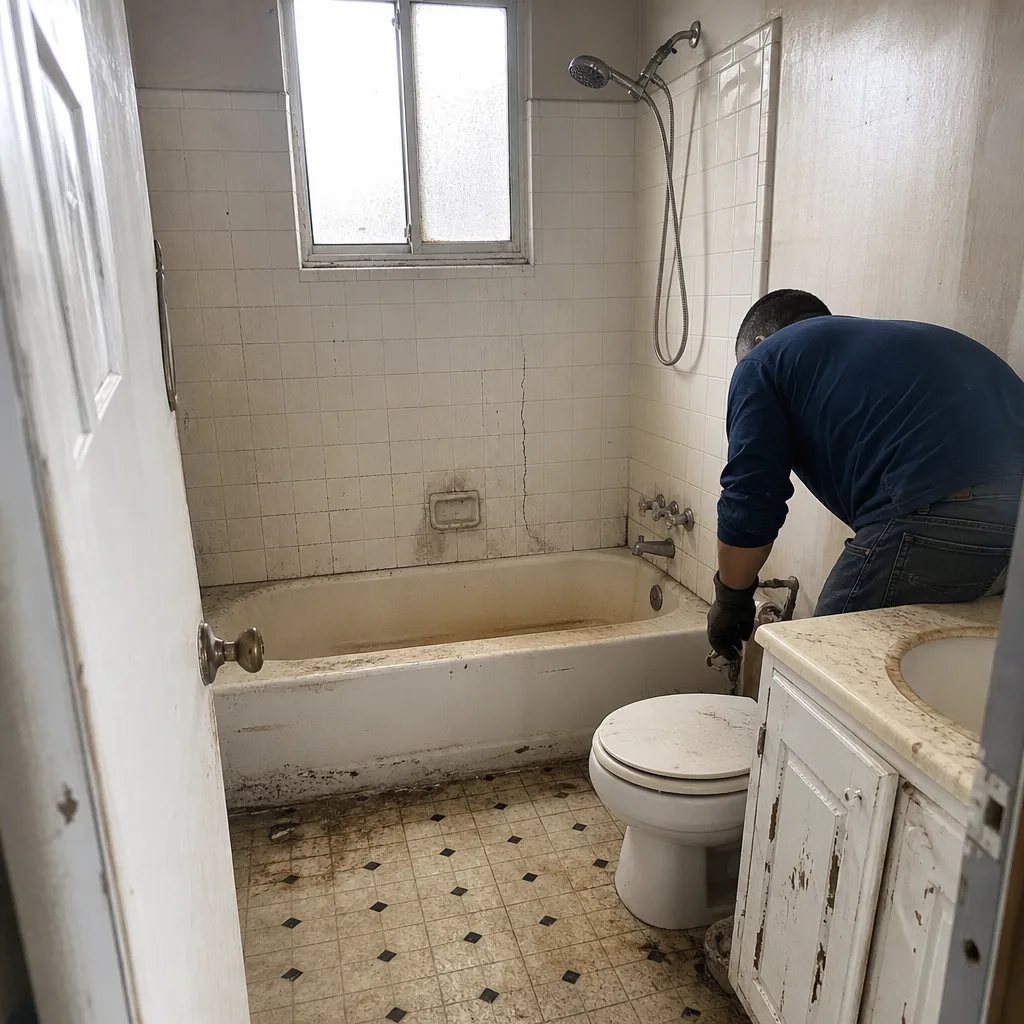 Before
 After
When to Call a Professional
If your project involves any of the following, get a professional on the phone before you order pavers or book the demolition: work that touches the parkway, apron, or sidewalk (permit required); a driveway that currently slopes toward the garage; an existing surface that’s been patched repeatedly; special-order pavers that need to be right the first time; or any project where you’re being quoted a schedule under three weeks for a job that clearly involves four or five phases. A free estimate from a Buena Park contractor who will lay out the phase timeline in writing is the fastest way to find out what your project actually takes. Groundwork Construction Co. of Buena Park offers free estimates in Buena Park – call (833) 522-5059. We’ll tell you what your schedule really looks like, including the parts that other quotes leave out.
Frequently Asked Questions
Plan for 4 to 6 weeks end to end, with 3 to 5 days of on-site installation once permits are approved. The installation itself is fast; the permit, demolition, base, and cure phases are the bulk of the calendar. Call (833) 522-5059 for an exact quote on your project – estimates are free.
Allow 2 to 4 weeks for a standard residential driveway permit in Buena Park, longer if the work touches the parkway or requires drainage review. Resubmittals add 1 to 2 weeks per cycle. Start paperwork the week you sign the contract so you’re not sitting on a delay you created.
No. Sand-set paver driveways need 72 hours before a full vehicle load; concrete-set installations can need up to 7 days for the concrete to reach cure strength. Driving on it early causes joint failure and paver movement that shows up months later. Call (833) 522-5059 if you want the cure window for your specific installation in writing.
Yes, typically 2 to 4 weeks of lead time for custom colors, imported stone, or lines your regional supplier doesn’t stock. Stocked lines from brands like Belgard usually arrive in 3 to 7 days. If your deadline is tight, ask which stocked lines fit your design before ordering.
The permit approval window (2 to 4 weeks in Buena Park) and the material lead time for special-order pavers (2 to 4 weeks) are usually the longest phases. Installation itself rarely exceeds 5 days for a residential driveway. Budget time on the front end, not the on-site work.
The base correction extends the project by 1 to 3 days, more if a re-inspection is required. A good contractor shows you the problem before proceeding and puts the revised schedule in writing. A quick short-schedule quote with no contingency for base problems is a warning sign – call (833) 522-5059 to talk through your specific site.
The Bottom Line
Driveway paver installation is 3 to 5 days of on-site work wrapped in 4 to 6 weeks of real project calendar. Permits, demolition, base prep, installation, and the 72-hour cure window all take what they take – shortcuts on any one of them show up as joint failure, cracking, or paver movement within a few years. Special-order pavers add 2 to 4 weeks. Base problems and Buena Park permit resubmittals add another week each. The single most useful thing you can do is get a phase-by-phase schedule in writing before you sign, and then hold your contractor to it. If you want a Buena Park contractor who puts the schedule in writing and backs the work with a 730-Day Done Right Promise, call Groundwork Construction Co. of Buena Park at (833) 522-5059 for your free estimate. We’ll walk your driveway, tell you what phases apply to your site, and give you upfront pricing with no surprises.
Written by the team at Groundwork Construction Co. of Buena Park.