Last updated November 18, 2026
Free written scope consultation - allowances, timeline, and change-order rules on paper before a single trade is scheduled
DIY vs Professional Driveway & Pavers: What’s Safe to Do Yourself
Renting a plate compactor for a weekend doesn’t make the base layer right. It makes it look right until the first rainy season. That’s the gap most DIY paver guides skip over, and it’s the gap that costs Buena Park homeowners thousands. Most of the popular tutorials floating around online were written by people in flat, sandy-soil states where water drains almost instantly and frost heave isn’t a concern. Southern California is a different animal: heavy clay soil, engineered drainage requirements, and a permitting system that doesn’t forgive shortcuts. This guide draws an honest line between what a motivated homeowner can genuinely handle and the work where DIY ends up costing more to fix than it would have to hire out. You’ll learn which tasks are safe, which are traps, and how to price the real comparison.
Quick Answer
You can safely handle demolition, hauling materials, and even paver cutting with a rented wet saw on a driveway project. What you should not do yourself is base preparation, compaction, slope engineering, and anything touching drainage or permits. Base prep is where 80% of paver failures originate, and in Buena Park’s clay soils, an improperly compacted base will settle and shift within one or two wet seasons. Hire out the structural work; keep the labor for the parts that don’t put your driveway warranty at risk.
Styles & brands we work with
- Kitchen remodeling
- Bathroom remodeling
- Home additions & ADU
- Roofing
- Windows & doors
- Driveway & pavers
- Fence
Table of Contents
- Why Southern California Driveways Are a Different Job Than the Internet Thinks
- The DIY Tasks You Can Genuinely Handle (With Real Numbers)
- Base Preparation: The Non-Negotiable Professional Task
- The Permit Reality Nobody Explains
- True Cost Comparison: DIY vs Professional in Orange County
- Three Red Flags That Mean the DIY Window Has Already Closed
- Materials, Tools, and What Quality Actually Costs
- Common Mistakes to Avoid
Why Southern California Driveways Are a Different Job Than the Internet Thinks
The DIY paver content ecosystem has a geography problem. Search “how to install pavers yourself” and you’ll land on blogs from Florida, Texas, and the Carolinas, where sandy or loamy soil drains fast and the base course does most of its settling in the first month. Buena Park sits on a different foundation entirely. The expansive clay soils that run through much of Orange County hold water, swell when wet, and shrink when dry. A base layer that’s compacted to a sandy-soil standard will move under a Buena Park driveway in a way it never would in Tampa.
The other difference is water engineering. Southern California gets its rain in concentrated bursts, not spread evenly across the year. That means when a storm hits, your driveway needs to move a large volume of water fast, and the slope of the base, the pitch of the pavers, and the drainage pathway all have to be engineered for that specific reality. A flat driveway with good compaction is still a failing driveway if the water has nowhere to go.
There’s also the code side. Buena Park and surrounding Orange County jurisdictions have specific requirements for driveway approach aprons, side setbacks, and drainage that most DIY guides never mention. If your project touches the public right-of-way, you’re dealing with a permit that involves city inspection. We’ve seen homeowners spend three weekends laying a beautiful herringbone driveway, only to have it flagged during a pre-sale inspection because the approach apron didn’t meet the city standard. That’s not a cosmetic problem. That’s a project that has to come out.
None of this means DIY is foolish. It means the calculus is different here. The question isn’t “can a homeowner lay pavers?” because the answer is yes. The question is “can a homeowner lay pavers that survive a Southern California clay soil and pass a Buena Park inspection?” and the honest answer is: sometimes, but only if the structural work is done by someone who understands what’s underneath.
The DIY Tasks You Can Genuinely Handle (With Real Numbers)
There’s real money to be saved on the labor portions of a paver project, and there’s no reason to pay a crew for work you can do with your own hands. Here’s what we tell homeowners in Buena Park when they ask which parts are worth taking on.
Demolition and Removal
Breaking out an old concrete or asphalt driveway is hard, physical work, but it carries almost no risk of expensive failure. You’ll need a rented electric demo hammer (about $80-$120 per day from a Buena Park or Anaheim rental yard) and a dumpster for the debris. Expect $400-$650 for a 10-yard dumpster for a typical two-car driveway’s worth of concrete. A crew of two can demo a 20×20 concrete driveway in a weekend. Save your receipts and take photos of the subgrade once it’s exposed; those photos are useful later when you’re talking to a contractor about base work.
Material Hauling and Staging
Pavers are heavy. A pallet of standard 60mm concrete pavers weighs around 3,000 pounds, and a two-car driveway in Buena Park typically needs 4-6 pallets. Hauling them yourself saves delivery fees ($150-$300 per delivery for most Southland suppliers) but only makes sense if you have a truck or trailer and can move the pallets to the staging area with a rented forklift or pallet jack. The labor savings here are real, but the physical toll is significant. Factor in a chiropractor visit if you’re doing this solo.
Paver Cutting With a Rented Saw
This is the one task where a homeowner with some patience can save meaningful money without risking the structural integrity of the job. A wet tile saw or paver saw rents for $75-$130 per day. Cutting the perimeter pieces and any curved or angled sections takes time, but it’s a learnable skill, and most cuts are forgiving. We recommend buying a few extra pavers (10-15% overage instead of the standard 5-10%) to account for miscuts. Practice on scrap pieces before you touch the visible surface.
What You Should Not Take On
- Excavation to exact depth with proper slope. This is the first step where errors become permanent.
- Base gravel placement and compaction. Covered in the next section.
- Sand bedding screeding and leveling. This is a precision step that determines whether the surface is flat.
- Edge restraint installation. Polymeric sand and edge restraints are the two systems that keep pavers from migrating.
- Final polymeric sand application and activation. Done wrong, it hazes the pavers permanently or fails to lock them.
- Any drainage connection to existing systems or public stormwater infrastructure.
Budget realistically: if you take on demolition, hauling, and cutting, you might save $1,200-$2,200 in labor on a typical Buena Park driveway project. That’s real money. It’s not the full cost of a professional install, but it’s not nothing either.
Base Preparation: The Non-Negotiable Professional Task
If you take one thing from this guide, take this: base preparation is where DIY paver projects fail, and it fails invisibly. The surface looks perfect on day one. The failure shows up six to eighteen months later as settling, heaving, uneven joints, and water pooling where it didn’t before. By the time you can see it, the only fix is to pull up the pavers, redo the base, and relay. You’ve now paid for the job twice.
Base prep for a Buena Park driveway involves several layers of engineering that most DIY guides completely gloss over.
Correct Depth for Local Soil
In sandy soil, a 4-inch compacted base is often adequate for a residential driveway. In Buena Park’s clay soils, that’s not enough. We typically recommend 6-8 inches of compacted aggregate base (Class II or crushed miscellaneous base) for a residential driveway, sometimes more depending on soil testing. The clay doesn’t drain, so the base has to compensate by providing both a stable load-bearing layer and a drainage pathway for water moving laterally under the pavers.
Compaction Testing, Not Just Compaction
Renting a plate compactor and running it over the gravel is not the same as passing compaction. Proper base work involves compacting in lifts (typically 2-3 inch layers), wetting each layer, and testing density. On commercial and municipal work, that means a nuclear density gauge or sand cone test. On residential work, an experienced contractor still knows what proper compaction feels and looks like, and they’ll compact each lift properly instead of one pass with a heavy plate over a thick layer. The difference shows up as base settling under the pavers over the next two winters.
Slope Engineering for Drainage
Water is the enemy of every driveway. A Buena Park driveway needs to slope away from the garage and foundation at a minimum of 2% (roughly a quarter-inch per foot), and the slope has to be consistent across the whole surface. If the driveway slopes into the garage, water flows under the garage door during the first real storm. If it slopes toward the street, that might be fine, but only if the flow doesn’t cause an erosion problem at the apron. If the property has a grade change within the driveway footprint, the slope work becomes more complicated and often requires a drainage channel or trench drain at the low point.
Edge Restraint and Geotextile
Pavers are held in place by edge restraint that’s anchored into the base, not just set on top. And on clay soils, a geotextile fabric between the subgrade and the base gravel reduces migration and improves long-term stability. Neither of these is hard to install, but both are routinely skipped in DIY jobs and both are directly responsible for the “my pavers are spreading at the edges” problem that shows up a year later.
Here’s the honest part: if you’re paying a crew to do the base, the excavation, the compaction, and the sand setting, you’re paying for the majority of the install labor cost. The DIY window on a Buena Park driveway is not zero, but it’s narrower than most guides admit. If you want to keep the driveway cost down, consider taking on the demo and hauling and letting a vetted pro handle everything from excavation forward.
The Permit Reality Nobody Explains
Here’s a question that almost never makes it into DIY paver guides: who pulls the permit, and who’s liable if the work fails inspection? In Buena Park and most of Orange County, the permit requirement for a driveway project depends on whether the work touches the public right-of-way, changes the drainage pattern on the property, or involves grading beyond a small threshold. If any of those apply, you’re dealing with a permit.
The Homeowner’s Liability When DIY Work Fails Inspection
When you pull a permit as a homeowner and the work fails inspection, you’re the responsible party. You have to bring it into compliance, which usually means paying someone with experience to redo the failing portion and then paying for a re-inspection. When the permit was pulled under a licensed contractor’s name, the contractor carries that responsibility. The financial exposure is on their side, not yours. This asymmetry is a significant part of what you’re paying for with a licensed professional, and it’s not the part that gets discussed.
Unpermitted Work and the Sale of Your Home
Unpermitted driveway work has a way of surfacing at the worst possible time: during the buyer’s inspection, three days before closing, when the buyer’s agent asks the city to confirm that work done on the property was permitted. A driveway that shows up on record as unpermitted can trigger a demand to either bring it into compliance (expensive) or reduce the price to cover the potential liability (also expensive). The cost difference between permitted and unpermitted work rarely exceeds a few hundred dollars. The cost of a delayed or killed sale is easy to calculate in the tens of thousands.
Who Pulls the Permit When You Use a Contractor
This is one of those questions you should ask before signing anything with any contractor. A licensed and insured contractor pulls the permit in their name, carries the inspection responsibility, and schedules and passes the inspection. If a contractor suggests you pull the permit yourself “to save time,” that’s a red flag about how much responsibility they intend to carry. The local pro is licensed and insured as their state requires, and the permit should sit in their name, not yours.
If you’re already planning a fencing or landscape project around the driveway, fence installation in Buena Park has similar permit and inspection considerations that are worth bundling into a single conversation.
True Cost Comparison: DIY vs Professional in Orange County
The online conversation about DIY vs professional pavers tends to compare materials-only cost to professional bid. That comparison is misleading. Here’s a more honest framework using real Orange County numbers.
Scenario: 20 x 20 Two-Car Driveway in Buena Park, 60mm Concrete Pavers
Materials and Tool Rental (DIY Path)
- Pavers (480 sq ft with 10% overage): $1,900-$2,800
- Class II base aggregate, delivered: $350-$500
- Sand bedding and polymeric sand: $200-$350
- Geotextile fabric and edge restraint: $150-$250
- Plate compactor rental (2-3 days): $180-$320
- Demo hammer rental and dumpster: $500-$700
- Paver saw rental (2-3 days): $200-$350
- Crew lunch, sunscreen, and the ibuprofen you’ll need: figure $100
- Subtotal: $3,580-$5,370
Your Time (DIY Path)
- Demolition and haul-away: 20-30 hours
- Material handling: 10-15 hours
- Paver cutting: 15-25 hours
- Install, base work, sanding, cleanup: 60-90 hours
- Total: 105-160 hours (assuming you do the base work yourself too, which we don’t recommend)
- At even $40/hour (a low figure for a Buena Park homeowner’s time), that’s $4,200-$6,400 in unpaid labor.
Realistic DIY total: $7,780-$11,770 across 3-5 weekends, with the very real possibility that the base fails and the project needs to be redone.
Professional Bid on the Same Project
- Full-service install with permit, inspection, base prep, materials, labor: $9,500-$15,000
- Includes the contractor’s workmanship warranty (and on a Groundwork project, the 730-Day Done Right Promise)
- Typical timeline: 3-5 working days, weather-dependent
The truthful comparison isn’t $4,000 DIY vs $12,000 professional. It’s a number close to the professional bid, minus the warranty, minus the permit liability protection, minus the compaction that actually passes, and plus several weekends of your life. For the vast majority of Buena Park homeowners, the professional install wins on a real cost-per-year-of-service basis once you price your own time honestly.
If you’re planning other hardscape or structural work around the project, home additions and ADU work in Buena Park has overlapping grading and permit considerations worth discussing in the same conversation.
Three Red Flags That Mean the DIY Window Has Already Closed
There are specific conditions that take the DIY option off the table entirely, no matter how handy you are. If any of these describe your property in Buena Park, the cost of fixing a DIY mistake exceeds the cost of hiring out from the start.
1. Existing Drainage Issues You’re Trying to Solve
If your current driveway is pooling water, running water into the garage, or pushing water against the foundation, the new paver project is a drainage project first. A DIY install that puts pavers over the same drainage pattern will fail in exactly the same way, just with more expensive materials on top. Resolving drainage requires a survey of the current water flow, potentially regrading the subsoil, and possibly installing channel drains or French drains connected to the property’s existing stormwater system. That’s professional territory.
2. Grade Changes Within the Driveway Footprint
A flat driveway is a manageable DIY project. A driveway with a significant grade change from street to garage requires slope engineering at multiple points and often requires retaining walls or step-downs that have their own structural and permit requirements. In Buena Park, hillside properties and lots with unusual grade (which exist in parts of the city, especially toward the hills) are usually better served by a professional conversation than by a weekend of trial-and-error.
3. Proximity to the Foundation or Structural Elements
If the driveway abuts the garage foundation, runs along the house wall, or meets a retaining wall or property line within a few feet, excavation depth and compaction work touch the structural system of the home. A base that’s compacted too close to a foundation can cause movement. Excavation too near a retaining wall can undermine it. This is where experience matters most, and where the potential cost of a mistake goes from “we have to redo the pavers” to “we have to redo the pavers and repair the foundation.”
If you’re on the fence about whether your project falls into one of these three categories, that’s usually a sign that professional input is worth a phone call. The Groundwork team handles driveway and pavers in Buena Park and can tell you in one site visit whether your project is a realistic DIY candidate or a job that needs to be done right the first time.
Materials, Tools, and What Quality Actually Costs
One place where the DIY and professional paths diverge sharply is material quality. There’s a wide range of paver products on the market, from big-box entry-level concrete pavers to premium manufactured stone from established brands. Quality matters more than most guides say, especially in a climate where freeze-thaw isn’t the threat, but UV exposure and soil movement are.
For Buena Park driveways, the material considerations that matter most:
- Compressive strength: 60mm pavers are the minimum for residential driveways; heavier vehicles may warrant 80mm.
- Water absorption: Lower absorption (under 6%) is better on clay soils where water movement is already a problem.
- Colorfastness: UV stability matters in Southern California, where the sun is the primary weathering force. Cheap pigments fade within a few years.
- Edge-to-edge consistency: Premium pavers have tight dimensional tolerances that make for cleaner joints and better long-term locking.
Brands we install on Buena Park projects include Belgard, one of the manufacturer partners we work with across our hardscape work. The difference between a $2.50-per-square-foot commodity paver and a $5-per-square-foot premium paver is visible in year five, not week one. If you’re going to invest in professional base work beneath the pavers, put a material on top of it that’s worth the base.
Door and window brands like Therma-Tru and ES Windows don’t seem related to a driveway project, but they come up in a different way: when the driveway work involves regrading around the front entry or reworking the approach, the door and threshold need to be coordinated so water doesn’t get pushed toward the doorway. We’ve seen more than one Buena Park driveway project that turned into a door threshold reseal once the water flow pattern was properly engineered. Good hardscape work thinks about the adjacent parts of the house.
Common Mistakes to Avoid
- Compacting in one thick lift. A heavy plate compactor over a thick layer of base looks compacted on the surface but leaves loose material underneath. Proper compaction means 2-3 inch lifts, each wetted and compacted individually. Skipping this step is the number-one reason DIY pavers settle within a year.
- Sand-bedding too thick. Sand bedding should be 1 inch, not 2 or 3. A thick sand layer looks easier to screed but compresses and shifts under traffic, allowing pavers to rock and joints to open. In Buena Park’s heat, thick sand layers also dry out unevenly and pull moisture away from the polymeric sand joint.
- Skipping the geotextile on clay soil. A cheap roll of geotextile fabric under the base aggregate costs under $100 for a typical driveway and prevents clay migration into the base gravel. Omitting it saves a few hours and costs you a base that loses drainage capacity within two seasons.
- Using the wrong polymeric sand and activating it wrong. Polymeric sand is not a one-product-fits-all situation. Cheaper products haze on the paver surface when they’re activated with too much water, and some brands fail in Southern California because they aren’t formulated for the UV exposure. Use a premium brand, activate sparingly, and follow the manufacturer’s water dosage precisely.
- Forgetting the slope at the apron. Buena Park’s street-to-driveway transition is where water either flows away cleanly or creates a persistent puddle. The apron must shed water toward the street without violating the city’s shallow-slope requirement for the approach, and that’s a specific sweet spot that most DIY installs miss.
- Ordering pavers without proper overage. Standard overage is 5-10% for flat runs, 10-15% for complex cuts, and more if you’re cutting on a rented saw for the first time. Running short mid-install means either a second delivery ($150-$300) or a different dye lot that never quite matches the first batch.
- Pulling the permit yourself “to save money.” The permit fee is small compared to the liability. When the inspection fails, the homeowner who pulled the permit is the one who pays to fix it and re-inspect. Save yourself the headache and have the contractor pull the permit in their name.
See the difference
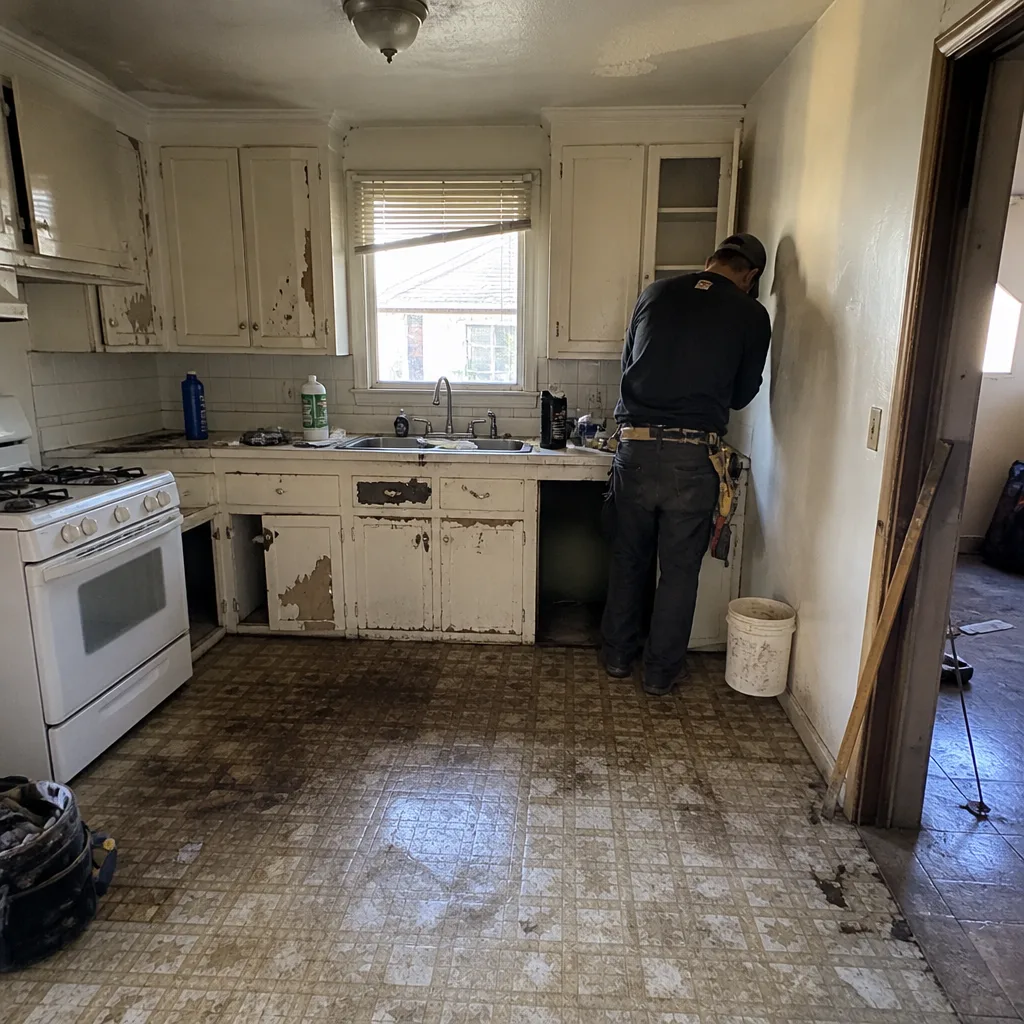 Before
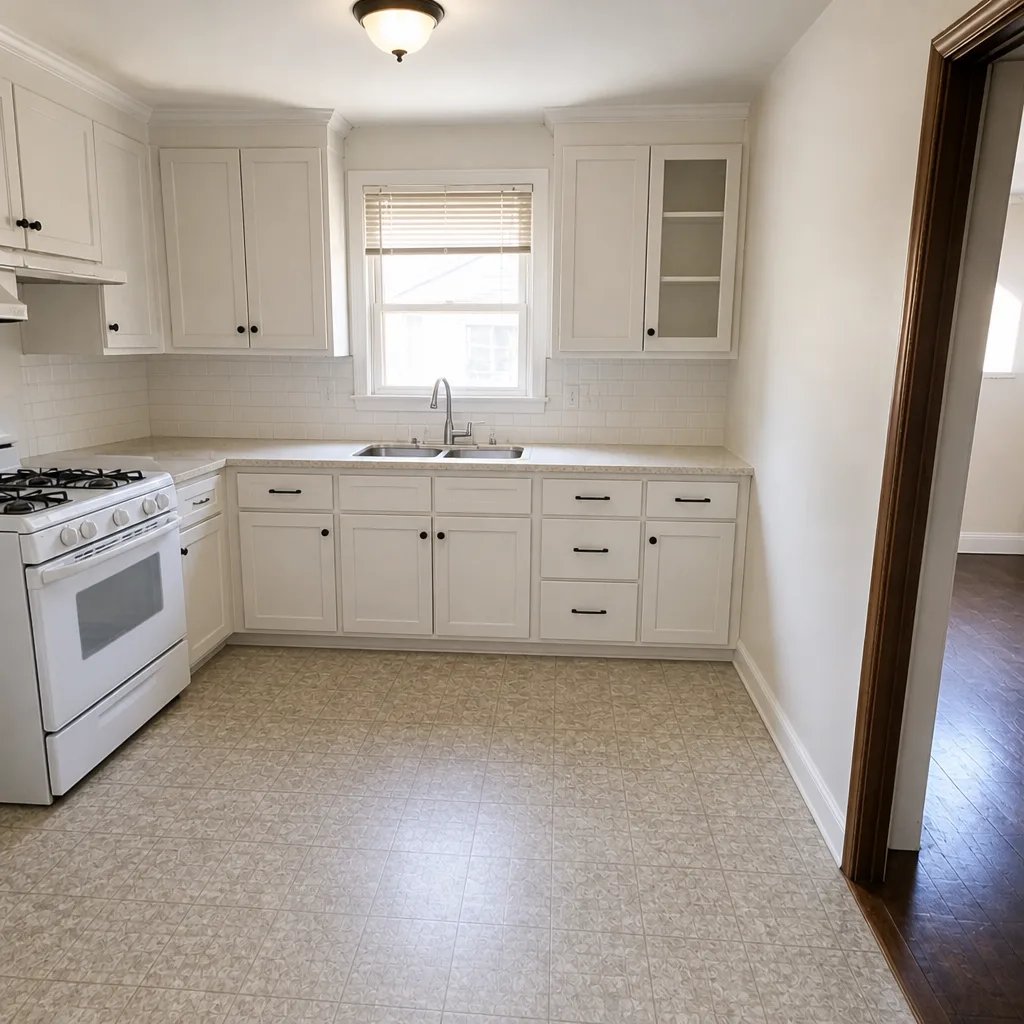 After
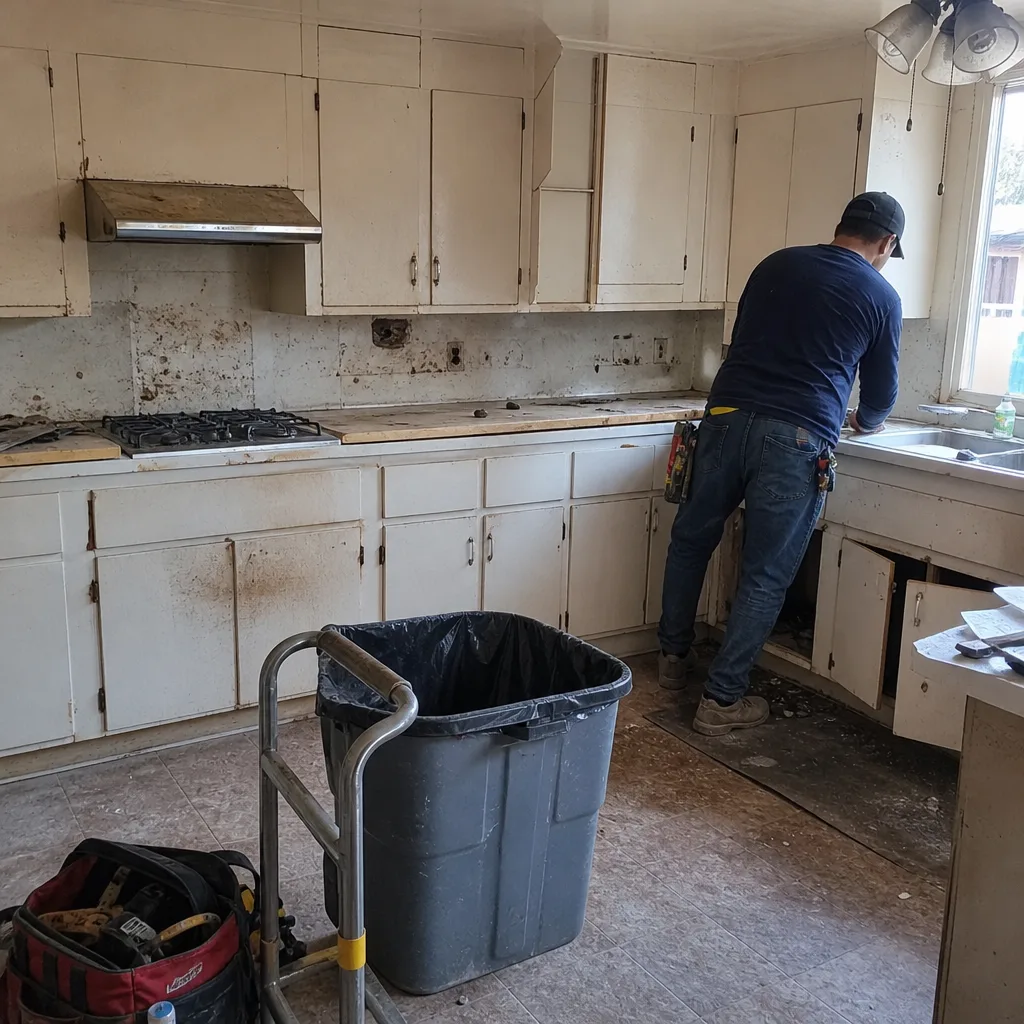 Before
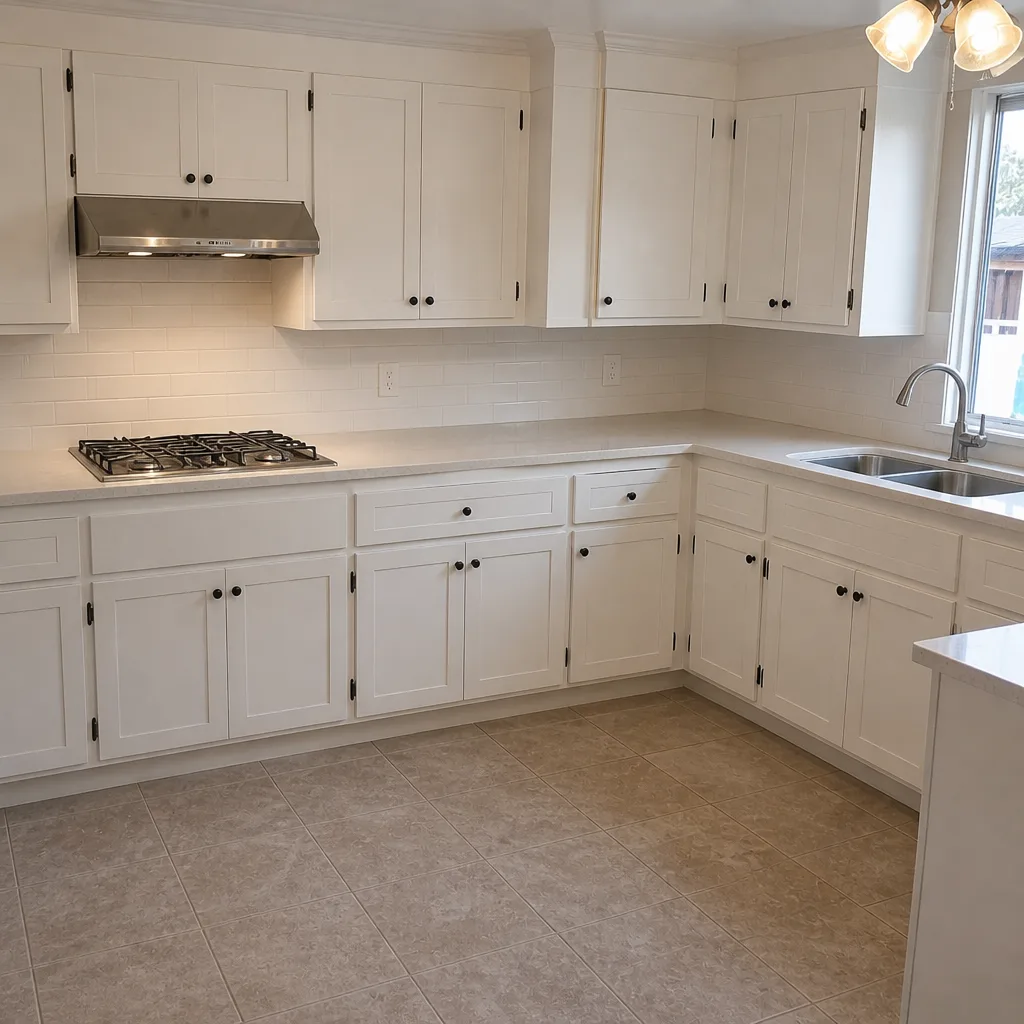 After
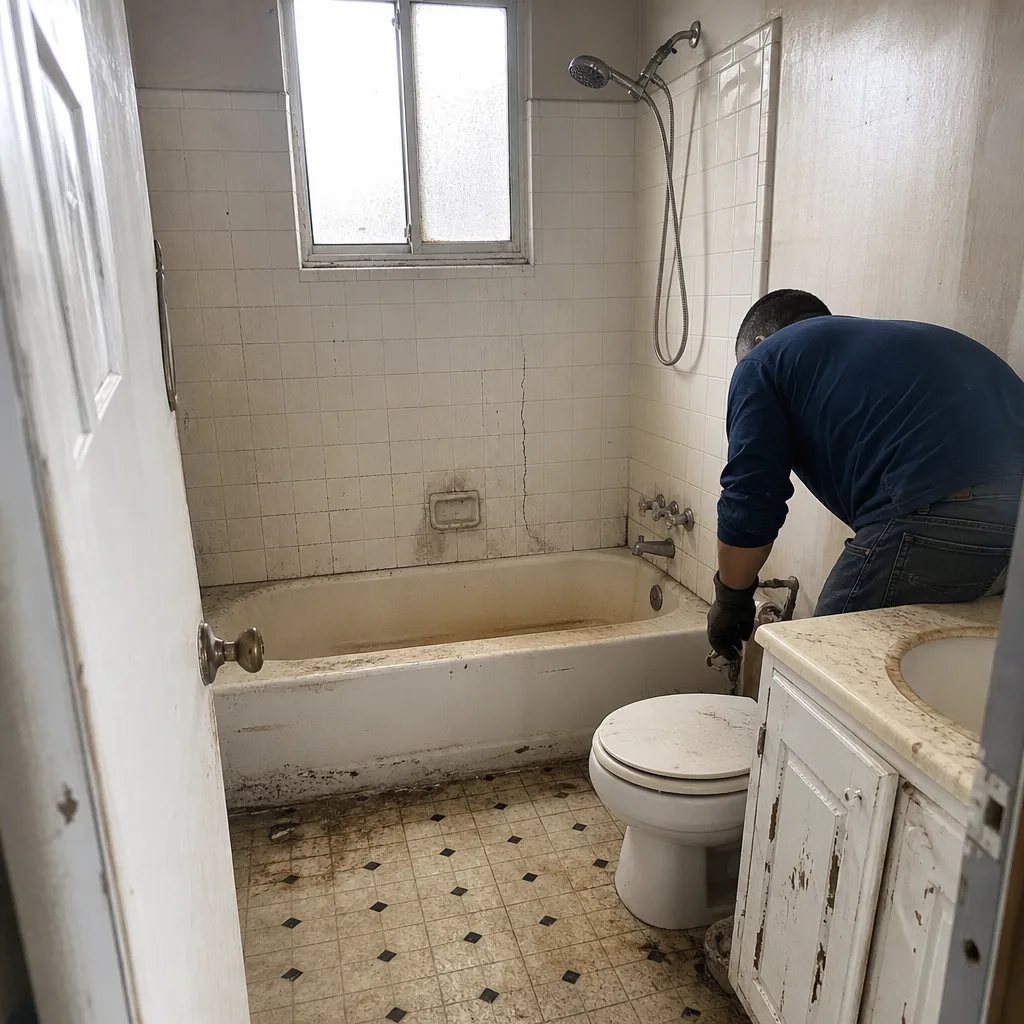 Before
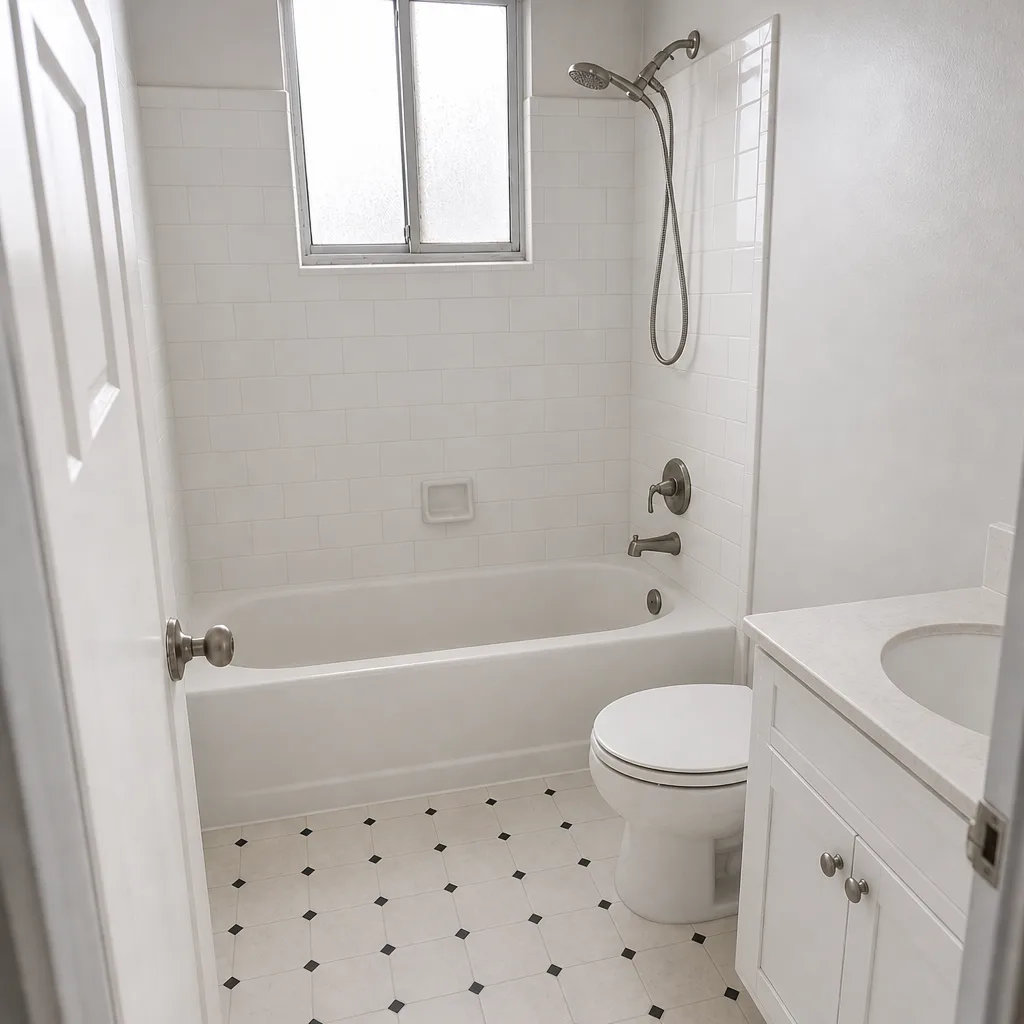 After
When to Call a Professional
If your Buena Park driveway project involves any of the following, it’s time to bring in a professional: existing drainage problems, grade changes, structural proximity to foundation or retaining walls, a required permit, or a driveway size that makes the DIY timeline stretch beyond two weekends. Add in any prior water intrusion into the garage or pooling at the apron and the professional path becomes nearly mandatory, because those problems don’t get fixed by laying pavers on top of them. The local pro is licensed and insured as their state requires, pulls the permit in their name, carries the inspection responsibility, and backs the work with a written workmanship warranty. From our side, every project we take on comes with the 730-Day Done Right Promise: if it’s not done right, we make it right. For a Buena Park driveway that’s going to sit in clay soil for the next thirty years, that’s the difference between a project and a permanent install. Groundwork Construction Co. of Buena Park offers free estimates in Buena Park – call (833) 522-5059.
Frequently Asked Questions
A full professional paver driveway install in Buena Park typically runs $9,500-$15,000 for a standard two-car driveway, depending on paver selection, base depth, and whether the project requires a permit or drainage work. That range includes materials, labor, base prep, and inspection. Budget-oriented DIY paths can land in the $4,000-$6,000 range for materials and tools only, but only if the base work is done by a professional. Call (833) 522-5059 for an exact quote – estimates are free.
With an upfront-priced bid from a contractor who showed up, measured the site, and inspected the base and drainage, the answer should be no. Change orders on driveway projects almost always come from one source: site conditions that weren’t disclosed on the original bid, like hidden root systems, old concrete thickness beyond expectation, or soil that needs more excavation than a photo suggested. A proper onsite evaluation eliminates most of that risk. Call (833) 522-5059 for a written line-item estimate before you commit to anything.
Yes, and it’s worth doing. Demolition, hauling, and paver cutting are honest labor savings of $1,200-$2,200 on a typical Buena Park project. What you shouldn’t do is the base preparation, compaction, slope setting, or final polymeric sand work. Take on the physical labor, and hire out the engineering steps. Call (833) 522-5059 to talk through what a labor-only arrangement looks like.
Often yes, depending on whether the work touches the public right-of-way, involves grading beyond the local threshold, or changes site drainage. A licensed contractor pulls the permit in their name and carries the inspection. When the homeowner pulls the permit for DIY work, the homeowner carries the re-inspection and correction cost. Call (833) 522-5059 to confirm whether your specific Buena Park address requires a permit before you start.
A professional install on a typical Buena Park two-car driveway takes 3-5 working days, weather-dependent, once the permit and inspection scheduling are accounted for. A DIY install of comparable scope takes most homeowners 3-5 weekends, sometimes stretching to six. The difference in elapsed time matters when you’re managing family schedules, garage access, and other projects. Call (833) 522-5059 to schedule a site visit and get a realistic timeline for your property.
If the base fails under a professionally installed driveway, the contractor’s workmanship warranty covers the correction, which on a Groundwork project means the 730-Day Done Right Promise: if it’s not done right, we make it right. If the base fails under a DIY install, you’re pulling up the pavers, redoing the base, and re-laying the surface on your own dime. That failure mode is the single biggest reason we recommend letting a professional handle the base, even for homeowners who do the demo and cutting. Call (833) 522-5059 to schedule a free estimate.
The Bottom Line
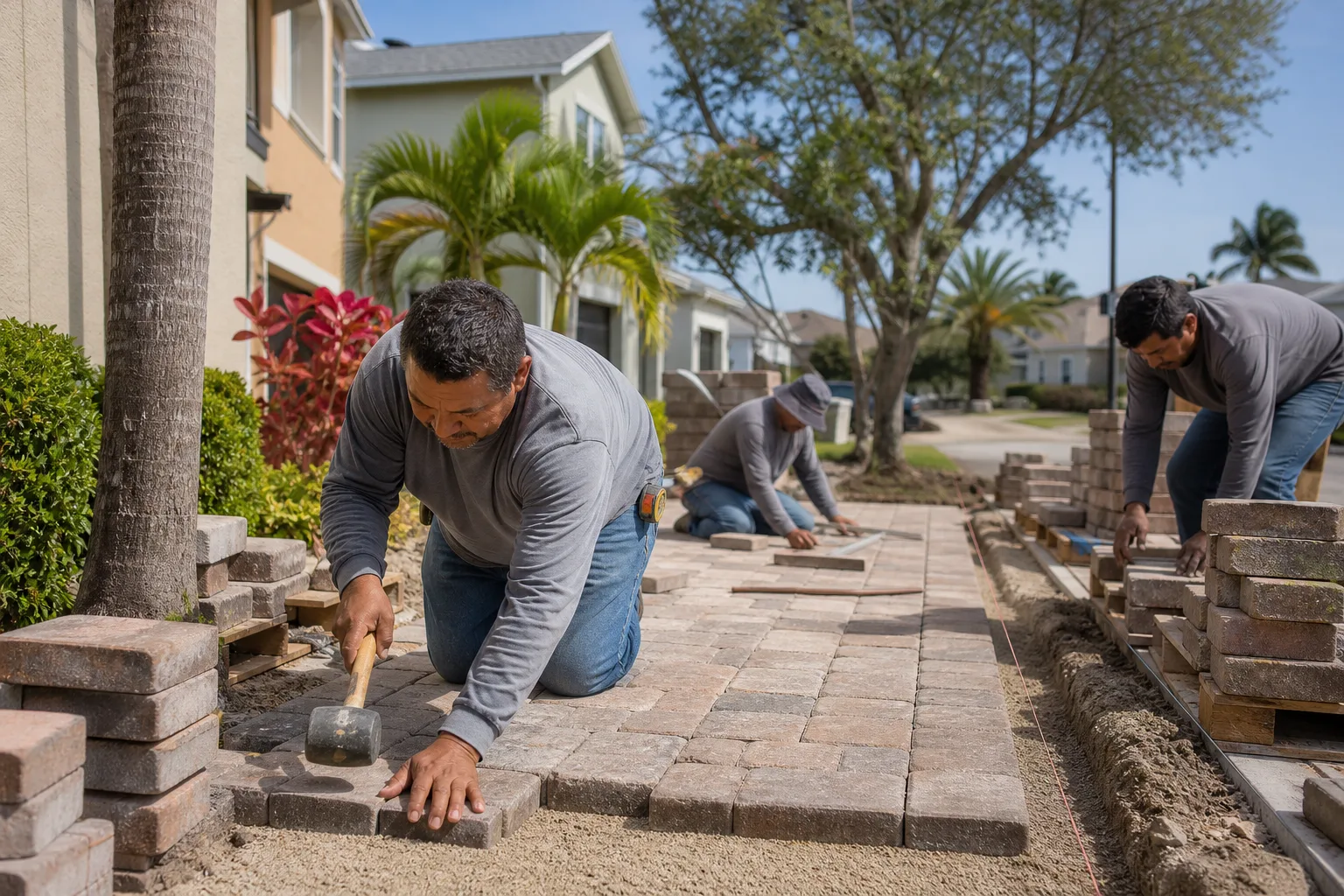
DIY paver work in Buena Park is not zero or all-or-nothing. It’s a spectrum, and the honest line sits at the base course. Handle the demo, the material hauling, and the cutting with a rented saw, and you’ll save real money. Hand the base preparation, slope, drainage, and permit work to a licensed professional, and you’ll keep the driveway that lasts the next thirty years instead of the one that needs to be redone after two wet seasons. Do the comparison honestly by pricing your own time, calling in a site evaluation, and demanding a written line-item estimate before anyone digs. That’s the standard the project deserves, and it’s the one that costs the least over the life of the driveway.
If you’re ready to get a real number on your Buena Park driveway project, Groundwork Construction Co. of Buena Park answers the phone with a live person 24/7, sends background-checked technicians in uniform, and stands behind every project with the 730-Day Done Right Promise. We’re also running current offers: a free project estimate and design consult, $1,000 off projects over $10,000, and 0% financing for 18 months. Call (833) 522-5059 to schedule your free estimate, and get an honest answer on whether your project is DIY-ready or one that should be done right the first time. You can also browse our other services, including Groundwork Construction Co. of Buena Park home, to see how a single contractor handles hardscape, roofing, and structural work as one finished project from foundation to finish line.
Written by the team at Groundwork Construction Co. of Buena Park.